


Establishment of a national quantum research hub in Ulsan
 Published2026.03.13 15:51
.jpg)
Key research infrastructure to strengthen South Korea's competitiveness in quantum technology has been newly established in the industrial city of Ulsan.
On the 13th, Ulsan National Institute of Science and Technology (UNIST) held an opening ceremony for the 'UNIST Quantum Nano-Fab' and officially launched a national research facility capable of carrying out the entire process of quantum device development in one space.
The newly opened Quantum Nanofab is a facility established through a total investment of 30 billion won, and is configured to autonomously conduct full-cycle research ranging from the design, fabrication, analysis, verification, and demonstration of quantum devices.
It is an open research infrastructure built through two national projects supported by the Ministry of Science and ICT and the Institute of Information and Communication Technology Planning and Evaluation (IITP).
UNIST has expanded and built this quantum nanofab based on the nanofab facility it has operated for the past 18 years.
The existing nanofabs are open process infrastructures jointly utilized by over 60 institutions nationwide, supporting tens of thousands of research processes annually and serving as key hubs for domestic nanotechnology research.
In addition, the scope of research has been further expanded by adding equipment specialized for quantum processes and a dedicated support system.
Quantum Nanofab is equipped with world-class analytical equipment and has about 30 process and analysis specialists on-site to support researchers.
Through this, domestic and international researchers [can] work on advanced quantum device processesIt is expected to function as an open research platform that provides an environment where researchers can freely utilize the technology and promotes cooperation between industry, academia, and research institutes.
With the opening of this facility, UNIST has evolved beyond its existing semiconductor and nano-process-focused research infrastructure to become a comprehensive research hub encompassing quantum technology.
The strategy is to foster Ulsan, which has grown particularly through the automobile, shipbuilding, and petrochemical industries, as an innovation hub in the southeastern region by adding a cutting-edge quantum and semiconductor technology base.
UNIST presented three principles for the operation of its quantum nanofab: a "one-stop research environment," "open joint use," and "future industrial vision."
The plan is to increase research efficiency through a researcher-centered integrated process system and to lead the expansion of the quantum ecosystem through a nationwide joint utilization model.
UNIST President Park Jong-rae stated, “This investment goes beyond the simple expansion of research facilities and marks a turning point that elevates the nation’s quantum technology capabilities to the next level,” adding, “We will create a virtuous cycle so that quantum research achievements originating in Ulsan lead to technological advancement and strengthened industrial competitiveness.”

Comments
Related news
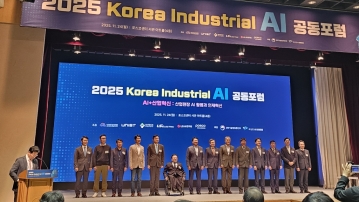
UNIST Accelerates Industrial AI Transition
UNIST (President Park Jong-rae) held the '2025 Korea Industrial AI Joint Forum' on the 24th at the POSCO Center in Seoul together with six industry-academia-research institutions, sharing AI utilization outcomes in manufacturing fields and corporate talent innovation cases.
2025.11.25by 배종인 기자

AI that feels like it's learned everything after learning only 1/25th of what it needs to learn.
A research team led by Professor Shim Jae-young at UNIST's Graduate School of Artificial Intelligence has developed dataset distillation technology that can maximize the learning efficiency of 3D artificial intelligence (AI) models, which are critical to advanced industries such as autonomous vehicles and robotics.
2025.12.01by 배종인 기자
.jpg)
AI that moves 3D characters with a single photo
A research team led by Professor Ju Kyung-don from the UNIST Graduate School of Artificial Intelligence has developed 'DeformSplat (Rigidity-aware 3D Gaussian Deformation)', an AI model that deforms the poses of 3D characters generated based on 3D Gaussian Splatting without shape distortion. This technology can implement natural 3D motion without multi-angle photography data or complex motion capture equipment that were previously required in the conventional 3D content production process, and is expected to significantly reduce production costs and lower barriers to entry across the metaverse, game, and animation industries.
2025.12.26by 명세환 기자

UNIST Implements First 100V Self-Powering Technology
UNIST researchers have developed a new electrochemical cell technology that produces high voltage without external stimuli by mimicking the biological structure of electric rays. This technology is attracting attention as a core foundational technology in next-generation energy harvesting fields such as wearable power devices and self-generating sensors.
2026.01.21by 배종인 기자

Robotic arms don't tremble when suddenly lifting heavy loads.
The research team led by Professor Kang Sang-hoon from the Department of Mechanical Engineering at UNIST announced on the 26th that they have newly developed an 'adaptive PID control algorithm' that enables robot arms to operate stably even under sudden load changes or unexpected external contact situations. This technology significantly enhances the performance of PID controllers installed in over 90% of industrial robots, and can be applied to various fields including smart factories, rehabilitation robots, and humanoid robots.
2026.01.26by 명세환 기자











