



ADI Presents Evolution of Robotics with 'Physical Intelligence' at GTC 2026
 Published2026.03.17 10:01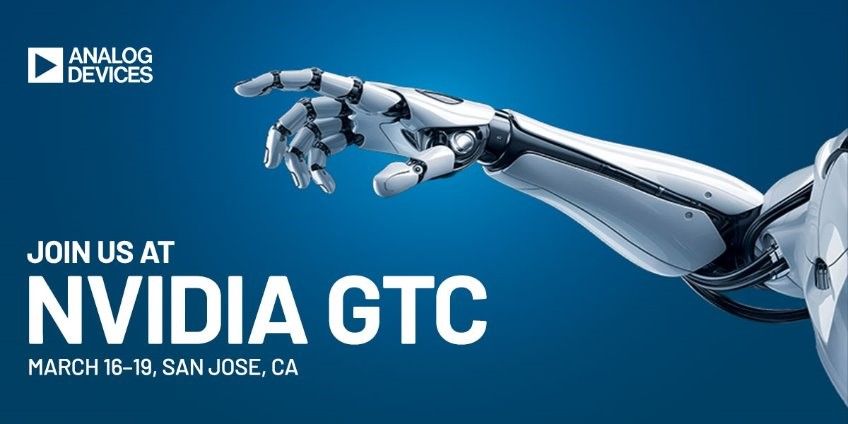
Analog Devices (ADI) presented the direction of next-generation robotics by unveiling 'Physical Intelligence (PI)' technology, which helps robots achieve human-like manipulation capabilities in real-world environments.
ADI participated in 'NVIDIA GTC 2026', held in San Jose, USA from the 16th to the 19th, and demonstrated robot manipulation technology combining sensing and artificial intelligence.
Physical intelligence is a technology that integrates sensors, signal processing, actuation, and AI to enable robots to perceive their physical environment and respond precisely.
At this event, ADI showcased key technologies that enable robots' sophisticated object manipulation capabilities, centering on an AI-assisted humanoid hand platform.
The platform was designed based on ADI's motor control and sensing architecture.
The operational precision of robots is still considered a challenge to be addressed in the automation industry.
Unlike humans, robots have shown limitations in tasks requiring tactile perception and fine force control.
Accordingly, ADI unveiled the first industrial robot precision benchmark to objectively evaluate advancements in robot manipulation technology.
This benchmark is physical-based sensing and highIt enables performance comparison and technology verification between robot platforms by utilizing fidelity simulation.
Three major demonstrations took place at the exhibition booth.
The first was a demonstration of 'tactile intelligence' using a multimodal tactile sensor, showing the process of a robot detecting contact and slippage without visual information and finding a socket along a cable.
This technology is designed to rapidly apply control methods learned in a digital twin environment to actual robots.
In the second demo, industrial robot sophistication benchmarks and a digital twin environment were introduced.
Technology that reduces the gap between simulation and reality, based on actual industrial tasks such as data center cable work or precision machine assembly, was emphasized.
This can reduce development costs and increase the reliability of robot operation algorithms.
Finally, an end-to-end manipulation demonstration was conducted in which an AI-based humanoid hand recognized the cable and connected it accurately.
This demo, integrated into a single system from sensing to control and execution, demonstrated the potential of robotics enabled by physical intelligence.
An ADI official stated, “Physical intelligence is a core technology that enables robots to work safely and precisely in real industrial environments,” adding, “It will accelerate the evolution of industrial automation by setting new standards for robot development and verification.”

Comments
Related news
“Extremely Diverse Assistants Needed”… Specialized Agentic AI is the Trend
Human intelligence is highly specialized, so it is inappropriate to attach the label of "general-purpose" to it. We need an extremely diverse range of assistants. This was stated by Yann LeCun, Meta's Chief AI Scientist and a professor at New York University, while sharing his vision for the future of AI at last year's NVIDIA GTC 2025. He predicted that artificial general intelligence (AGI) will become practical within 3 to 5 years and emphasized the importance of developing diverse AI assistants and open-source projects.
2025.03.24by 권신혁 기자
NVIDIA, “The Era of Physical AI Begins in Earnest, Spreading to Autonomous Driving, Robotics, and Across Industries”
NVIDIA presented "Physical AI" as the next evolutionary stage of artificial intelligence at an online press briefing ahead of GTC 2026, signaling a major ecosystem expansion centered on autonomous vehicles, robots, and industrial applications.
2026.03.17by 배종인 기자
Samsung Electronics Unveils Next-Generation HBM4E at NVIDIA GTC… Highlighting Competitiveness as an AI Memory 'Total Solution'
Samsung Electronics participated in Nvidia GTC 2026, showcasing a memory integration strategy encompassing next-generation high-bandwidth memory (HBM) technology and AI infrastructure, thereby strengthening its position in the global AI ecosystem.
2026.03.17by 배종인 기자
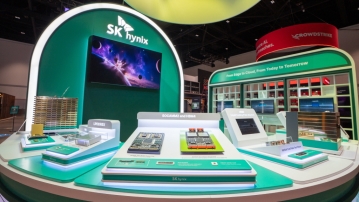
SK Hynix Showcases AI Memory Technology at NVIDIA GTC 2026
SK Hynix will participate in 'NVIDIA GTC 2026' held in San Jose, California from the 16th to the 19th, showcasing core technologies for AI infrastructure.
2026.03.17by 배종인 기자

NVIDIA Unveils 'Vera Rubin' Platform... Era of Agentic AI Infrastructure Begins in Earnest
NVIDIA unveiled the 'Vera Rubin' platform at 'GTC 2026' and began mass production of seven new chips for expanding the world's largest-scale AI factory.
2026.03.17by 배종인 기자











