


Samsung Electro-Mechanics Completes SAP S/4HANA Migration… Lays Foundation for AI Utilization by Integrating Distributed Data
 Published2026.04.08 14:29
SAP Korea announced on April 8 that the implementation of Samsung Electro-Mechanics' next-generation ERP system has been completed. Samsung Electro-Mechanics established a real-time analysis environment by integrating key data, which was previously scattered across existing ERP, MES, and SCM systems, into a BW-based system. This is akin to transforming the structure to allow information separated by division to be viewed and analyzed from a single central location.
This project incorporated the SAP Premium Supplier framework. Based on this, a service foundation combining domestic operational personnel, data centers, and disaster recovery systems was applied, serving as a factor in enhancing security and operational stability in the Samsung Electro-Mechanics case as well.
The characteristics of the manufacturing industry were also reflected in the transition method. Downtime-optimized transition is a method that reduces overall downtime by processing some data transition tasks while the system is running; Samsung Electro-Mechanics stated that by applying this, it reduced downtime by more than 75% compared to expectations. Given that transition time itself is directly linked to costs for systems connected to production lines, this figure highlights the nature of the project.
The scope of implementation was not limited to system replacement. The company adopted a strategy of first integrating and standardizing core processes such as finance, purchasing, production, and logistics, and then applying them simultaneously across all subsidiaries. This approach is interpreted as an attempt to reduce the scale and risk of the transition by establishing a common system first, rather than repeatedly rebuilding each individual subsidiary.
SAP's generative AI copilot 'Joule' was also utilized in the project execution process. Samsung Electro-Mechanics also presented a direction to expand data-driven decision-making and business automation environments through this transition. Ultimately, this implementation can be viewed as a restructuring of the data foundation necessary for manufacturing companies to integrate AI into actual business operations, alongside ERP modernization.

Comments
Related news
.jpg)
SAP Leads Hyundai Mobis Digital Transformation
SAP Korea (CEO Shin Eun-young) is leading the digital transformation of Hyundai Mobis in collaboration with Hyundai Autoever, going beyond ERP system migration and implementation by applying cutting-edge technologies to maximize user convenience, while simultaneously achieving performance optimization and enhanced security for Hyundai Mobis's massive database.
2024.11.18by 배종인 기자

SAP, “Ready to Support Solutions for a Sustainable Future”
SAP will participate in the 'Fifth Session of the Intergovernmental Negotiating Committee on Plastic Pollution (INC-5)' held in Busan from November 25 to December 1, and explore measures to end plastic pollution and advance toward a circular economy.
2024.11.25by 배종인 기자

SAP Links Carbon Emissions Financial Data to Increase Sustainability
SAP has officially launched "SAP Green Ledger" globally, a comprehensive carbon accounting solution that integrates directly with customers' financial data.
2024.12.23by 배종인 기자

SAP Offers Distribution-Specific Public Cloud ERP
SAP has officially launched the 'SAP S/4HANA Cloud for Retail, Public Edition' at the 'Retail's Big Show' hosted by the National Retail Federation (NRF).
2025.01.13by 배종인 기자
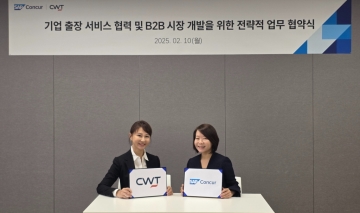
SAP, Systematic Operation Support for Customer Travel Management and Expense Processing
SAP Korea (CEO Shin Eun-young) has signed a Memorandum of Understanding (MOU) with CWT Korea, a global business travel management company, to cooperate on corporate travel services and develop B2B market opportunities. Through this partnership, SAP will actively support customers in managing business trips and processing expenses in a more convenient and systematic manner.
2025.02.11by 배종인 기자











