


KIMS and Hyundai IFC Establish Joint Research Center for Core Materials for Nuclear Power Plants and Aviation Engines
 Published2026.04.13 15:26
.jpg)
SMR Heat-Resistant Steel and Alloy Forging Technology Cooperation
The Korea Institute of Materials Science (KIMS) and Hyundai IFC are establishing a joint research center to secure core material technologies for next-generation nuclear power plants and aircraft engines. Through this joint research, the two organizations plan to establish a system that links material development, process optimization, and performance evaluation, and to accumulate technologies applicable to industrial sites.
The Korea Institute of Materials Science (KIMS) announced on April 10 that it signed a business agreement with Hyundai IFC at its headquarters in Changwon, Gyeongnam, for the "establishment and operation of the KIMS-Hyundai IFC Joint Research Center and joint research and development." This agreement focuses on laying the foundation for mid-to-long-term cooperation to strengthen the technological competitiveness of materials and components in the nuclear and aviation sectors.
Key areas of cooperation include technology for evaluating the properties of heat-resistant steel for Small Modular Reactors (SMRs), technology for optimizing the forging process of nickel alloys, and the development of pack forging processes based on high-quality titanium alloys. These technologies are directly related to the reliability of nuclear power plant and aircraft engine components that must withstand high temperatures and heavy loads.
The two organizations plan to establish a joint research center within KIMS and operate a cooperative structure that leads to research and development, testing and evaluation, and technology transfer. The plan is to handle the entire lifecycle of materials, components, and evaluation together through a one-on-one matching method with working-level personnel, while also providing joint use of research equipment, technical consulting, and analysis support.
In addition, they agreed to jointly pursue the resolution of short-term technical problems and the development of next-generation technologies through the joint planning and participation in government R&D projects. Accordingly, cooperation is expected to move beyond existing project-based collaboration to a model that continuously identifies research topics and expands the scope of technology exchange.
This agreement is considered significant in that it establishes a permanent cooperation platform between research institutions and companies, going beyond simple joint research. Attention is focused on whether this will serve as an opportunity to enhance technological completeness through a structure that extends from material development to testing and evaluation, and to increase the industrial applicability of key materials required in the nuclear power and aircraft engine sectors.

Comments
Related news
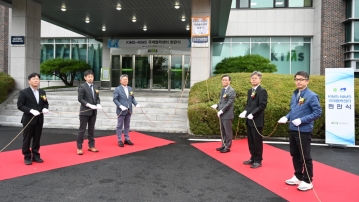
Korea Materials Research Institute Accelerates Global Collaboration in Materials Science
The Korea Institute of Materials Science (KIMS, Director Chol-Jin Choi) has established the KIMS-NIMS International Joint Research Center together with Japan's National Institute for Materials Science (NIMS, Director Kazuhiro Hono), and will conduct joint research projects at a world-class level.
2025.10.15by 명세환 기자
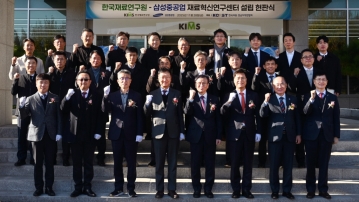
Korea Institute of Materials Science and Samsung Heavy Industries Join Forces to Secure Sovereignty in Materials
The Korea Institute of Materials Science (KIMS, Director Choi Chul-jin) and Samsung Heavy Industries (SHI) have joined forces to establish the 'KIMS-SHI Materials Innovation Research Center,' holding a dedication ceremony at the KIMS headquarters in Changwon, Gyeongnam on November 28th.
2025.12.01by 배종인 기자
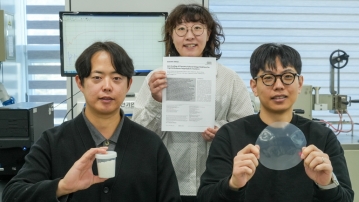
KERI Breaks Performance Limits of Eco-friendly Insulation Materials… Innovation Expected in High-Voltage Power Equipment
A research team led by Dr. Yu Seung-gun at the Insulation Materials Research Center of the Korea Electrotechnology Research Institute (KERI) has demonstrated a technology that overcomes the structural limitations of polypropylene, a conventional insulation material, and implements stable performance even in high-voltage environments.
2026.02.23by 배종인 기자
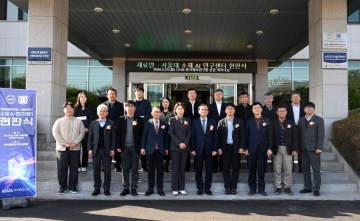
KIMS and Seoul National University Launch 'Materials AI Research Center'... Transition to Data-Driven Research Begins in Earnest
The Korea Institute of Materials Science and Seoul National University have launched the 'Materials AI Research Center,' a joint hub that integrates AI into materials and process research. The two institutions will operate centers in Seoul and Changwon respectively, pursuing research that links experiments, theory, and model development. In an effort to transform the existing materials development process, which has relied on repetitive experimentation, into data-driven design and prediction, both organizations will also expand collaborative project planning and talent exchange.
2026.02.24by 배종인 기자
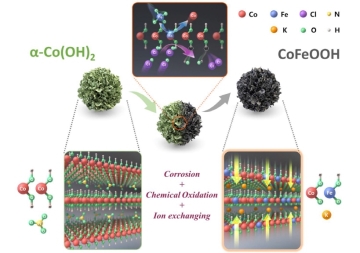
KIMS Develops Non-Precious Metal OER Catalyst… Raising Possibility of Commercializing AEM Water Electrolysis
The Korea Institute of Materials Science has developed a non-precious metal oxygen evolution reaction (OER) catalyst applicable to anion exchange membrane water electrolysis (AEMWE). A cobalt-iron based oxyhydroxide (CoFeOOH) was designed with a layered structure, and the electronic structure and reaction pathway were precisely controlled by combining iron doping with surface chemical treatment. As a result, high current density was achieved even at low overpotential, and structural stability was secured during extended operation. The research team applied the catalyst to a unit cell and verified its performance and durability in an actual water electrolysis environment. This achievement, which reduces reliance on precious metals, is expected to contribute to the commercialization of low-cost, high-efficiency green hydrogen production technology.
2026.02.25by 배종인 기자











