


Kaspersky Warns of North Korean Virtual Asset Theft Campaign
 Published2026.04.16 11:51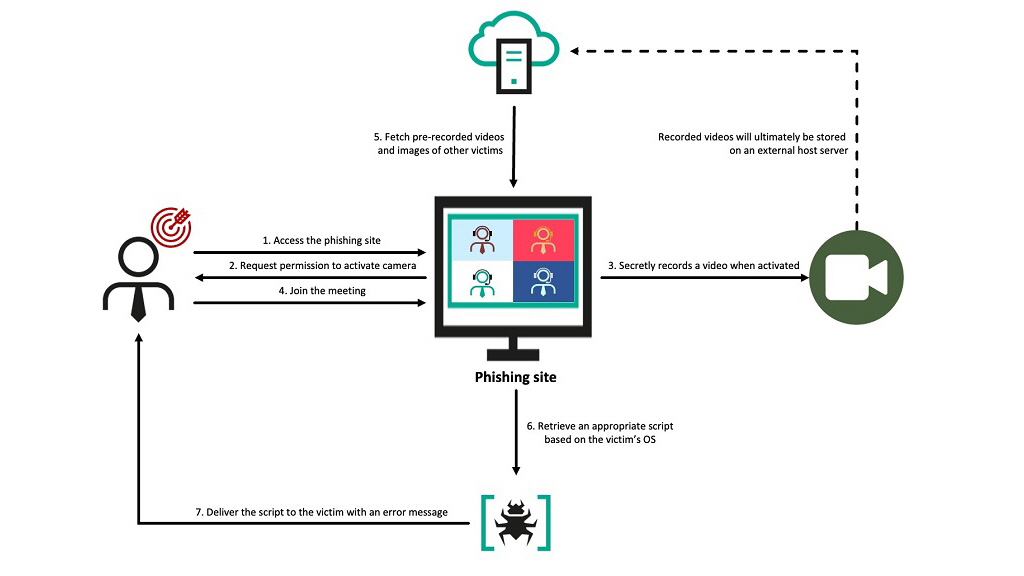
Bluenoroff, identified as a North Korea-linked hacking group, appears to have evolved its methods of stealing virtual assets to be even more sophisticated. Analysis suggests that the scope of attacks is expanding beyond simply targeting cryptocurrency wallets to simultaneously taking control of video conferencing, recruitment processes, cloud accounts, messengers, and browser credentials.
On the 16th, global security firm Kaspersky released an in-depth report containing these details and urged Web3 and blockchain industry professionals to exercise special caution.
The key to this analysis is the two-pronged attack known as 'GhostCall' and 'GhostHire'.
According to data released by Kaspersky, BlueNoroff has been tracked since at least April 2025, and the targets of the attacks have narrowed down to blockchain developers, venture capitalists, and startup executives.
A common tactic involves approaching victims via Telegram, posing as investors or recruiters, and inducing them to execute malware after gaining their trust.
Ghost Call is an attack that uses a video conference as bait.
Victims are lured to fake Zoom or Teams pages disguised as investment discussions or partnership meetings.
In this process, the attacker plays a video of the victim's actual past meeting instead of a deepfake to make it look like a 'real meeting currently connected.'
Subsequently, it induces the installation of fake updates under the pretext of resolving audio issues or program errors, and if the user executes them, a chain of infection begins.
In particular, Kaspersky explained that this campaign was primarily aimed at the macOS environment.
Ghost Hire is an infiltration method disguised as a recruitment process.
Attackers impersonate recruiters from U.S. financial companies or global corporations to approach Web3 developers and demand that they perform technical evaluation tasks.
The victim receives a compressed file or repository via a Telegram bot or GitHub link, usually accompanied by time pressure such as “submit within 30 minutes.”
The short time limit robs you of time for verification and acts as a psychological tactic that ultimately forces the malicious project to be executed as is.
The report pointed out that this attack is not simple phishing but is carried out through a multi-stage malware chain.
Kaspersky announced that it has identified at least seven infection streams and several new malicious components.
This includes features such as browser credential theft, Telegram account collection, cryptocurrency wallet information leakage, and the collection of various private keys and API keys.
The released data also contains evidence that the attacker targeted OpenAI-related directories in an attempt to secure traces of ChatGPT account usage.
What stands out particularly is the use of generative AI.
Kaspersky stated that it detected evidence that BlueNoroff used AI tools in various stages of the attack, including creating fake profile images, writing malicious scripts, and refining code.
Analysis suggests that this can act as a factor that shortens attack preparation time and accelerates the adoption of new programming languages and obfuscation techniques.
Kaspersky stated that victims have been confirmed in various regions, including Japan, Italy, France, Singapore, India, and Hong Kong.
In particular, tech company executives, venture capitalists, and developers working in the Web3 and blockchain industries were the primary targets.
The company emphasized that one should be wary of sudden investment offers or recruitment contacts via Telegram, as well as requests for code tests that rush execution.

Comments
Related news

Kaspersky: “There is a risk of service interruption for large AI companies such as OpenAI and Meta”
Global security firm Kaspersky, through its 'Kaspersky Security Bulletin' annual report, warned of service disruption risks at major AI companies such as OpenAI and Meta in 2015, and requested diversification of suppliers and strengthened security measures in preparation for IT supply chain risks.
2024.12.23by 배종인 기자

Kaspersky Launches UEBA-Based SIEM Solution
Kaspersky has announced a SIEM solution that integrates a UEBA rule set. Through machine learning-based behavioral analytics, it detects anomalies in real-time and minimizes false positives, enhancing security response capabilities.
2025.10.22by 명세환 기자
Honeymite APT targets government agencies, evolving information theft techniques.
Kaspersky has disclosed the latest attack flow of HoneyMyte APT, which targets government and diplomatic institutions. According to the analysis, the attackers expanded the functionality of the CoolClient backdoor to collect clipboard and active window information, browser login data, and HTTP proxy credentials. The infection process utilized DLL side-loading techniques that induced legitimately signed executable files to load malicious DLLs, and recent campaigns have been identified in Myanmar, Mongolia, Malaysia, Thailand, Russia, and other regions. Researchers assessed that proactive monitoring capabilities have become a standard tactic in APT attacks, necessitating preemptive defense measures.
2026.02.04by 명세환 기자
Notepad++ Supply Chain Attack: 3 Additional Undisclosed Infection Chains Confirmed
Kaspersky's Global Research and Analysis Team analyzed a recent Notepad++ supply chain attack and revealed that the attackers targeted Philippine government agencies, Salvadoran financial institutions, Vietnamese IT service providers, and individual users across multiple countries. A minimum of three infection chains were used in the attack, two of which had not been previously disclosed. Notably, the attack infrastructure utilized from July to September 2025 differed significantly from previously known indicators of compromise, raising the possibility that some organizations may not have been aware of their infections. Kaspersky explained that there may be additional, as yet unconfirmed attack stages.
2026.02.09by 명세환 기자
Kaspersky Unveils Revamped 'NEXT' Combining SOC Integrated Management and AI Analytics
As enterprises increase demand for integrated management and automation in the construction and operation of Security Operations Centers (SOC), Kaspersky has disclosed updates to its B2B security product suite 'Kaspersky Next'. This update expands EPP, EDR, XDR, and SIEM integration through a single console based on OSMP, incorporates AI capabilities such as DLL hijacking detection and suspicious account takeover behavior identification, and includes integration with generative AI assistant tool KIRA. The company stated that in large-scale deployment environments, EDR Expert can reduce resource requirements by up to 30%, and XDR Expert by up to 60%.
2026.03.25by 배종인 기자











