


Fire Alarms Become the Boy Who Cried Wolf, Semiconductors Provide the Answer
 Published2026.04.27 18:36
스팀다리미를 켜도, 샤워 후 화장실 문을 열어도, 삼겹살을 구워도 어김없이 화재 경보가 울린다. 2019년 SBS 보도에 따르면 한 신축 아파트 단지에서는 잦은 화재 경보 때문에 입주 10개월 만에 관리과장 5명이 그만뒀고, 분석된 비화재보 773건은 거의 전부 연기 감지기에서 발생했다. 결로·먼지·스팀·미세먼지·심지어 화장실에서 올라오는 김까지 화재로 인식했다. 소방청 점검 결론은 "생활환경의 문제"였는데, 풀어 말하면 현재 양산되는 연기 감지기가 환경 변화를 분별하지 못한다는 뜻이다.
문제는 가정보다 산업 현장에서 훨씬 더 위험하다. 양치기 소년이 된 경보는 안전불감증을 키우고, 한 번의 진짜 신호를 놓치면 안 되는 ESS·수소 인프라·발전소 배전반에서 비화재보가 쌓이면 진짜 화재 신호조차 또 한 번의 오작동으로 받아들여지기 쉽다. 수원의 강소기업 수진(SuJin)이 5년에 걸쳐 다듬어 온 SJ_SMOKE 패밀리는 정확히 이 지점에 답을 내놓는다. 광 경로가 어긋날 여지를 구조적으로 없애고, 두 개의 파장으로 연기와 수증기를 분별하며, 0~100% 실시간 농도를 RS-485 Modbus RTU로 호스트에 보낸다.
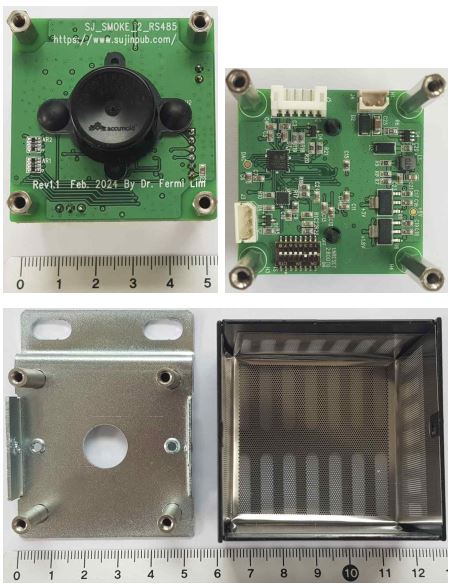
SJ_SMOKE_RS485 본체 — 1.3mm 철제 케이스 + 알루미늄 bug screen
기존 감지기의 구조적 한계
광학식 연기 감지기는 IR LED에서 발광한 빛이 챔버 안 포토다이오드에 도달하고, 그 사이에 연기가 끼어들 때 빛의 양이 줄어드는 것을 감지하는 단순한 원리로 작동한다. 문제는 LED와 포토다이오드를 별도 부품으로 손으로 정렬해 조립하는 데서 발생한다. 미세한 광 경로 불일치가 처음부터 존재할 수 있고, 시간이 지나면 LED 철제 다리에 가해지는 장력으로 정렬이 점점 더 틀어진다. 진동 환경에서는 이 효과가 가속된다. 게다가 단순 비교기 회로는 ON/OFF 신호밖에 내지 못하니, 농도가 5%인지 50%인지 알 길이 없어 '오작동인지 진짜 화재 초기인지'의 판단이 운영자의 직관에 맡겨진다. 알파선을 쏘는 방사성 물질(아메리슘) 기반의 이온화식은 또 다른 문제 응답 속도가 광학 반도체 방식 대비 눈에 띄게 느리다 를 안고 있다.
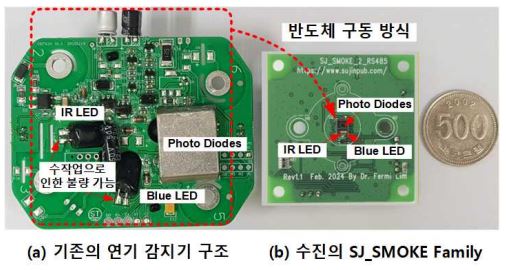
기존 광전식 감지기와 SJ_SMOKE 구조 비교
단일 다이에 모든 것을 — ADPD188BI라는 답
수진이 채택한 핵심 부품은 미국 Analog Devices Inc.의 ADPD188BI다. IR LED와 Blue LED, 포토다이오드, 주변 회로를 모두 단 하나의 반도체 다이 안에 집적한 연기 측정 전용 IC다.
이 한 줄에 두 가지 혁신이 함께 들어 있다. 첫째, 광 경로 어긋남의 원천 차단. LED와 포토다이오드가 동일 실리콘 위에 놓이므로 수작업 정렬 자체가 불필요하다. 진동·온도·시간에 의한 정렬 틀어짐의 물리적 여지가 사라진다. 둘째, 듀얼 파장에 의한 연기·수증기 식별. 빛의 산란은 입자 크기와 파장 관계에 따라 달라지는데, 연기 입자(주로 0.01~1µm의 탄소·고분자)와 수증기 입자(상대적으로 큰 물방울)는 IR과 Blue 두 파장에서 서로 다른 산란 비율을 보인다. 두 파장의 응답 비를 비교하면 같은 광 차단량의 원인이 연기인지 수증기인지를 추론할 수 있다. 결로·김·스팀에 의한 비화재보를 광학 단계에서 풀어내는 접근이다. 부품 실장이 최소화돼 전력 소비도 낮아져, 24V 600mAh 배터리 한 팩으로 약 50시간 동작이 가능하고, 동작 온도는 -40~85℃로 사실상 모든 산업 환경을 커버한다.
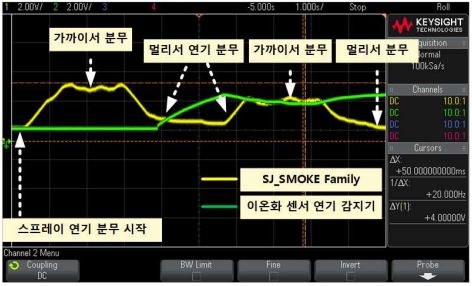
SJ_SMOKE Family와 이온화식 감지기의 응답 속도 비교
정확한 농도 + 산업 통신 통합
부품이 좋아도 데이터가 거칠면 의미가 없다. 수진은 ADPD188BI에서 받은 원시 광학 신호를 자체 알고리즘으로 처리해 0~100% 연기 농도 값으로 환산한다. 단순 ON/OFF가 아닌, 연기가 얼마나 빠르게 차오르는지를 그래프로 그릴 수 있다. 한 고객사가 "100%까지 1초 상승, 도달 후 3초 유지" 응답 곡선을 요구하자 펌웨어로 그에 맞춰 출력 특성을 재설계해 납품했다. 같은 하드웨어 위에서 응답을 다르게 빚어낼 수 있다는 점은 단순 부품을 넘어 솔루션이라는 의미다.
데이터 출력은 RS-485 Modbus RTU 슬레이브 구조다. 연기 농도(0x1014), 온도(0x1024), 상대 습도(0x1034), 그리고 세 값을 한 번에 읽는 통합 레지스터(0x1004)를 제공한다. 9600bps 기본·재조정 가능, 5비트 ID 스위치로 최대 32대 멀티드롭, 120Ω 종단 저항 On/Off, ID=0 브로드캐스트 동시 리셋까지 산업 통신을 다뤄 본 엔지니어라면 한눈에 어떤 배려가 들어갔는지 보일 것이다.
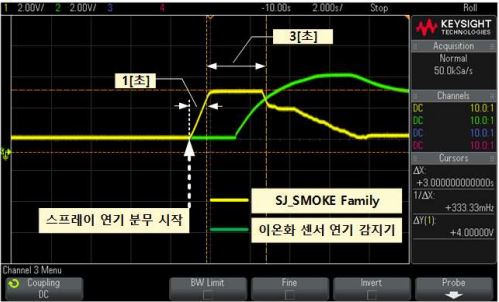
고객 요구에 맞춘 응답 곡선 튜닝 사례
5년의 산업 검증 — 검증 곡선이 가팔라지다
기술의 신뢰는 결국 어디에 들어갔느냐로 증명된다. SJ_SMOKE 패밀리의 5년은 검증 곡선이 시간이 갈수록 더 가혹한 환경으로 진입했음을 보여 준다.
2021년 9월, 삼성 SDI 배터리 충/방전기. 국내뿐 아니라 헝가리 공장 다수 라인에 적용. 배터리 셀이 열 폭주로 가스를 배출하기 시작하는 미세 농도 변화를 실시간으로 잡아내야 사고로 번지는 것을 막을 수 있는 환경. 1~4V DAC 출력 버전인 SJ_SMOKE_Vol이 적용됐고, 진동 강건성과 연속 농도 출력이 결정적이었다.
2022년 5월, 현대 초기 2층 수소버스 수소 탱크. 폭발성 연료의 누출과 화재 위험이 동시에 존재하고 진동이 상시인 환경. ADPD188BI의 집적 구조가 진동 강건성을 입증한 무대였다.
2026년 2월, 전국 발전소 배전반. 결로·먼지·진동·전기 노이즈가 동시에 존재하는 복합 가혹 환경이며, 다수 측정 포인트의 중앙 통합 모니터링이 필요한 자리. 이 적용에는 SJ_SMOKE_RS485가 채택됐다. 정밀 연기 농도와 함께 ±1.0℃ 온도, ±1.0%RH 습도를 동시 측정해 RS-485 Modbus로 전달하는 점, 그리고 결로(수증기)를 연기로 오인하지 않도록 듀얼 파장 식별이 가능한 점이 결정적이었다. 게다가 1.3mm 철제 케이스에 부식 방지 도료, 외부 벌레 침입을 막는 알루미늄 bug screen까지 산업 현장에서 살아남기 위한 디테일이 함께 갖춰졌다.
세 사례는 단순한 고객 리스트가 아니다. 진동(2021) → 진동 + 가연성(2022) → 진동 + 결로 + 통신 통합(2026) 환경 난이도가 단계적으로 올라갔고, 그때마다 SJ_SMOKE 패밀리가 답을 내놓았다는 흐름이다.
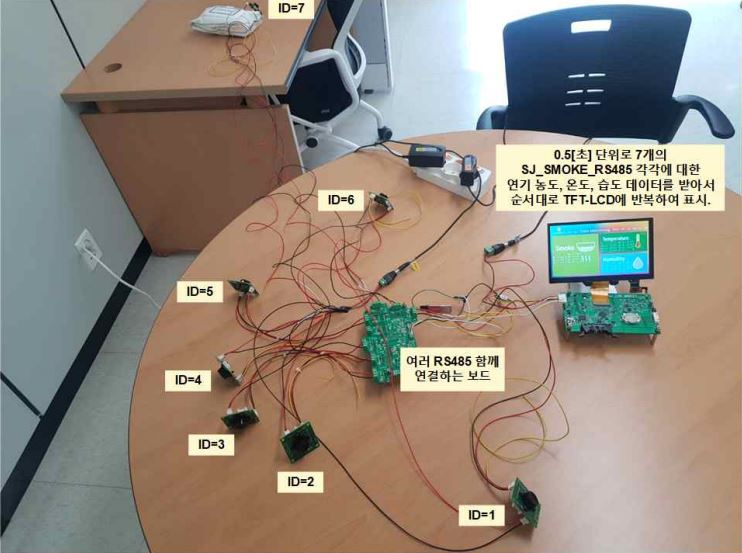
7대의 SJ_SMOKE_RS485 RS-485 멀티드롭 실험 구성
단일 알람 장치에서 산업 IoT 노드로
SJ_SMOKE_RS485가 보여 주는 것은 결국 화재 안전의 디지털 전환이다. 기존 감지기가 "불났다 / 안 났다"의 1비트만 보내는 단방향 알람 장치였다면, 반도체 기반 정밀 측정기는 농도·온도·습도라는 시계열 데이터를 산업 통신으로 송출하는 IoT 노드에 가깝다. 이 데이터는 단순 트립을 넘어 예지 정비, 환경 트렌드 분석, 다지점 상관 분석의 입력이 된다. 비화재보로 무력해진 화재 경보를 다시 신뢰의 영역으로 끌고 오는 일은 부품을 바꾼다고 되지 않는다. 광학 구조의 재설계, 펌웨어 알고리즘, 산업 통신 통합, 가혹 환경 검증이 모두 함께 가야 한다. 5년간 산업 현장의 가장 까다로운 자리들을 통과해 온 SJ_SMOKE 패밀리는, 그 통합 작업이 한국 강소기업의 손에서도 가능하다는 것을 보여 주고 있다.

Comments
Related news
Dual FOC Servo Drive Solution for Robot Hands and Humanoid Robots
The joints and hands of humanoid robots must densely pack multiple motor axes within extremely limited space. The conventional approach of using independent drives for each axis increases board area, heat dissipation, and wiring. This white paper addresses how STMicroelectronics solves this problem through a dual servo drive solution that simultaneously performs flux-oriented control (FOC) on two axes with a single controller (STSPIN32G4). Two patented technologies—shared current sensing (US Patent US 11,757,345 B2) and junction temperature measurement with thermal distribution layout (US 12,264,976 B2)—enabled a 150 W class dual board of 4 x 4.5 cm in size. Under 40 kHz current loop conditions during dual FOC operation, MCU load reaches a maximum of 60%, with the remaining computational headroom utilized for condition monitoring and AI-based automatic tuning. The solution's nature is a reference design rather than a finished product, with applicable boundaries and limitations specified in the text.
2026.10.09by 명세환 기자
The first signal determines the fate of the system
This whitepaper, based on the presentation materials and technical Q&A from the WaveInsense webinar 'Power & Boot Sequence Measurement Know-how,' summarizes measurement techniques for the initial operation interval spanning from the power-on sequence (Power-on Sequence) to the boot sequence (Boot Sequence), clock stability, and DC power quality in embedded systems. It presents a measurement procedure for narrowing down the causes of intermittent boot failures from the perspective of power rail sequence, PGOOD, reset, and clock quality, and addresses measurement pitfalls such as aliasing, low-frequency attenuation in AC coupling, and probe ground loops along with avoidance methods. Finally, it clarifies the boundary leading to integrated verification of power integrity (PI) and signal integrity (SI).
2026.10.09by 명세환 기자
Color Accuracy Issues in Vehicle Interior Ambient Lighting and Intelligent LED Drivers
Vehicle interior ambient lighting is spreading across all price segments, and the level of color accuracy required of lighting designers is rising accordingly. This white paper quantitatively addresses why temperature drift and individual variations of RGB LEDs cannot be corrected by standard constant-current drivers, and explains an intelligent LED driver approach that integrates an MCU, calibration data, and a LIN network interface into the driver. It covers implementation details of the LITIX Interior TLD4020-3ET currently in production, portfolio roadmap, and evaluation/development environments, and clarifies application boundaries including lack of 48V support, lack of RGBi/ISELED support, and absence of direct optical degradation diagnostics.
2026.10.08by 명세환 기자

Group-IB Partners with UAE Cyber Security Council
Cybersecurity specialist Group-IB has established a strategic partnership with the UAE National Cyber Security Council. Both parties will promote the transition from reactive response to proactive defense through threat intelligence sharing, incident response collaboration, and specialized workforce training. The key is to leverage AI-based intelligence to predict risks and strengthen response capabilities before attacks materialize.
2026.10.08by 명세환 기자

SKT and Upstage Launch AI Cybersecurity Council...11 Organizations Participate
SK Telecom and Upstage have launched an AI cybersecurity council together with 6 security companies and 3 universities. They are expanding SKT's A.X K series and Upstage's Solar into the security domain, training AI models with on-site security data, and validating vulnerabilities through mutual red-teaming. Through collaboration with 11 organizations, they plan to demonstrate the effectiveness of Korea's proprietary AI models applied to cybersecurity.
2026.10.08by 명세환 기자











