


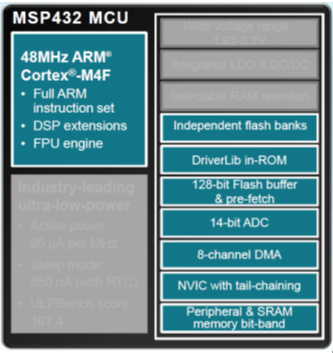
TI Develops 32-Bit MCU That Captures Both Low Power and High Performance
 Published2015.05.18 13:41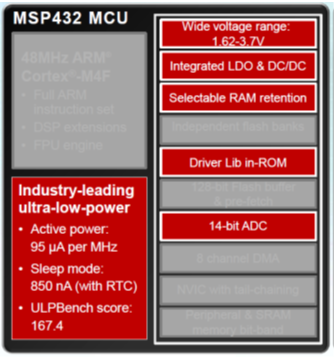

Comments
Related news
Dual FOC Servo Drive Solution for Robot Hands and Humanoid Robots
The joints and hands of humanoid robots must densely pack multiple motor axes within extremely limited space. The conventional approach of using independent drives for each axis increases board area, heat dissipation, and wiring. This white paper addresses how STMicroelectronics solves this problem through a dual servo drive solution that simultaneously performs flux-oriented control (FOC) on two axes with a single controller (STSPIN32G4). Two patented technologies—shared current sensing (US Patent US 11,757,345 B2) and junction temperature measurement with thermal distribution layout (US 12,264,976 B2)—enabled a 150 W class dual board of 4 x 4.5 cm in size. Under 40 kHz current loop conditions during dual FOC operation, MCU load reaches a maximum of 60%, with the remaining computational headroom utilized for condition monitoring and AI-based automatic tuning. The solution's nature is a reference design rather than a finished product, with applicable boundaries and limitations specified in the text.
2026.10.09by 명세환 기자
The first signal determines the fate of the system
This whitepaper, based on the presentation materials and technical Q&A from the WaveInsense webinar 'Power & Boot Sequence Measurement Know-how,' summarizes measurement techniques for the initial operation interval spanning from the power-on sequence (Power-on Sequence) to the boot sequence (Boot Sequence), clock stability, and DC power quality in embedded systems. It presents a measurement procedure for narrowing down the causes of intermittent boot failures from the perspective of power rail sequence, PGOOD, reset, and clock quality, and addresses measurement pitfalls such as aliasing, low-frequency attenuation in AC coupling, and probe ground loops along with avoidance methods. Finally, it clarifies the boundary leading to integrated verification of power integrity (PI) and signal integrity (SI).
2026.10.09by 명세환 기자
Color Accuracy Issues in Vehicle Interior Ambient Lighting and Intelligent LED Drivers
Vehicle interior ambient lighting is spreading across all price segments, and the level of color accuracy required of lighting designers is rising accordingly. This white paper quantitatively addresses why temperature drift and individual variations of RGB LEDs cannot be corrected by standard constant-current drivers, and explains an intelligent LED driver approach that integrates an MCU, calibration data, and a LIN network interface into the driver. It covers implementation details of the LITIX Interior TLD4020-3ET currently in production, portfolio roadmap, and evaluation/development environments, and clarifies application boundaries including lack of 48V support, lack of RGBi/ISELED support, and absence of direct optical degradation diagnostics.
2026.10.08by 명세환 기자

Group-IB Partners with UAE Cyber Security Council
Cybersecurity specialist Group-IB has established a strategic partnership with the UAE National Cyber Security Council. Both parties will promote the transition from reactive response to proactive defense through threat intelligence sharing, incident response collaboration, and specialized workforce training. The key is to leverage AI-based intelligence to predict risks and strengthen response capabilities before attacks materialize.
2026.10.08by 명세환 기자

SKT and Upstage Launch AI Cybersecurity Council...11 Organizations Participate
SK Telecom and Upstage have launched an AI cybersecurity council together with 6 security companies and 3 universities. They are expanding SKT's A.X K series and Upstage's Solar into the security domain, training AI models with on-site security data, and validating vulnerabilities through mutual red-teaming. Through collaboration with 11 organizations, they plan to demonstrate the effectiveness of Korea's proprietary AI models applied to cybersecurity.
2026.10.08by 명세환 기자











