



Nota Reduces AI Infrastructure Costs by Up to 76.5%... Unveils Lightweight Model Dedicated to 'Solar Open2'
 Published2026.07.27 09:01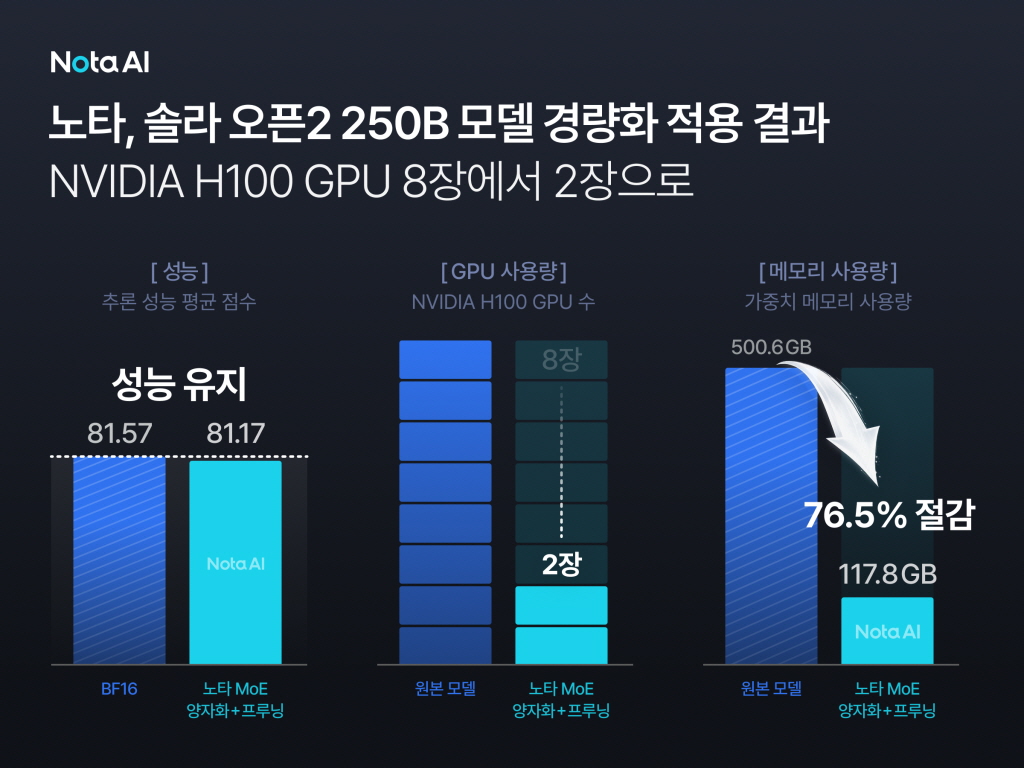
Nota, a company specializing in AI model optimization, has unveiled a lightweight model dedicated to Upstage's large-scale language model (LLM), 'Solar Open 2'. This technology focuses on improving the cost efficiency of enterprise AI transformation (AX) by reducing the infrastructure burden required to operate large-scale AI models.
Nota announced on the 27th that it has unveiled a lightweight model dedicated to 'Solar Open 2' as the second outcome of the government's independent AI Foundation model project, in which it is participating jointly with Upstage.
With the recent proliferation of high-performance openweight AI models such as DeepSeek and Moonshot AI, the criteria for AI competitiveness are expanding beyond just model performance to include actual business applicability and operational cost efficiency. Nota's strategy is to use this technology to support companies in operating large-scale AI models in a smaller infrastructure environment.
Solr Open2 is a large-scale language model with a total of 250 billion parameters, and adopts a Mixture of Experts (MoE) structure that activates only about 15 billion parameters when performing tasks.
Nota stated that it applied data-driven MoE quantization, router-aware MoE quantization, and non-uniform global pruning techniques for model optimization.
For data-driven MoE quantization, 'PASCAL-MoE' was utilized to convert model weights into a 4-bit (INT4·NVFP4) format, and a proprietary algorithm was applied to ensure the expert selection process remains stable even after quantization. Additionally, the model size was reduced by applying a non-uniform global pruning technique that selectively removes expert modules of low importance.
According to Nota, as a result of optimization, the weighted memory of Solar Open2 decreased from the existing 500.6GB to 117.8GB. This corresponds to a weight reduction effect of approximately 76.5%.
The company explained that it optimized the original model, which required eight NVIDIA H100 GPUs based on memory capacity, so that it could be operated in an environment with two H100 GPUs.
They also stated that they maintained the performance of Tool Calling, a key feature of Solar Open2, even while reducing the model capacity.
"It is significant that we have optimized a large-scale MoE model into a form that companies can actually implement," said Kim Tae-ho, CTO of Nota. "We plan to continuously advance our lightweight technology to enable the adoption of agent AI tailored to companies' infrastructure environments and budgets."
Nota unveiled the lightweight model dedicated to the Solar Open 2 through the global AI platform Hugging Face.

Comments
Related news
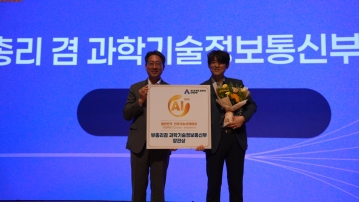
NOTA Wins Minister of Science and ICT Award at 'Korea AI Industry Awards'
Nota, an AI model optimization technology company, received the Vice Prime Minister and Minister of Science and Technology, Information and Communications Award at the '2026 Korea Artificial Intelligence Industry Awards', with its achievements in on-device AI and physical AI applications being recognized.
2026.06.12by 배종인 기자

NOTA Participates as a Core Technology Company in Ministry of Land, Infrastructure and Transport's 'AI-Specialized Pilot City'
Nota, an AI model optimization and lightweight specialization company, will participate as a core technology company in the Ministry of Land, Infrastructure and Transport's 6.109 trillion won 'AI-Specialized Pilot City' project. On the 22nd, the Cheonan·Assan consortium, selected as the target area for the Chungcheong region, will conduct demonstration projects for disaster, traffic, and civil affairs using an integrated urban intelligence center and autonomous AI agents based on digital twin technology from 2026 to 2030. Nota will optimize urban AI models for traffic, safety, and disaster in edge environments and operate them with on-device AI. By combining with Upstage's Korean-specialized language model, it will implement sovereign AI city services that integrate domestic data and edge execution technologies.
2026.06.22by 배종인 기자
Nota Signs MOU for AI-Based ITS Commercialization with LG CNS
Nota, an AI model lightweight and optimization company, signed an MOU with LG CNS on the 23rd for commercializing AI-based real-time intelligent transportation systems (ITS). The two companies will collaborate on joint marketing, field validation, development, and implementation with North America as their core market, combining Nota's edge-based generative VLM video surveillance solution 'NVA' with LG CNS's global smart city ITS capabilities. Building on the reference of jointly implementing a smart intersection system in the construction of Kenya's Nairobi Traffic Control Center last year, the companies are launching an expansion into the overseas traffic infrastructure market.
2026.06.23by 배종인 기자

NOTA Expands AI Lightweighting Technology into Space Industry… Participates in Space Medicine Platform Development
Nota, an AI model optimization company, is expanding its on-device AI optimization technology into the space sector. The company will participate in a DCP ecosystem innovation project led by SpacelinTech, taking charge of developing a space medicine platform that autonomously operates biopharmaceutical research in the International Space Station (ISS) and low Earth orbit. In this project, which runs for four years with a maximum budget of 20 billion won, Nota plans to optimize and lighten AI models to implement experiment state recognition and anomaly detection based on image and sensor data, as well as natural language reporting functionality.
2026.06.25by 배종인 기자
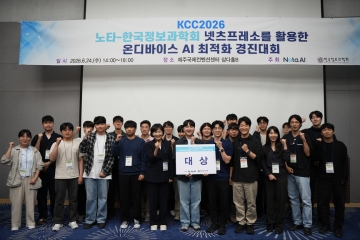
Nota Expands AI-Optimized Developer Ecosystem
Notta, an AI optimization specialist company, held an on-device AI optimization competition at the Korea Computer Congress (KCC 2026). The winning team "EcoRunner" achieved results of reducing response latency by 6.7 times and cutting memory usage by 85% when running LLMs on small devices using Notta's NetsPresso platform. As AI model optimization capabilities in edge environments become increasingly important, Notta is expanding its touchpoints with the developer and researcher ecosystem.
2026.06.29by 배종인 기자











