



Kaspersky KCS, DevSecOps Optimization·GitHub Actions Error Detection Enhanced
 Published2026.08.05 08:40
Kaspersky has released a new version of its container security solution 'Kaspersky Container Security (KCS)'. This update focuses on streamlining DevSecOps workflows and enhancing software supply chain security, with a newly included GitHub Actions configuration error detection feature.
Kaspersky unveiled the new KCS version on the 5th.
Key additional features include △custom security policy creation per organization △import and export of entire system configurations △control plane cluster deep audit △GitHub Actions configuration error detection.
Kaspersky stated that the entire lifecycle of containerized applications can be protected in on-premises and isolated network environments.
Enterprises can set and apply their organization-specific security standards alongside the default policies provided.
Custom policies can be created in the areas of image assurance, dynamic admission control (DAC), and security benchmarking, and the company explained that it can rapidly respond to changing compliance requirements.
From a supply chain risk perspective, dedicated rules have been introduced to detect unsafe workflow triggers in GitHub Actions, untrustworthy input handling, and inappropriate version management policies.
Security teams can integrate the KCS scanner into CI/CD workflows or operate it in standalone mode.
This version also includes technical improvements that enhance operational efficiency.
Node agent performance has improved 2.5 times compared to the previous version, and DAC processing speed has become 10 times faster, according to the company.
Additionally, scanned container images can be exported as SBOM (Software Bill of Materials), simplifying integration with vulnerability management tools.
A feature to dynamically update node agents without redeployment has also been added.
Anton Lusakov-Rudenko, Senior Product Marketing Manager for Kaspersky's Cloud and Network Security division, stated: "The GitHub Actions scanning feature detects vulnerabilities directly within configuration code, enabling teams to identify and fix errors at the earliest possible stage. This update bridges the gap between rapid deployment and strict compliance, allowing organizations to protect their infrastructure from the latest cyber threats without operational burden."
Lee Hyo-eun, Country Director of Kaspersky Korea, said: "While container workloads have become commonplace in Korea's manufacturing, fintech, and IT sectors, many enterprises struggle to balance between adopting agile DevOps and maintaining domestic compliance. The enhanced supply chain and control plane monitoring capabilities will address these needs."

Comments
Related news
Kaspersky: “6.5 million web attacks and 9.19 million local threats detected in Korea last year”
Kaspersky released its 2025 Korea-related security threat report, disclosing that it detected approximately 6.5 million web-based attacks and 9.19 million local threats in the country last year. Web attacks primarily centered on exploitation of browser vulnerabilities and social engineering techniques, while local threats were analyzed as capable of spreading to offline environments through removable media such as USB drives. The company noted that evasion techniques such as fileless malware and code obfuscation are increasing, and explained that a multi-layered security system encompassing behavioral detection, firewalls, and device control beyond single antivirus solutions is necessary.
2026.04.06by 명세환 기자
Kaspersky Warns of North Korean Virtual Asset Theft Campaign
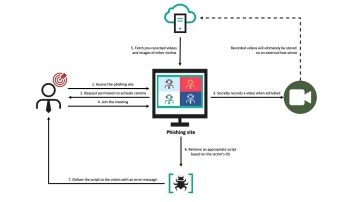
Bluenoroff, a hacking group linked to North Korea, has been found to have evolved its cryptocurrency theft methods to become increasingly sophisticated. Rather than simply targeting cryptocurrency wallets, the group is expanding its attack scope to simultaneously control video conferencing platforms, recruitment procedures, cloud accounts, messengers, and browser credentials, according to analysis. Global cybersecurity firm Kaspersky released an in-depth report on the matter on the 16th and urged special caution from those working in the Web3 and blockchain industries.
2026.04.16by 배종인 기자
Kaspersky Confirms 'SparkCat' Variant Bypassing App Store and Google Play
Kaspersky has announced that it has identified a new variant of 'SparkCat,' a cryptocurrency theft malware distributed through official app stores. The malware disguises itself as a legitimate application to access the photo gallery on users' devices, then utilizes OCR technology to analyze text within images and search for wallet recovery phrases. A notable characteristic is that Android-based searches focus on Asian language keywords, while iOS-based searches center on English language keywords. Although some infected apps have already been removed, distribution through third-party channels has also been confirmed. Security experts have analyzed that cases of bypassing official store review processes are increasing as advanced techniques such as obfuscation and code virtualization are being applied.
2026.04.27by 배종인 기자
.jpg)
Kaspersky Releases Report on Linux Kernel Vulnerability 'Copy Fail'
Kaspersky disclosed a Linux kernel vulnerability called 'Copy Fail,' revealing that root privilege escalation is possible through memory cache manipulation alone without file modification. Since the vulnerability operates by leveraging normal system calls, it is difficult to detect with conventional endpoint security solutions. While kernel updates are the fundamental mitigation measure, in environments where immediate patching is impractical, monitoring for abnormal privilege escalation indicators through behavioral analysis based on EDR and SIEM is necessary.
2026.05.07by 배종인 기자
Kaspersky Joins DCO… First Cybersecurity Company to Participate
Kaspersky has joined the Digital Cooperation Organization (DCO) as an observer. As the first cybersecurity company to participate in the DCO, it plans to share cyber threat response experience and capacity-building programs with member states and organizations. This participation demonstrates that digital economy discussions are expanding beyond technology accessibility to encompass security and resilience.
2026.05.28by 명세환 기자











