


ST Microelectronics and NUS Establish Joint Research Center 'HELIX' for Edge AI
 Published2026.08.28 10:13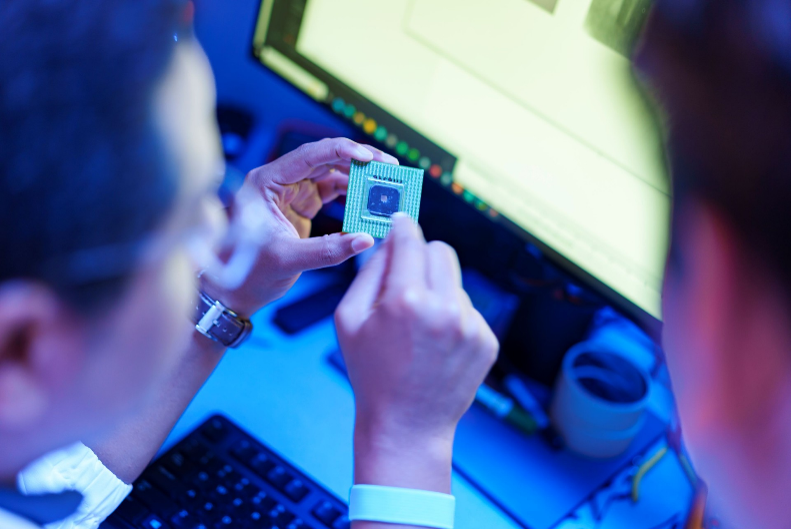
싱가포르 정부의 ‘연구·혁신·기업 2025(RIE2025)’ 지원을 받아 NUS 디자인 및 공과대학 산하에 설립됐으며, 컴퓨팅대학도 참여한다.
출범식에는 싱가포르 통상산업부 선임국무장관 로우 옌 링(Low Yen Ling)이 참석했다.
전력 제약이 있는 소형 하드웨어에서 멀티모달 센싱·온디바이스 컴퓨팅·실시간 액추에이션을 결합하는 것이 핵심 과제다.
연구는 △메모리 중심 아키텍처 △혁신적인 인메모리 컴퓨팅 △확장 가능한 컴퓨팅-메모리 시스템 △첨단 실리콘 및 임베디드 메모리 기술에 집중된다.
이 플랫폼은 초저전력 동작과 적응형 바디 바이어싱(Adaptive Body-Biasing)을 지원하며, 임베디드 PCM(Phase Change Memory)과 결합해 온칩 고밀도 비휘발성 저장공간을 구현한다고 ST 측은 설명했다.
오프칩 데이터 이동을 줄여 메모리 의존도가 높은 AI 워크로드에서의 에너지 소비를 낮출 수 있다는 설명이다.
학생과 연구원이 산업 수준의 프로젝트에 참여해 실무 역량을 쌓을 수 있는 환경을 조성한다는 계획이다.
NUS 총장 탄 엥 체(Tan Eng Chye) 교수는 “NUS의 연구 역량과 ST의 산업 역량을 결합해 싱가포르 반도체 및 AI 산업의 미래를 이끌 인재와 생태계를 함께 구축하고 있다”고 말했다.

Comments
Related news
ST Launches Multiplier-Free PFC Controller 'L6462A'
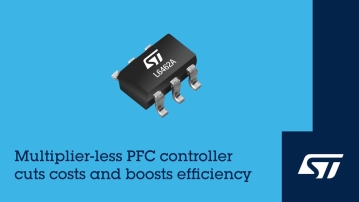
STMicroelectronics launched the 'L6462A' transition mode power factor correction (PFC) controller with a multiplier-free architecture on June 18. By generating sinusoidal reference signals using a current source and waveform shaper instead of a voltage sensor and analog multiplier, it enables the design of boost PFC converters without external voltage dividers. With standby current as low as 60μA or less and valley switching, it meets eco-friendly design standards and supports cost reduction and efficiency improvement in power supply units for home appliances such as up to 250W-class battery chargers, power adapters, and flat-panel TVs. Pricing starts from $0.18 based on 1,000 units.
2026.06.18by 명세환 기자
ST Launches Ultra-compact dToF 3D LiDAR Module 'VL53L9'
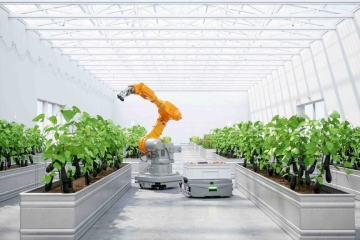
STMicroelectronics launched VL53L9, its first dToF 3D LiDAR all-in-one module targeting spatial awareness for small MCU-based edge AI, on June 23rd. Employing a stacked BSI SPAD sensor and metasurface optical elements, it delivers measurements with up to 1% accuracy ranging from under 5cm to 9m, offering a 54°×42° field of view, 2,268-zone resolution, and 100 frames per second. The module integrates on-chip dToF processing and a dedicated power management IC, eliminating the need for separate calibration to reduce system complexity and cost. Applications include robotics, industrial automation, smart buildings, AR/VR, and healthcare. Mass production is scheduled to begin in early July 2026.
2026.06.23by 배종인 기자
ST Launches 'ST54M' Security Mobile Chip Equipped with PQC
STMicroelectronics has launched the ST54M, a secure mobile chip equipped with a post-quantum cryptography (PQC) hardware accelerator. The product integrates an NFC controller, secure element (SE), and eSIM functionality in a single IC, providing a next-generation security solution to counter quantum computing threats. It has completed CC 2022 EUCC and EMVCo certifications, with production qualification targeted for July of this year.
2026.06.29by 배종인 기자
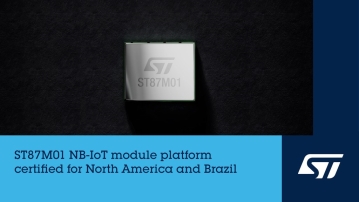
ST, ST87M01 NB-IoT Module Certified in North America and Brazil
ST Microelectronics has completed regulatory certification for its NB-IoT module ST87M01 in North America and Brazil. The module has obtained FCC, PTCRB, ISED, and Anatel certifications, supporting 5G-ready cellular connectivity and GNSS/Wi-Fi positioning functionality, while implementing ultra-low power consumption below 0.5μA in standby mode. Through collaboration with global IoT operator Onomondo, it is now possible to build IoT solutions tailored to regional demand, including smart metering, street lighting, and agricultural monitoring applications.
2026.07.01by 배종인 기자
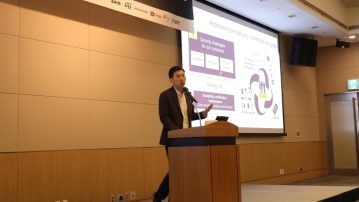
"In embedded development strategy, 'security' determines product competitiveness and market entry"
Lee Joon-ho, a manager at STMicroelectronics (ST), presented on the topic of "Accelerating Embedded Security Implementation Using STM32 Solutions" at the 'IAR Korea Embedded Conference 2026' held on the 2nd. He emphasized that as not only IoT but also industrial equipment become connected to the internet, security is no longer optional but a mandatory requirement. He explained that STM32Trust is a framework that collectively refers to hardware, software, and services provided by ST to meet various security certifications and regulatory requirements.
2026.07.03by 배종인 기자











