



Cloudflare Deploys 'Adaptive Intelligence' in Bot Management
 Published2026.09.02 10:25
실시간 트래픽 학습·탐지 규칙 자동 생성으로 자동화 공격 비용 구조 역전 겨냥
Adaptive Intelligence는 Cloudflare 글로벌 네트워크에서 처리되는 수조 건의 요청을 분석해 실시간 트래픽 신호를 학습하고, 새로운 위협에 대응하는 탐지 규칙을 즉시 생성한다.

주요 기능은 △상시 방어 체계 구축 △공격자 반복 침투 차단 △저강도·장기 지속형 공격 탐지 △정상 사용자 보호와 악성 활동 구분 △보안 업데이트 자동 배포 등으로 구성된다.
자사 행동 기반 봇 방어 솔루션 ‘Cloudflare Precursor’가 수집한 브라우저 세션 행동 신호와 글로벌 엣지 텔레메트리 데이터를 결합해, 크리덴셜 스터핑(credential stuffing)이나 스크래핑처럼 낮은 강도로 장시간 이어지는 공격도 식별한다고 Cloudflare는 밝혔다.
보안 업데이트는 실제 트래픽을 기반으로 백그라운드에서 자동 검증을 거친 뒤 서비스 중단 없이 배포된다.

Comments
Related news

Cloudflare Reduces Costs of Building AI Agents and Enhances Scalability
Global connectivity cloud company Cloudflare has released the industry's first remote Model Context Protocol (MCP) server, and is supporting developers in building AI agents easily and quickly through the general availability (GA) of its Workflows feature for AI agent development and free provision of Durable Objects.
2025.04.14by 배종인 기자
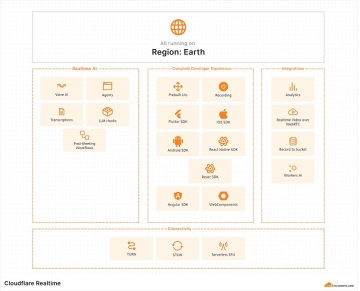
Cloudflare simplifies development and deployment of audio, video, and AI applications
Cloudflare recently launched 'Cloudflare Realtime' and 'RealtimeKit'.
2025.04.18by 명세환 기자
.jpg)
Cloudflare and Oracle Form Strategic Collaboration to Accelerate AI Workload and Application Performance
Global connectivity cloud company Cloudflare has announced a strategic integration with Oracle Cloud Infrastructure (OCI), dramatically enhancing the performance and security of customer applications and AI workloads in hybrid and multicloud environments.
2025.10.14by 명세환 기자

Delays in application modernization hinder AI performance and weaken security competitiveness.
Connectivity cloud company Cloudflare has released the "2026 App Innovation Report," which contains survey results conducted recently among organizational leaders worldwide. According to the report, organizations that have modernized their applications were three times more likely to achieve clear ROI through AI, while conversely, organizations dependent on legacy systems face complex challenges including increased technical debt, expanded security vulnerabilities, and developer talent shortages.
2026.01.16by 배종인 기자

Cloudflare Implements Quantum-Resistant Encryption Across All Cloudflare One Routes
Cloudflare has announced that it has applied post-quantum cryptography across its SASE platform 'Cloudflare One.' Following the deployment in Secure Web Gateway and Zero Trust domains in 2025, the company has now expanded it to IPsec-based WAN segments. This move is interpreted as a response to quantum threats across enterprise networks, particularly as the U.S. National Institute of Standards and Technology (NIST) recommends transitioning from existing public key cryptography around 2030. The measure is evaluated as a step to strengthen long-term data protection against potential "harvest now, decrypt later" attacks.
2026.02.25by 배종인 기자











