


[OSW 2026]"The Key to AI Era is Connection, Not Computation; PIC and CPO on the Rise"
 Published2026.09.18 10:12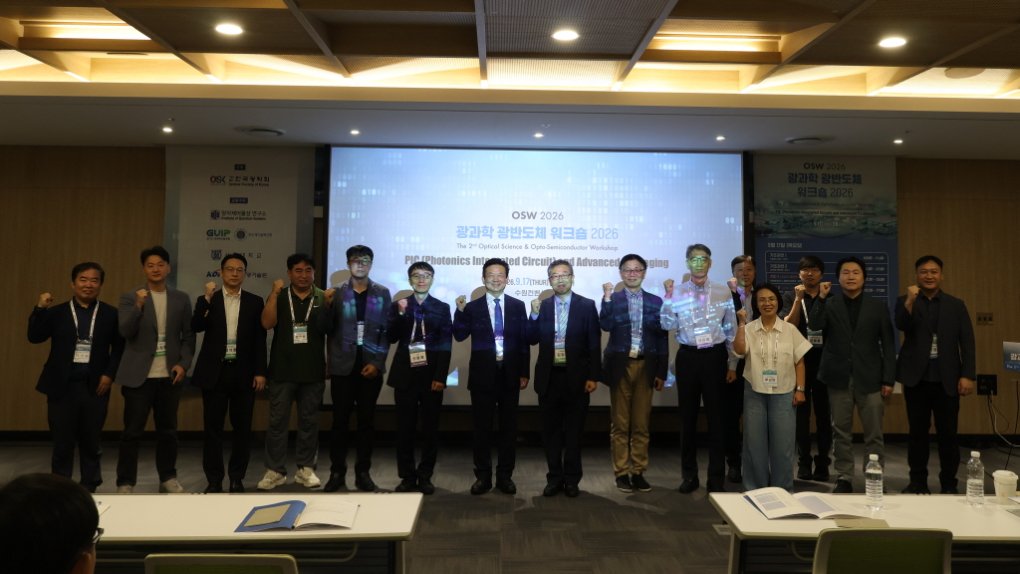
Data Movement Between GPUs Is a Greater Bottleneck Than Transistor Performance
Optical Modules Using Silicon Photonics Maximize Direct Data Transmission Between GPUs
"In the AI era, the cost of data movement is becoming more important than computational cost, and to address this, a new computing paradigm is beginning where photonic integrated circuits (PIC) and advanced packaging (CPO) are converging with electronic semiconductors."
The Korean Optical Society held the Optical Science and Semiconductor Workshop 2026 (OSW 2026) from the 17th to 18th at the Suwon Convention Center. This event, with a focus on photonic integrated circuits (PIC) and advanced packaging, brought together experts from industry, academia, and research institutions to discuss the direction of future computing technology.
As the artificial intelligence (AI) revolution reshapes the semiconductor industry landscape, industry attention is now shifting from simply faster computation to how efficiently data can be moved.
As 'photonics' emerges as a solution to this change, optoelectronic semiconductors and advanced packaging technologies are receiving attention as core technologies for next-generation AI infrastructure.
OSW 2026 was precisely the venue that demonstrated this technological paradigm shift.
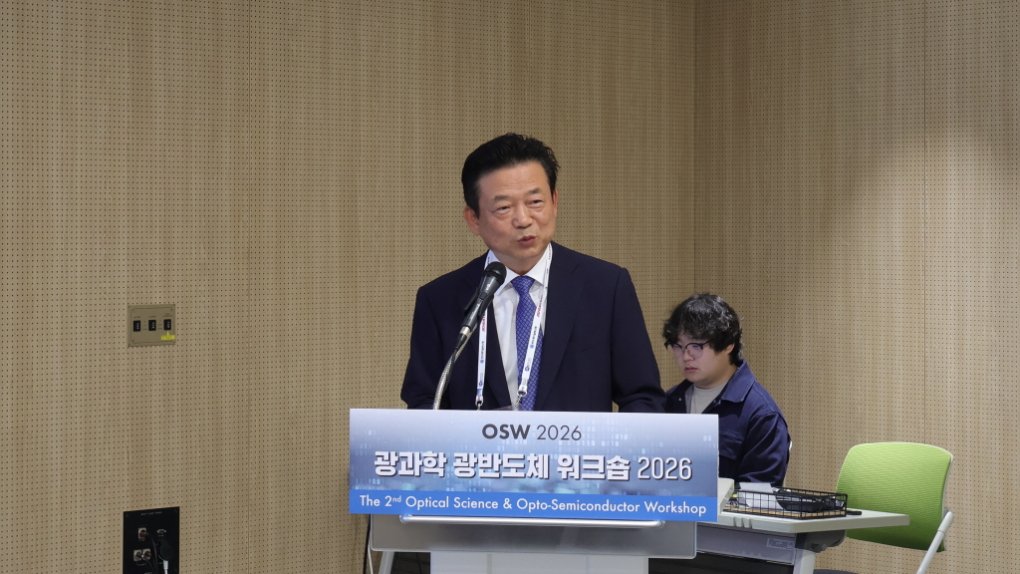
In the opening ceremony, Co-Chair Kim Jang-sun expressed gratitude for the participation of researchers and industry professionals from across the country in this workshop, held for the second time following last year, and emphasized that the optics and optoelectronic semiconductor field is becoming a national-level core technology.
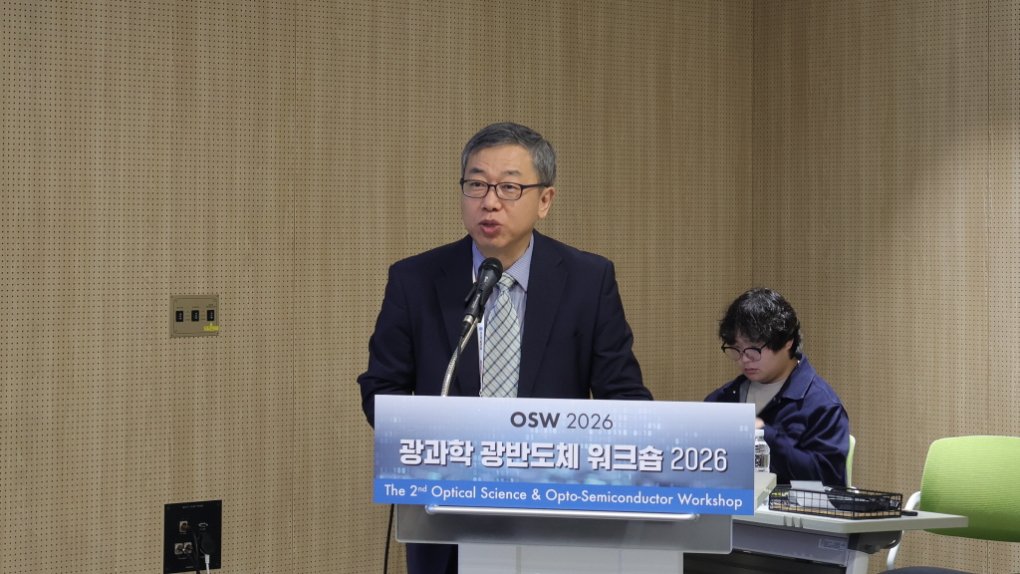
Subsequently, Kim Dong-hyun, President of the Korean Optical Society, diagnosed in his welcoming remarks that as AI data center technology advances rapidly, it is facing a situation where it is difficult to overcome limitations with conventional electrical and electronic technologies alone. He stated that silicon photonics, optical interconnects, and optoelectronic semiconductor technologies are becoming new growth opportunities, and expressed hope that this workshop will serve as a venue where industry, academia, and research institutions can share experiences and ideas to explore new innovation models.
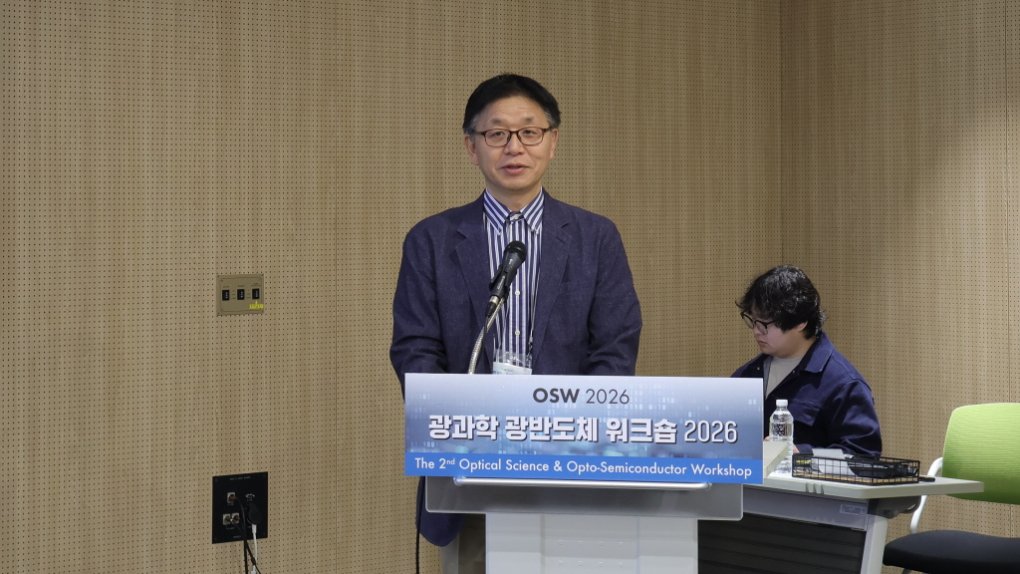
Seo Ki-woong, Director of the Korea Photonics Technology Institute (KOPTI), who delivered a congratulatory address, also emphasized that photonic convergence technology is essential for the success of the three mega-projects—semiconductors, Physical AI, and data centers—that the government is promoting. He noted that optical technology, which previously remained in the telecommunications field, has now become a 'game changer' that determines the performance of AI hardware and next-generation semiconductors, and assessed that photonic integrated circuits and advanced packaging technologies are the most promising solutions to overcome the physical limitations of future systems.
The core message of this workshop was clear: the computing performance demanded by the AI era can no longer be met by electronic circuits alone, and convergence of optical and electronic technologies is essential.
In an interview with this publication, Chairman Kim Jang-sun explained that semiconductors, Physical AI, and data centers are presented as national strategic projects, and the core element that will determine the success of these fields is precisely 'optics.'
He also emphasized that optical communication technology is already being used extensively in AI data centers and high-performance computing (HPC) environments, and the importance of optical-based technologies is growing in semiconductor manufacturing processes as well.
This line of thinking was presented more concretely in two keynote speeches.
Dr. Shin Dong-jae from imec delivered the first keynote speech on the topic 'Designing the Future PIC-EIC Co-Design.'
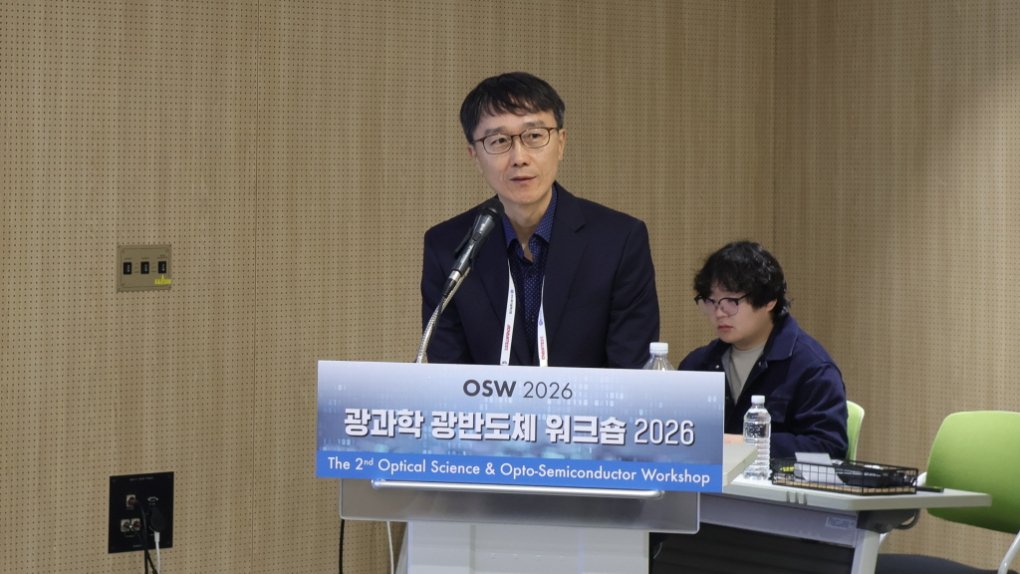
He diagnosed that in the age of AI and data centers, the approach of designing electronic integrated circuits (EIC) and photonic integrated circuits (PIC) separately has reached its limitations.
Based on accumulated experience in MEMS optical switching, optical DRAM I/O, LiDAR, and data communications, he emphasized that 'co-design' that simultaneously considers optical devices, electronic circuits, packaging, thermal design, and system architecture is essential going forward.
In particular, he forecasted that validated models, integrated electrical-optical-thermal simulation, design platforms, and ecosystem building will determine future industrial competitiveness.
Subsequently, Professor Choi Woo-young from Yonsei University presented 'Si Photonic Ultra-Dense WDM Receivers for Scale-Up Interconnects' and analyzed that the greatest bottleneck in AI data centers is not computation but interconnection.
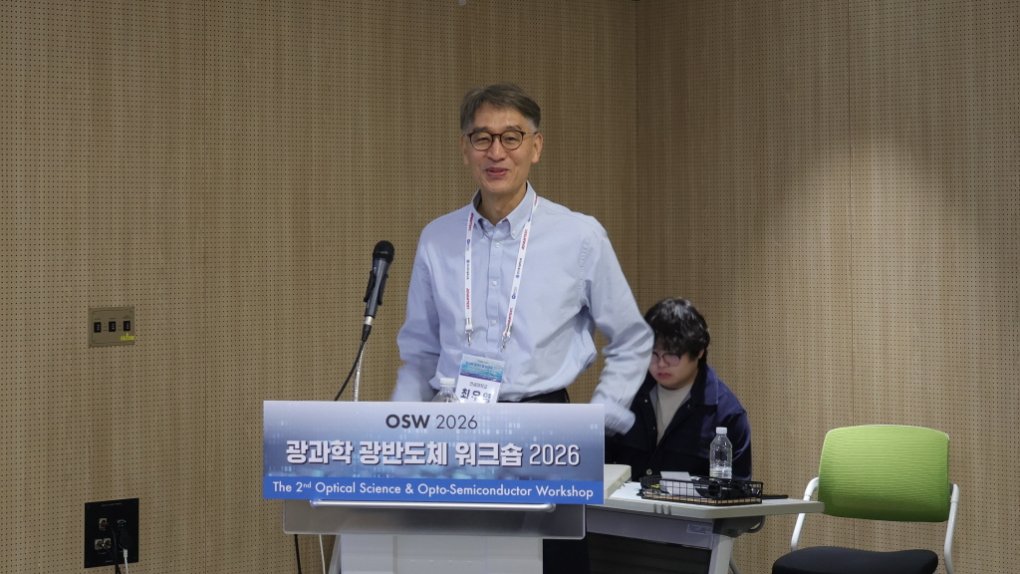
He explained that as NVIDIA adopted Co-Packaged Optics (CPO) based on silicon photonics in its GPU expansion network, optical technology has emerged as a core element of AI computing.
In fact, by using optical technology to transmit signals close to the processor, system size can be reduced and power consumption can be significantly decreased, and ultra-high-density wavelength division multiplexing (WDM) technology is expected to become key to expanding data transmission capacity in the future.
The detailed sessions conducted after the keynote speeches pointed in the same direction.
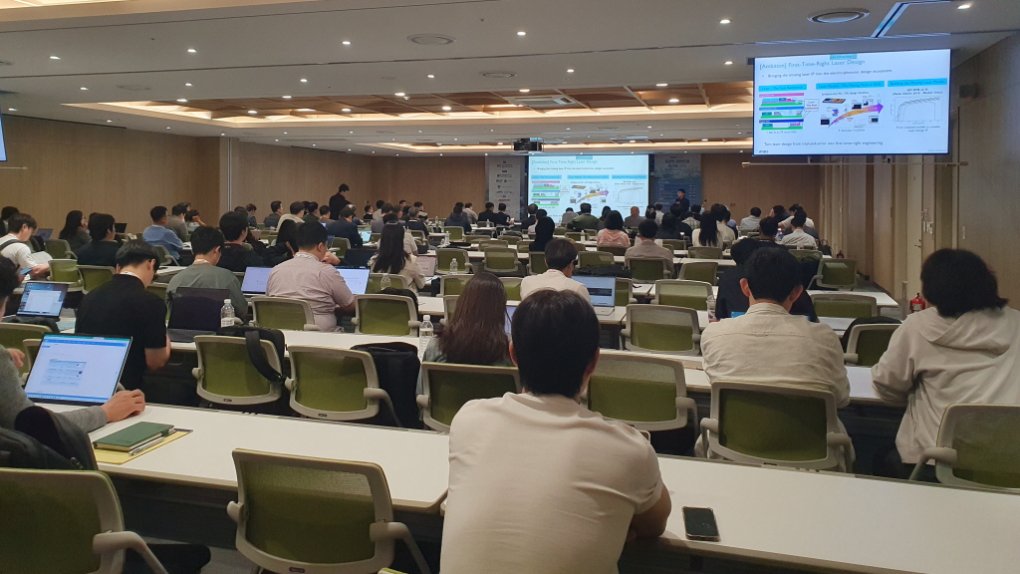
In the PIC session, heterogeneous material integration, ultra-compact light sources, silicon photonics, optical processors, LiDAR, and optical quantum computing were introduced, while in the Advanced Packaging session, CPO, FOWLP, RDL, 3D IC, glass substrates, and multi-chiplet design and verification technologies were intensively covered.
The conclusion drawn from this event is clear.
The future competition in AI is shifting from competition to build faster GPUs to competition over how efficiently GPUs, memory, and servers can be connected.
Furthermore, photonic integrated circuits and advanced packaging technologies are at the center of the solution.
Organizing Committee Chairman Kim Jang-sun stated, "OSW 2026 is a symbolic venue that demonstrates that optics is no longer an ancillary technology but is growing into core infrastructure supporting the AI era," and added, "Now that the boundary between electronics and optics is breaking down, the leadership in next-generation computing ultimately depends on who first puts these convergence technologies into practical use and connects them as an ecosystem."

Comments
Related news
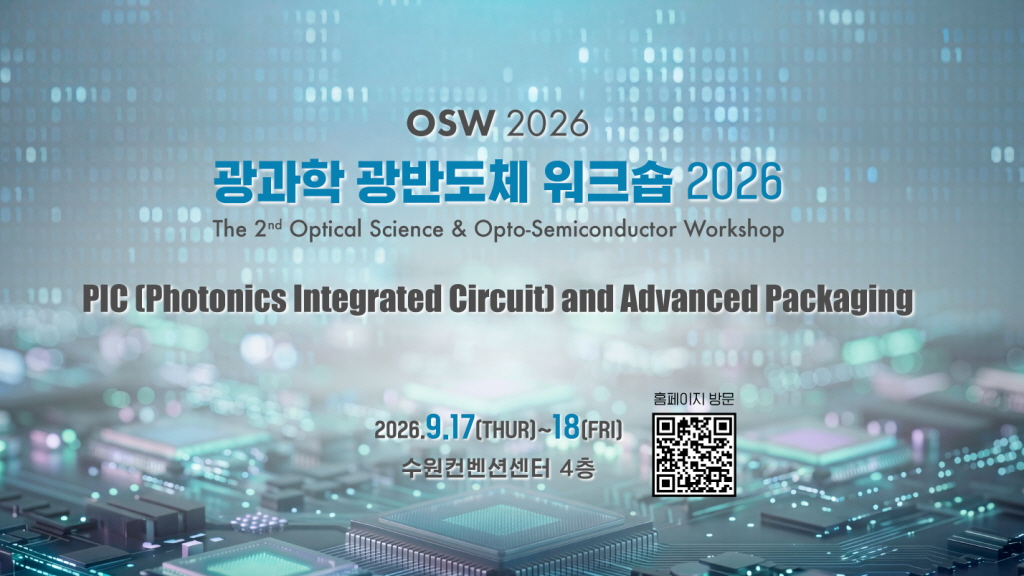
The Future Opened by the Convergence of Light and Semiconductors…'Optical Science and Optical Semiconductor Workshop 2026' Held in Suwon
The 'Optical Science and Optical Semiconductor Workshop 2026' addressing light and semiconductor convergence technologies will be held on September 17-18 at the Suwon Convention Center. This year's theme is Photonic Integrated Circuits (PIC) and advanced packaging, with keynote presentations by Dr. Shin Dong-jae from imec and Professor Choi Woo-young from Yonsei University. Next-generation optical semiconductor technologies including PIC-EIC co-design and ultra-dense WDM receivers will be discussed, with presentations in 8 fields covering PIC platforms, processes, high-speed devices, signal and power integrity, as well as packaging processes, equipment, materials, and verification. Paper submissions are accepted from July 28 to August 24, and advance registration runs until September 7.
2026.08.21by 배종인 기자
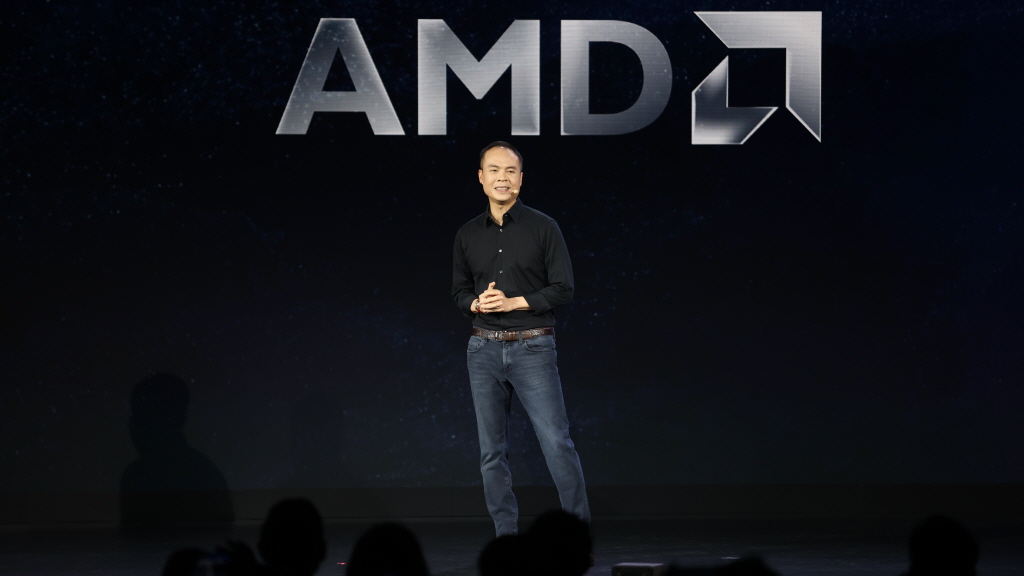
[IFA 2026 ③] AI Computing Shifts from Data Centers to Homes…AMD and NVIDIA Present the Blueprint for the 'Personal AI' Era
IFA 2026, held in Berlin, Germany, was no longer a traditional consumer electronics exhibition. As AI emerged as the central axis of the home appliance industry, the protagonists of this year's event were not home appliance manufacturers like Samsung Electronics, LG Electronics, and TCL, but semiconductor companies like AMD and NVIDIA. In particular, AMD's opening keynote and NVIDIA's public disclosure of its local AI ecosystem expansion strategy demonstrated that the competition for dominance in the AI era is extending beyond data centers into personal devices and smart home sectors.
2026.09.15by 배종인 기자
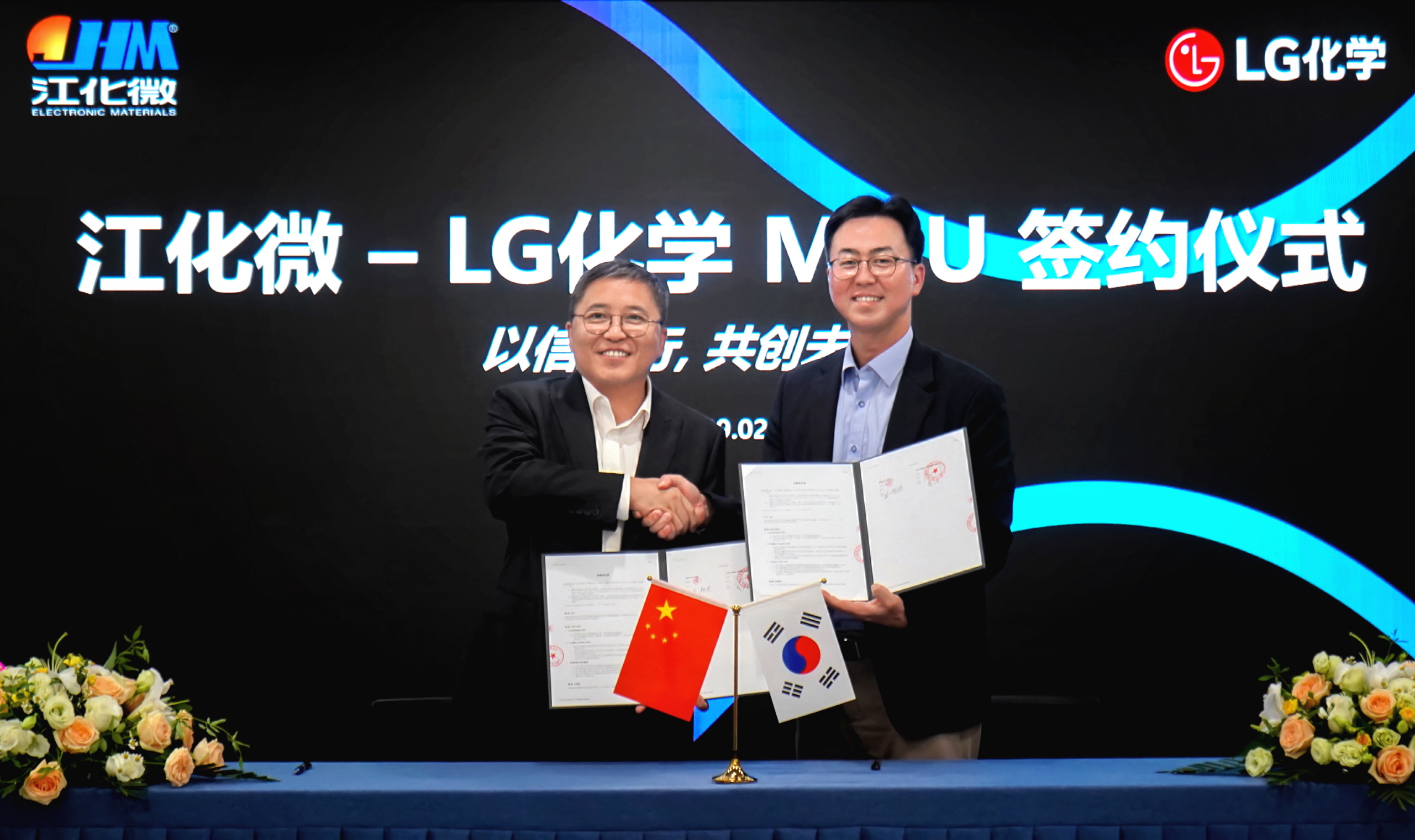
LG Chem Expands Semiconductor Cleaning Materials Business…Collaborates with China's Jianghua Wei on Ultra-high Purity IPA
LG Chem is moving to expand its ultra-high purity IPA (isopropyl alcohol) business, a core material for semiconductor processes. The company is building a local supply system in collaboration with a Chinese precision chemical company and strengthening its market strategy for AI semiconductors and advanced memory.
2026.09.14by 배종인 기자

[Semiconductor Test Solution Case Study] Electronics and Telecommunications Research Institute (ETRI), Building a High-Frequency Evaluation Platform Supporting Foundry-Grade Quality
The Electronics and Telecommunications Research Institute (ETRI) has established an on-wafer evaluation platform based on the Anritsu VectorStar™ ME7838G to resolve measurement reproducibility issues that arise during the development of GaN MMIC high-frequency devices. This platform supports single-sweep measurements up to 220 GHz and provides consistent test environments and high data reliability in the millimeter-wave and sub-terahertz bands. Through this, it enhances the correlation between simulation and measurement results and improves the accuracy of design verification, characterization evaluation, and model optimization to support the development of high-frequency semiconductors for 6G and next-generation satellite communications.
2026.09.11by 배종인 기자
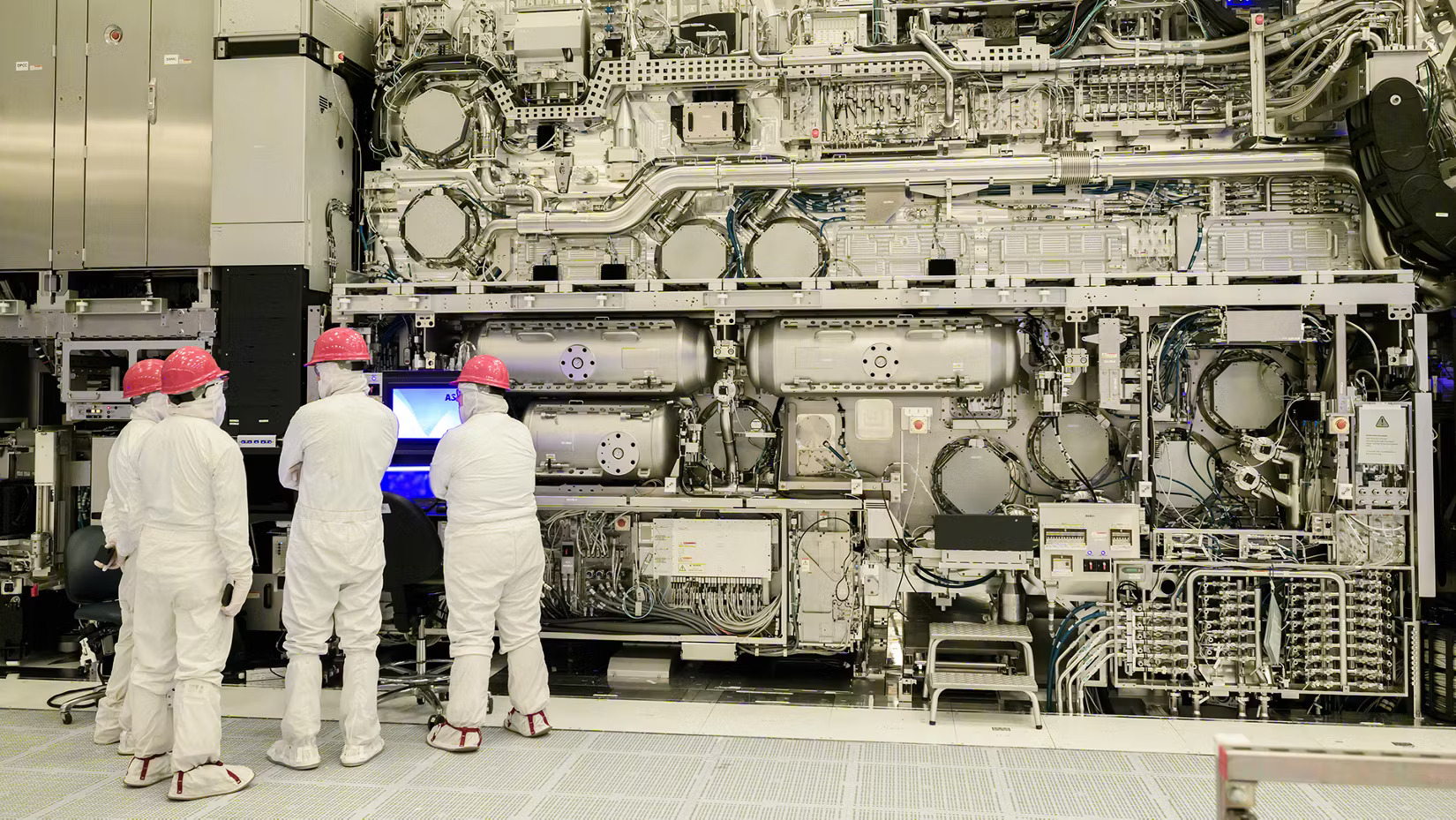
ASML, TSMC, and Samsung Play the '12-inch Photomask' Card…40-Year Semiconductor Standard Changes
ASML, TSMC, Samsung Electronics, and Intel have begun a joint industry standard transition in the era of High NA EUV, now pointing in the same direction. On the surface, this appears to be an announcement related to High NA EUV (extreme ultraviolet), the next-generation lithography equipment, but the essence of this move is not equipment adoption. It is an industry transformation project that changes the photomask specifications themselves, one of the core infrastructures of semiconductor production.
2026.09.09by 배종인 기자











