


Rockwell, "90% Digital Transformation Essential in Life Sciences Manufacturing"
 Published2026.10.07 16:31
This report is part of the "11th Annual State of Smart Manufacturing Report" conducted jointly with Sapio Research, and was prepared based on responses from 104 managers and executives from life sciences manufacturers, original equipment manufacturers (OEMs), systems integrators, and engineering procurement companies (EPCs) across 16 countries.
The key technologies identified as generating the greatest business outcomes were AI and machine learning (46%), process automation (44%), and cybersecurity (39%).
Investment priorities ranked as quality improvement (43%), operational digitalization (36%), and risk reduction (35%).
Key implementation strategies include evidence management, cyber resilience, industrial data operations, and AI governance.
However, only 32% of respondents reported that they are substantially utilizing more than half of collected data, revealing a gap between data utilization capability and investment commitment.
Target areas for AI and machine learning application within the next 12 months include quality management (50%), cybersecurity (45%), and process optimization (44%).
In the past year, 54% of life sciences companies experienced at least one cyberattack, with primary risk exposure areas identified as IT systems and corporate networks (41%), remote access and connected equipment (33%), and IT/OT convergence points (29%).

Comments
Related news
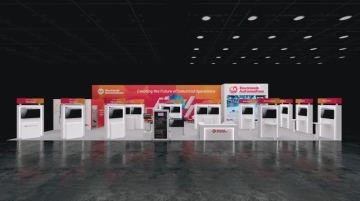
Rockwell to Participate in AW 2026, Unveils AI Application Strategy for the Entire Manufacturing Lifecycle
Rockwell Automation will participate in 'Automation World 2026' held at COEX from March 4th to 6th, showcasing an autonomous production system with AI applied across the entire pre-manufacturing lifecycle. The booth is organized into five zones centered on AI-Powered Design, Operations, and Maintenance, extending to Innovation and Industry zones. It presents digital twin solutions at the design phase, integrated data platform and MES at the operations phase, and predictive analytics solutions at the maintenance phase. During the exhibition period, guided tours, on-site seminars, and digital engineering seminars targeting OEMs will also be conducted.
2026.02.24by 배종인 기자
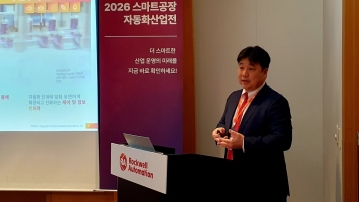
Rockwell: "The future of manufacturing is autonomous factories that combine human expertise and AI intelligence."
Global industrial automation company Rockwell Automation announced that it is actively advancing the realization of autonomous operations, noting that the manufacturing industry is rapidly transitioning from traditional automation-centric operations to AI and data-driven autonomous operations.
2026.03.04by 배종인 기자

Rockwell: “South Korea’s Manufacturing AI Investment Speed is Slow”
According to the "11th State of Smart Manufacturing Report" announced by Rockwell Automation, domestic manufacturing enterprises showed a high consensus on the necessity of digital transformation and AI, but actual investment and adoption levels were found to be lower than the global average. Ninety-five percent of Korean respondents answered that digital transformation is necessary, and 53% cited AI and machine learning as core smart manufacturing technologies. However, the actual investment rate in AI and machine learning stood at only 28%.
2026.05.20by 배종인 기자

Rockwell Unveils 3 New SecureOT Products
Rockwell Automation has added three new solutions to its industrial cybersecurity solution portfolio SecureOT: OT Cybersecurity Assessment Suite, SecureOT Platform managed service, and Managed Secure Remote Access (MSRA) service. This product family combines asset visibility in manufacturing facilities, vulnerability management, secure remote access, and professional managed services to enhance OT security responsiveness. As the importance of OT security grows with increased digitalization of production equipment and expanded remote operations, Rockwell is advancing cyber resilience strengthening in industrial environments through SecureOT.
2026.06.11by 명세환 기자
.jpg)
Rockwell: “Auto Industry Enters Phase to Determine Speed and Scope of Smart Manufacturing Adoption”
Rockwell Automation released a report on June 17th in collaboration with the Center for Automotive Research (CAR) analyzing the status of smart manufacturing adoption in automotive, tire, and battery manufacturing facilities. Through the application of AI, machine learning, and automation technologies, downtime in certain processes was reduced by up to 50%, overall equipment effectiveness (OEE) improved by approximately 5%, and production volume increased by 5-7%. The report noted that as automation expands beyond body shop, painting, and welding processes to electronic assembly and logistics, gaps in adoption between companies are translating into differences in quality, uptime, and long-term competitiveness.
2026.06.17by 배종인 기자











