This page was machine-translated and may differ from the original. View original

Sensors in the IoT Era: If You Don't Prepare, You'll Have to Buy Them All

Google 우선 소스Published2015.08.03 20:25
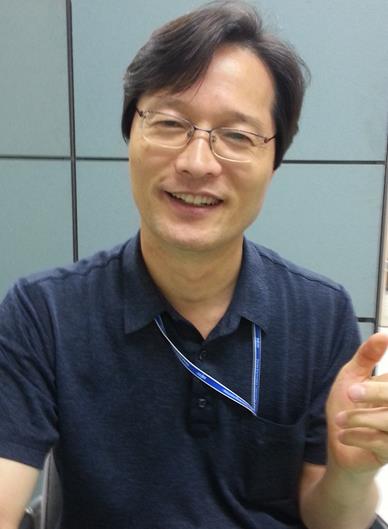
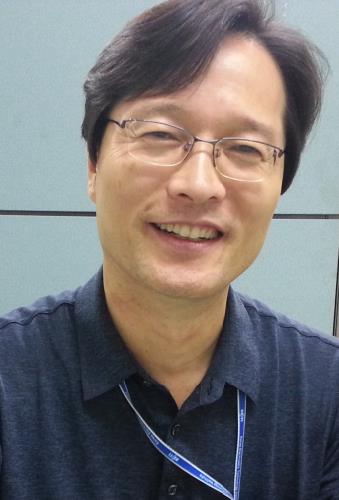
Park Hyo-deok, Head of the Smart Sensor Business Group at the Korea Electronics Technology Institute (KETI), was more concerned about his juniors in the sensor industry than he was disappointed. Park, who oversaw the planning and preliminary feasibility study for the 'Advanced Sensor Development Project for the Advancement of the Sensor Industry,' expressed deep regret over the failure to establish the business group that would have served as the focal point of the project, but he repeatedly emphasized that the project must produce 'results' for the sake of the sensor industry.
In fact, while transcribing the interview, I realized that he used the word "results" very frequently. Although his repeated use of the word "results" initially seemed like impatience, I thought it might actually be his unique expression, deeply imbued with a sense of responsibility as one of the key figures driving the project.
The efforts of over 200 industry experts, led by Director Park, resulted in an outstanding report card of passing the preliminary feasibility study in January 2014, but on the other hand, it left a 'difficult task' to solve during the project period.
Therefore, he emphasized that the importance of sensors will grow even greater as the wave of the IoT (Internet of Things) intensifies. Sensors are being applied in such a wide variety of fields—including automobiles, aerospace, robotics, mobile devices, and healthcare—that there is virtually no sector they are not used in. However, he noted that despite significant investment in interconnected development, the level of the industrial ecosystem is not particularly high.
Although it ranks 7th (1.6%) in global production volume, it is difficult to find specific statistical data on this. Director Park remarked that perhaps due to the influence of IoT trends, they seem to have secured a better budget for next year than expected, adding that this also places a greater burden on the project's success. I headed to the Electronics Components Research Institute to meet him, having served as the Director of the Advanced Sensor Planning Group following the passing of the preliminary feasibility study. The morning commute scene felt as lively as the footsteps of the researchers.
<Reporting by: Reporter Shin Yun-o>
It is important to have experience in mass-producing advanced sensors.
First, please briefly introduce how the Advanced Sensor Development Project for the advancement of the sensor industry came into being.
An application for a preliminary feasibility study was submitted in December 2012 and passed in January 2014. The budget was approved by the National Assembly, finalizing a total budget of 150.8 billion won (114.7 billion won from the government and 36 billion won from the private sector).
We secured 7.093 billion won in this year's budget. We secured 15.179 billion won in next year's budget, more than double that of this year. We aim to foster 20 mid-sized companies with sales of 50 billion to 100 billion won or more by 2020 to strengthen the competitiveness of the sensor industry and create employment opportunities.
The purpose of the advanced sensor development project is obviously to strengthen the competitiveness of the sensor industry, but what specific aspects do you mean by further developing?
Sensors are a form of convergence technology when viewed holistically, ranging from materials to mechanical systems. However, looking at failed cases, applying only one sensor—like a one-to-one approach—resulted in a smaller market size.
A strategy is needed to scale up from the perspective of the components. For example, a car contains 13 pressure sensor components alone. Sensors, communication, and energy functions that monitor the TPMS (Tire Pressure Monitoring System) are combined to create another sensor in the form of a module.
Furthermore, the 13 types of sensors currently used in automobiles—such as boosters, air conditioning pressure, engine oil pressure, and seat pressure—are manufactured into another type of modular pressure sensor. This is also referred to as a component-type sensor. The key lies in the pressure sensor component. Therefore, our strategy is not a '1:1' project, but rather to achieve commercial application through these components. Since pressure sensors are widely used not only in automobiles but also in bio, industrial, and automation fields, assembling and packaging them increases the quantity of components, which in turn leads to a model for industrialization.
Linkage between 8 core components and 7 major industrial sectors
- There must be a variety of technology development projects; what criteria did you use to define the scope?
Just as 13 new types of sensors are constantly being created in automobiles, new sensors can be made by attaching solutions. This is the core. This has been planned as an application-based commercial modular sensor product. The eight core components are magnetic, inertial, pressure, imaging, optical, chemical, radar, and infrared sensors. These components are commonly linked to seven major industrial sectors, including automotive, mobile, environment, bio, robotics, USN, and security.
- How do you plan to train the workforce?
To foster small and medium-sized enterprises (SMEs), workforce development is paramount. This training is tailored to master's degree programs. We provide support by offering scholarships to secure employment contracts with SMEs, or by allowing individuals to enroll in universities offering master's degree programs if they so desire. The plan is to recruit next March, complete a two-year master's program, and then supply the workforce to SMEs after three to four years. We anticipate training approximately 60 people per year.
Providing practical support to companies through the commercialization support program
There have been cases where projects based on existing R&D initiatives failed to even be commercialized.
Therefore, even during the preliminary feasibility study, it was emphasized that proceeding with the existing methods would lead to failure. It was stated that an independent corporation should be established to handle that task exclusively. It was argued that there must be an organization to oversee and take responsibility for the entire process. However, the launch of the project team fell through, and the project proceeded in the same manner as before.
When the project team was launched, the plan was to connect both suppliers and demanders through a forum and to gather IP experts as well. Even when manufacturing a single pressure sensor, IP must be involved to register a patent. This way, demand can be secured through the forum, and everything from design to mass production becomes possible.
This is necessary because no single company can handle all of this. To manufacture sensor components, the approach involves forming a consortium from the start that excels in just two or three specific fields, thereby linking demand together. We believed that operating a forum could create an environment for formal competition. This initiative was planned by approximately 200 people from academic societies, MEMS, and government-funded nano research institutes while preparing for the preliminary feasibility study.
Even without a project team, a central hub is needed to provide practical services to companies.
That is correct. Even without a central project team to act as a focal point, practical support is needed to meet the specific requirements of companies. Therefore, we plan to conduct a separate advanced sensor commercialization support program in the form of R&D projects. While it will not serve as the same central force or role as a project team, it will involve developing sensor technology roadmaps and operating forums.
We plan to provide a one-stop service by linking domestic sensor-related research institutions such as ETRI, the National Institute of Nanotechnology, and the Korea Institute of Photonics Technology. This approach, similar to Europe's Euro Practice model, utilizes existing networks to handle everything from the technology required by companies to mass production. We have arranged for domestic institutions with excellent facilities and sensor companies to participate in a consortium.
For example, if a sensor manufacturer requires MEMS technology or new process technology, we assist them to help them achieve immediate results. Unless it is very expensive, we can provide help by utilizing the infrastructure of various institutions. Sensor companies with annual sales of less than 5 billion won account for 60% of the market. Given this reality, we came up with the idea of a one-stop service method while contemplating ways to increase revenue.
The core of the project is the creation of an ecosystem for the advanced sensor industry.
The commercialization support program shows signs of careful consideration aimed at revitalizing the sensor industry.
We deliberated on measures to create an industrial ecosystem. The purpose of the preliminary feasibility study was also to establish an ecosystem for the advanced sensor industry. We went through great trouble to create this sensor development project, but if there are no results, it will be difficult to create another support project in the future.
Since we undergo annual business evaluations, we must have a way to increase revenue in the short term. If the business succeeds, we will become the fourth largest in terms of revenue, following the U.S., Japan, and Germany. We must compete with the UK, France, and China.
- What is the scope of advanced sensors? There appears to be an effort to encompass a comprehensive range.
"Smart" refers to something intelligent. The sensor industry is vast. Let's look at chemical sensors. In the past, they could not detect anything, but with the incorporation of nano-MEMS capabilities, the range of detectable substances has increased, and performance has improved significantly compared to existing sensors. This can also be considered a cutting-edge sensor. However, it is not referred to as a smart sensor.
By dramatically enhancing performance through new material properties and processing technologies, it enables what was previously impossible. Performance can be improved by incorporating bio and nanotechnology, and through signal processing. To redefine the concept of advanced sensors, we defined it as encompassing all "smart" sensors and those that deliver innovative performance capabilities distinct from conventional methods. This approach allows material-based sensors and gas sensors, which lack inherent intelligence, to be included within the category of advanced sensors.
The competitiveness of the systems industry, semiconductors, and IT is the foundation of the domestic sensor industry.
There are many foreign semiconductor companies that excel at sensor components. Can we really do it well just by trying?
That is why the goal is to move toward commercial application. Our approach so far has been to purchase components externally and stick to a module-based model. As new markets like IoT open up in the future, opportunities to expand the sensor market will increase. This implies that we must purchase all the core components.
However, even in foreign countries, strategic core components are rarely sold. If we do that, both the automotive and smartphone industries will die. If we buy and use all components, our industries will eventually become dependent. Sensors may seem insignificant, but the system determines competitiveness. A single sensor can determine whether consumer needs are satisfied.
Then, what do you consider to be the foundation that enables us to excel at sensors?
The United States, Japan, and Germany dominate 70% of the sensor technology market. The United Kingdom follows with 5.8%, while Korea holds 1.6% of the global market. I believe that if we excel in sensors, we do not need to worry too much about the rest of the industry. Our competitive edge lies in our strong infrastructure in the systems industry, semiconductors, and IT, as well as our significant investment in nanotechnology. We can gain a competitive edge by effectively combining the things we are good at.
In the IoT era, which field do you think will be the first to gain prominence, particularly regarding sensors?
With the advent of smartphones (iPhones), the number of sensors increased dramatically. As image sensors, microphones, acoustic, magnetic, touch, and inertial sensors were applied to smartphones, the sensor market shifted from small-batch, high-variety products to large-batch, high-variety products. Just as with smartphones, it is impossible to predict which sector will explode first in the IoT era.
Just as countless sensors exist within the buildings we currently live in, the number of sensors will increase further as the smart home market expands. The sooner the IoT era arrives, the greater the need for sensors will become. Ultimately, this means that if we do not prepare, we will have to buy them all. Global sensor experts have predicted the "Trillion Sensor Era," forecasting that trillions of sensors will be placed around us within the next 10 years.
- If there is a key point to note regarding the expansion of sensors.
As recently as the 80s and 90s, sensors were distinctly separated into categories such as carbon monoxide and oxygen sensors. However, as new sensors continue to emerge in response to system demands, the sensor paradigm has now shifted. Instead of relying on a single sensor, as seen in recent autonomous driving and parking sensors, new functions are constantly being created by applying algorithms.
By mastering the fundamentals, it is possible to combine several functions and create new sensors using novel algorithms. Sensors are becoming more complex, miniaturized, and low-power by integrating with other modules or adding communication capabilities. Therefore, sensors remain highly valuable for future research. Research topics can also continue to emerge by matching with future technologies.
This is the last question. Then, what do you think we need to overcome first for the sensor industry?
Sensor technology itself is not an easy task. The environment is unfavorable, and the gap with advanced nations is significant. Industrializing convergence technology is extremely difficult. First of all, we lack experience in mass-producing advanced sensors. Therefore, it is crucial to gain mass production experience, even if the initial level is low.
It seems that our capabilities are limited because we focus on small-batch, high-variety production. We need to combine these capabilities to create synergy, but it is difficult to overcome this because they are fragmented. Instead of trying to monopolize everything, we must find a way to combine our capabilities. We also need to overcome price competition with imported products.
It may be difficult right now, but if we continue to try, wouldn't it naturally affect the prices of imported goods? Even when taking the same path, there are various ways, but to proceed efficiently in the shortest amount of time, a strategy of doing one's utmost is needed more than ever. The judgment regarding how to proceed is crucial. A process of discussion requiring judgment from a comprehensive perspective is necessary. Only then can we reduce the trial and error seen in the past failures of the sensor industry.
본 기사에 대한 정정·반론·추후보도 청구는 보도 청구 안내를, 그간 게재된 보도문은 정정·반론보도 모아보기를 참고해 주세요.
명세환 기자
명세환 기자