


The sensor industry must also foster start-up companies through sensor development projects.
 Published2015.09.07 17:42
Interview/Jeon Gook-jin, President of the Korean Sensor Society
Creating a small-quantity, multi-variety market with diversely differentiated technologies
The Internet of Things (IoT), wearables… Tracing the latest IT trends, we eventually encounter sensors at the forefront of devices. In this era of connectivity, the value of sensors, which detect objects in contact and read data, is steadily increasing.
Following this trend, the government has once again stepped forward to revitalize the sensor industry. This initiative, the "Advanced Sensor Development Project for the Advancement of the Sensor Industry," launched after two years of preparation, is precisely this. The sensor development project, which will be fully implemented in the second half of the year, is expected to invest a total of 150.8 billion won by 2020.
The business's ultimate goal is simple: to foster the domestic sensor industry and create several start-up companies with annual sales exceeding 100 billion won. Academia, along with businesses and the government, is actively working to foster this industry. We met with Professor Jeon Guk-jin, president of the Korean Sensor Society, a leading academic organization responsible for R&D in the sensor industry.
We asked him, a leading researcher and authority in the field of MEMS (microelectromechanical systems) in Korea, what he thinks sensors are for the IoT era and what breakthroughs we should be seeking. The interview took place in his Seoul National University lab about a week before the start of the semester. Reporter Shin Yun-oh
-First, please briefly introduce the Korean Sensor Society. 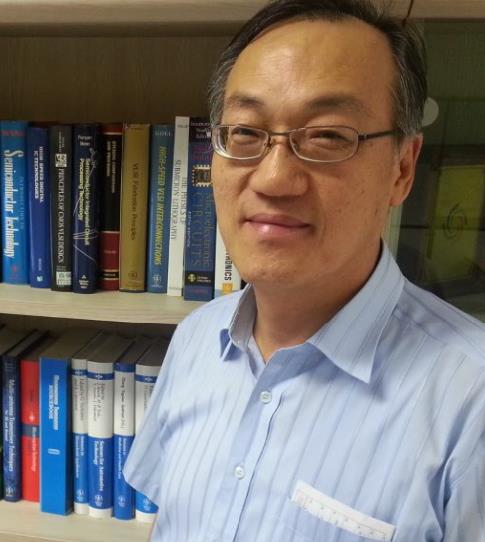
This year marks the 25th anniversary of the society's founding. It has approximately 1,300 members. Notably, it has hosted international academic conferences since 2013. This year, the conference will be held in Busan in November, hosted by the IEEE Sensors Council. Incidentally, there are 45 societies in the IEEE, and Sensors is one of them.
Before discussing sensors, I think we need to define some terminology. I feel like the terms sensors and MEMS (microelectromechanical systems) are often used interchangeably.
In fact, until the 1970s, the term "MEMS" didn't exist. They were called sensors, microsensors, or semiconductor sensors. The term "MEMS" emerged in the 1980s. Since then, the terms "MEMS" and "sensor" have been used interchangeably.
Sensors are passive because they literally sense, but when actuators are attached, they acquire control functions. MEMS can be seen as encompassing all of these.
In other words, MEMS refers to a technology, not a product. To be more precise, it refers to MEMS-based sensors.
-Sensors are receiving more attention in the IoT era, but the reality of the domestic sensor industry is not the same.
To understand the domestic sensor industry, it's necessary to first discuss the history of sensors. In the 1970s, extensive research was conducted on the idea that manufacturing mechanical components using semiconductors would result in lower prices and greater precision. Then, in the 80s, the term MEMS appeared and it became very diverse.
MEMS, which began as mechanical components made from semiconductors, found widespread industrial use in the 1970s and then transitioned to automotive applications in the 1980s. It's only been a few years since pressure sensors and accelerometers became widely used in automobiles. Just a decade ago, they were limited to luxury vehicles, but now they're indispensable.
- As you said, it is true that sensors have had their own development opportunities, but they have not.
The law plays a crucial role in the rapid development of any industry. I believe the reason sensors haven't experienced the explosive growth of semiconductors is standardization. Semiconductors are highly standardized, so most design processes are based on design and manufacturing processes. Unlike the DRAM market, which is a commodity, sensors cannot be considered a commodity.
This crucial part, the first input to the system, is lacking standardization. For example, even for the same TPMS system used in automobiles, different automakers, manufacturers, and manufacturing methods all differ. However, the memory is the same, the basic cells are the same, and the circuitry is identical. This lack of standardization seems to have hindered sensor development.
" This time, a new sensor breeding project has started,
I hope that the sensor industry will thrive with this business as its center."
-You're saying that standardization has held back sensor development. Could you elaborate?
For example, there are many types of pressure sensors. Not only are their applications different, but the methods of making them also differ, like optical and physical methods. However, memory has only one method. While many people can focus on making better memory, sensors are different. Even within the same product, sensors are constantly being created, like new branches constantly sprouting.
In other words, while the overall market is large, each type is distinct, making each market appear small. Consequently, the companies that make up the company are incredibly diverse. If there were only one or two sensor types, only one or two companies would remain. Furthermore, in the case of memory, roles vary, including design, process, and packaging. Previously, sensors required a single person to handle everything from start to finish. I believe this slowed down development.
-It seems like the nature of the sensor itself has a great influence on its development.
In the case of memory, if a new cell structure is created and the circuit improved, it's impossible to ignore it. However, sensors operate under more than one or two operating rules. Therefore, it's easy to create variants of sensors developed by others. The materials are diverse and offer a wide variety of options.
-Even though there was a catalyst for sensor development in the smartphone market, didn't we miss the opportunity?
The government should have continued to support underdeveloped sensor companies, but it's unfortunate it failed to do so. It's not that the government didn't spend money, but it seems to have missed the opportunity for development by providing sporadic support. During the IMF crisis, sensor-related companies closed, and those who left then founded their own companies, which have continued to operate to this day. The fact that they've endured this far is a remarkable feat in itself. So, there are high expectations for the government's new sensor development project.
 -So, what do you think is the level of domestic sensor technology?
When it comes to technological advancement, there are industrial (production) technology and R&D technology. While production has been important recently, R&D remains more crucial. Companies with strong R&D capabilities often dominate over 80% of a single product, focusing on it. Looking at international academic conferences, Korea ranked third in the number of papers published until the early 2000s, but recently, it's ranked sixth.
Germany and Switzerland have overtaken us, and now we're even being pushed back, having to compete with Taiwan. A new sensor project (Advanced Sensor Development Project for Sensor Industry Advancement) has just launched, and I hope this project will serve as a catalyst for the growth of the sensor industry. There's a lot of interest in the recent IoT trend, and I think there's something we can do.
-The society also held a symposium on the topic of IoT and sensors in the first half of the year. Is that the direction you've set?
It's difficult for academic societies to be biased towards one side. We hold symposiums on IoT (to reflect trends), but we don't intend to focus solely on that.
"We will also create a database of sensor specialists through government projects."
- The society also seems to place importance on cooperation with companies.
There are approximately 100 companies in Korea with even a passing interest in sensors, and only about 10 of them actively participate in academic conferences. While visiting these companies, I realized that what these companies need is a database of expert talent. Academic conferences can serve as a "fortune-telling center." This sensor support project also includes such a project: creating a database of domestic sensor-related professionals.
- What specifically does the 'Bokdeukbang' role that the academic society can play mean?
At the end of March, we invited representatives from sensor-related companies to an academic conference. About 25 executives from these companies attended. This event provided an opportunity for people from large and small businesses to learn about each other's work and what each other does. The atmosphere was lively, with everyone eager to learn more, and everyone really enjoyed it. It was a rare opportunity for people working in the sensor industry to gather together.
One of the things that the academic society can do is to create such a platform. Recently, the Sensor Convergence Forum, led by Seoul Technopark, has been doing a good job of creating cross-industry meetings centered on application industries. However, our society is more about creating a meeting place where technology-oriented people, such as smartphone and automobile design engineers and demand companies, can come together and discuss.
Sensors in the IoT era will ultimately start at home.
-How was the response from companies?
The sensor industry is home to many small companies, so they don't have much time to engage with academic societies. Therefore, a centralized academic society is essential for companies to leverage it when needed. I'd also like to encourage the sensor industry to utilize academic societies. This happened when I was at the Institute of Electrical Engineers. When Hynix was struggling, the institute ran a newspaper ad supporting Hynix. Even if they didn't believe what they said themselves, the institute's support made a difference. I believe the sensor industry also needs these kinds of things.
-In the IoT era, what fields do you think are good sensors and markets that we can create?
Everyone talks about the need for a killer application. Currently, IoT products are often sold in multiple, standalone packages. Those with communication capabilities are called IoT products. As functionality increases, multiple types of sensors are needed in a single module. These sensors are packaged together. In the future, more and more products will be manufactured with multiple sensors or packaged together.
Only then can we truly call it an IoT product. Ultimately, I think it will start with a focus on the home. Although it is currently a single product, there are already many products on the market, and now that they are becoming more complex, the key is to collect functions and make them small and convenient.
In fact, it's more accurate to say there's no market than there's no technology. With so many sensor technologies already developed, the key now is how to integrate them. While creating sensor chips and developing complex functions is crucial, so too is developing a software-centric platform. I understand that large corporations have begun to strengthen their workforces to address these challenges.
We need to nurture a startup with sales of 100 billion won through sensor development projects.
-You are making a significant contribution to the development of domestic industry through academic activities, but I think there are also many difficulties.
Rather than focusing on the academic world, working with industry makes me realize how much they've struggled. I'm grateful for how these companies have managed to survive (even in difficult circumstances). Thanks to their perseverance, the sensor industry is still alive.
The government is making significant efforts, but I hope this sensor development project will provide continued support. Another problem is that even if companies develop products, there's no place to manufacture them. Because small companies can't make significant investments, product quality remains low.
I understand you've been appointed head of the "Advanced Sensor Development Project for the Advancement of the Sensor Industry." Given your important role, what are your goals?
Somehow, I ended up becoming the project manager. I'll be working with several people, including Park Hyo-deok, the director of the Electronic Components Research Institute, who developed the project plan. We need to develop detailed plans for human resources and technology within this year. This project should produce two sensor startups. The goal is to create companies with sales exceeding 100 billion won.
Going forward, we will achieve our goal within six years (the business period) by integrating with IoT. While there are no issues with developing the technology, the key is whether it's feasible for production. We need to develop products that are viable in overseas markets, not just those needed domestically. Our goal is to foster a company that can overcome the limitations of the domestic market. I hope this opportunity will provide us with a leap forward.
Comments
Related news
Sensors in the IoT Era: If You Don't Prepare, You'll Have to Buy Them All
Park Hyo-deok, head of the Smart Sensor Business Division at the Electronics and Telecommunications Research Institute (KETI), expressed more concern for his junior colleagues in the sensor industry than disappointment. Park, who oversaw the preliminary feasibility study and planning for the "Advanced Sensor Development Project for Sensor Industry Advancement," repeatedly emphasized the need to deliver tangible "results" from the project for the sake of the sensor industry, despite considerable regret over the failure to establish the business division that was to serve as the cornerstone of the initiative.
2015.08.03by 명세환 기자
Sensor annual growth rate approaches 10%, reality is that most chips are imported
Advanced sensors that support consumer safety and convenience functions at the edge device level are collectively referred to as devices that recognize the external environment and convert it into electrical signals that are easy for higher-level systems to process. Generally, they encompass sensors with dramatically improved external environment sensing through the integration of manufacturing technologies such as semiconductors and nano/MEMS, as well as intelligent sensors that organically incorporate signal processing functions including data processing, automatic calibration, self-diagnosis, and decision-making. Sensors are trending toward miniaturization, integration, and intelligence in accordance with the convenience of daily life and the intelligentization of IT, and are receiving attention as key enabling technologies for realizing smart societies as convergence points between industries and as intermediaries between humans and devices. The intelligentization of sensors is prominent in applications such as compasses and maps, GPS sensor maps, and virtual/augmented reality, while integration is manifested in single sensor modules, multi-sensor modules, and one-chip multi-sensor solutions. Examples of sensor miniaturization include gas sensing utilizing birds, gas sensors using thick-film processes, and MEMS-based gas sensors.
2015.08.10by 신윤오 기자

Solve your sensor application challenges at the Sensor Convergence Forum
Currently, Seoul TP has only 4 resident companies, and there are dozens of companies that rent and use equipment. After observing many sensor companies utilizing the fab, we considered ways to help them. The IoT (Internet of Things) boom that began in earnest last year provided a starting point for resolving these concerns. This is because sensors, along with communication chips, must form the foundation of a network that enables all objects to exchange data in real time.
2015.08.24by 명세환 기자
"The core of sensor platforms is low power, so multicore is the answer"
Summary content
2015.09.09by 신윤오 기자
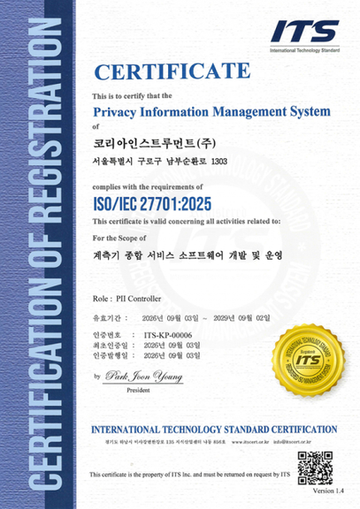
Korea Instrument, KOLAS Accredited Calibration Agency First to Simultaneously Acquire ISO/IEC 27,001·27,701
Korea Instrument has become the first among KOLAS accredited calibration agencies to simultaneously acquire ISO/IEC 27,001 and ISO/IEC 27,701 certifications. Through its proprietary platforms CWIZ Enterprise and CWIZ Partners, the company has embedded information security and personal data protection requirements across all business processes including customer information, equipment data, and calibration reports, with plans to continuously advance its management system through regular audits and security inspections.
2026.10.12by 배종인 기자











