


Their Smart Way of Coping with the IoT Era
 Published2015.09.15 11:06
What will our lives be like in the very near future, in 2017?
In two years, people aged 60 and over will account for 13% of the total population, and 55% of them will live in cities. Furthermore, compared to 2014, they will require 6% more energy, and 22 billion devices will be connected.
This will likely open up new business opportunities. With each smartphone equipped with 20 sensors, demand for a total of 4 million sensors is expected, 65 million new smart meters will be installed, 24 billion microcontrollers will be sold, and 56 million Ultra HD TVs will be sold.
These lifestyle changes are demanding innovative changes not only from finished product manufacturers but also from semiconductor manufacturers. The actions of STMicroelectronics, a semiconductor supplier for a wide range of industries, are particularly interesting in this regard. This is because the company's smart strategy, which promotes "Smart Things," clearly shows how to fit in with recent IoT trends.
STMicroelectronics Hosts "Smart Things Seminar" Event
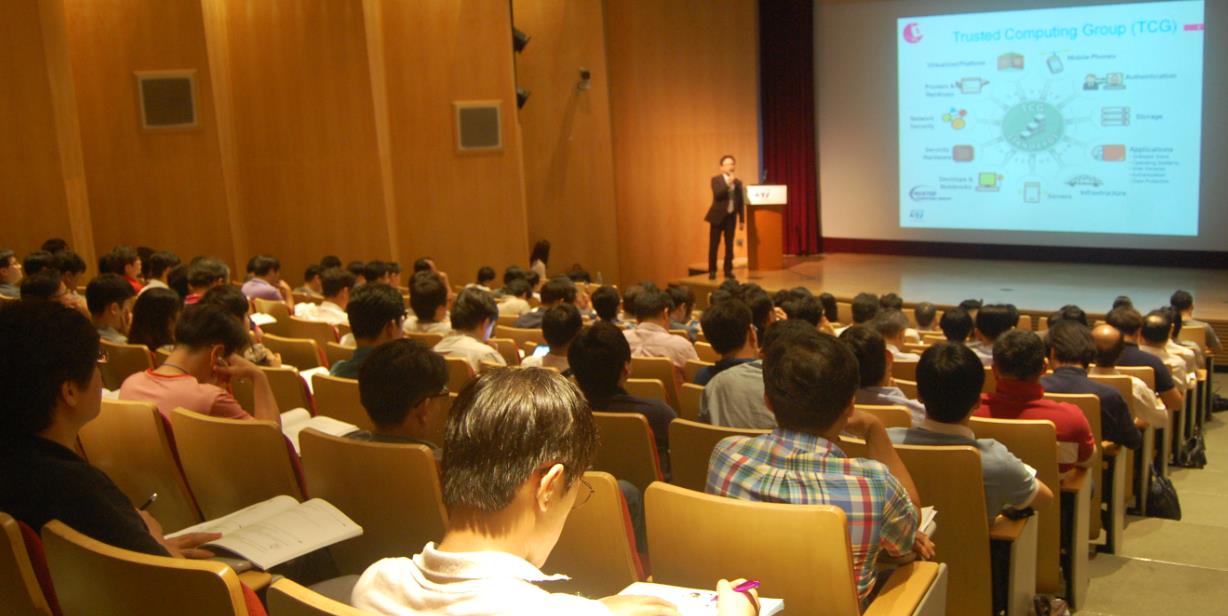
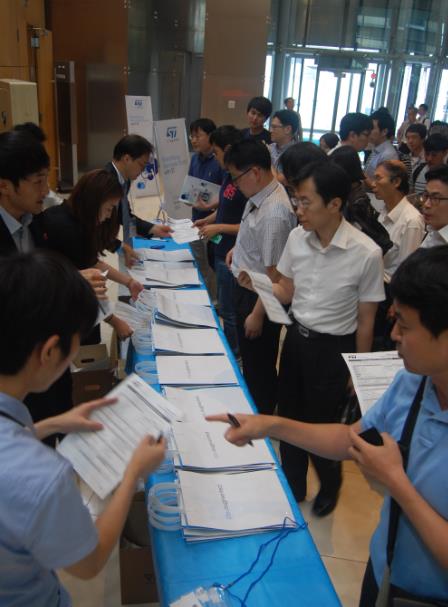
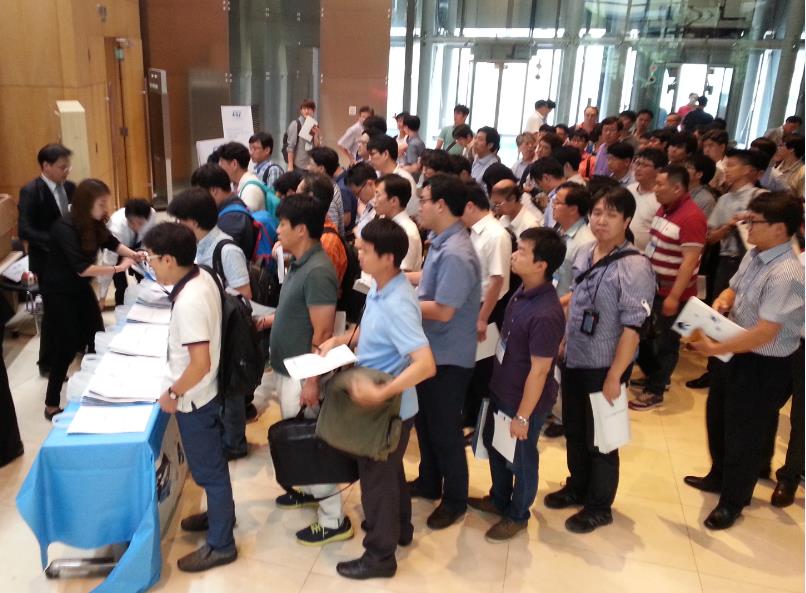
On the 1st, STMicroelectronics (hereafter referred to as ST) held an offline event called “Smart Things Seminar” (at the POSCO P&S Tower in Seoul) to introduce a large number of smart devices that can be applied in real life.
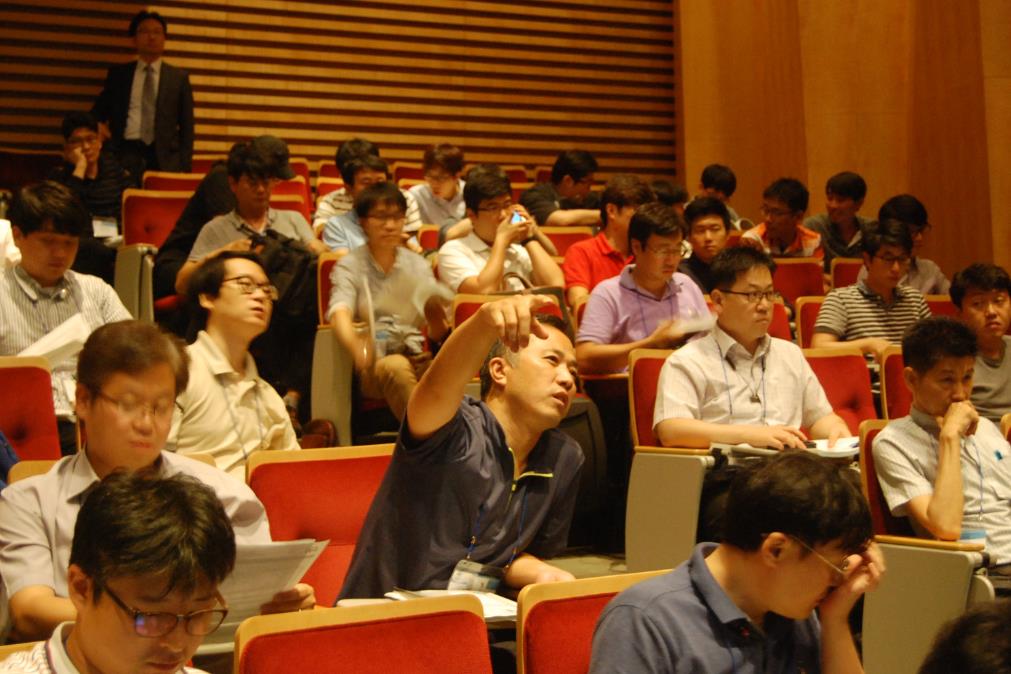
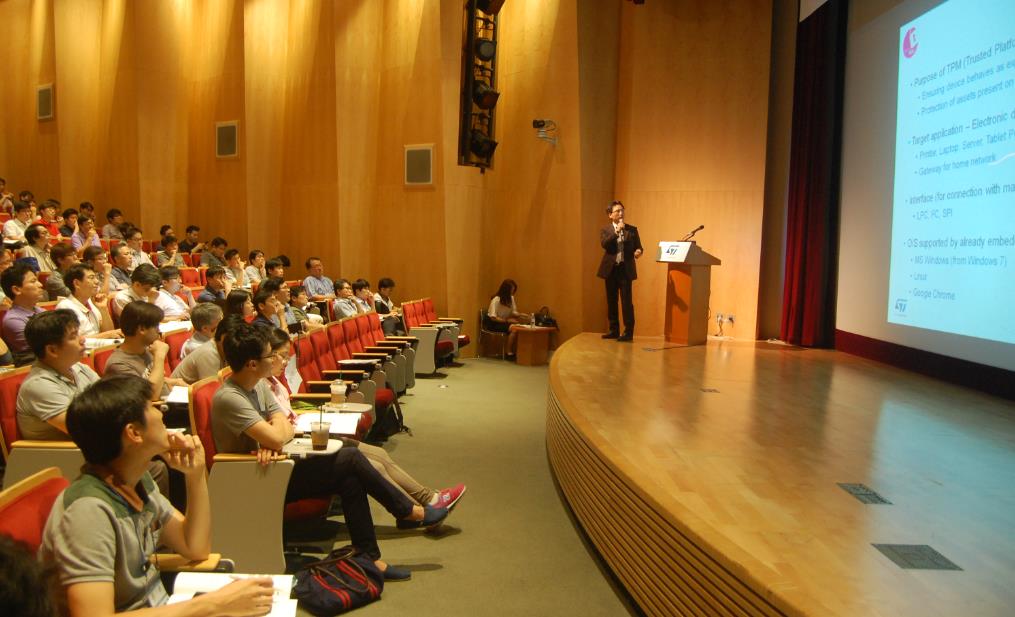
At the event, attended by around 200 engineers and industry insiders, ST highlighted its three growth areas of Smart Driving, Smart Environments, and Smart Things, with a particular focus on “Smart Things.” ST Korea's Vice President, Seonghwan Jeon, emphasized the concept of "Smart Things" as an intelligent connection between the new and the old, and said that this is a new 'application and business model.'
 New 'Applications and Business Models'
For example, a watch's role has expanded from simply telling the time to assisting with work, while socks designed for warmth now monitor foot health. Fashionable bracelets now indicate heart rate, and vision-correcting glasses become information channels.
Examples of "Smart Things" can also be found in smart cities. Street lighting, parking, smart metering, and garages enable real-time control of creative urban infrastructure.
ST's strength lies in its comprehensive range of solutions to address this market. ST provides integrated platforms suitable for a wide range of markets, including sensors and actuators, processing, communications, interfaces, power, and security.
Regarding this one-stop service, Vice President Jeon Seong-hwan said, “ST provides a simple, fast, and most robust way to develop Smart Things for IoT.”
The following introduces the ST solutions presented at the event by field.
Smart Sensor: Motion Sensor (Presented by Sang-hyeok Park, Manager)
Always-on 6-axis high-performance accelerometer and gyroscope combo
ST has a wide range of cutting-edge motion sensors. This time, they showcased the OIS Gyro (L2G2IS), iNemo inertial modules (low-power LSM6DS3, cutting-edge low-power and low-noise LSM6DS3H, and ultra-low-power LSM6DSM), accelerometer (LIS2DS12), e-Compass (6-axis LSM303AH), and ST Pedometer.
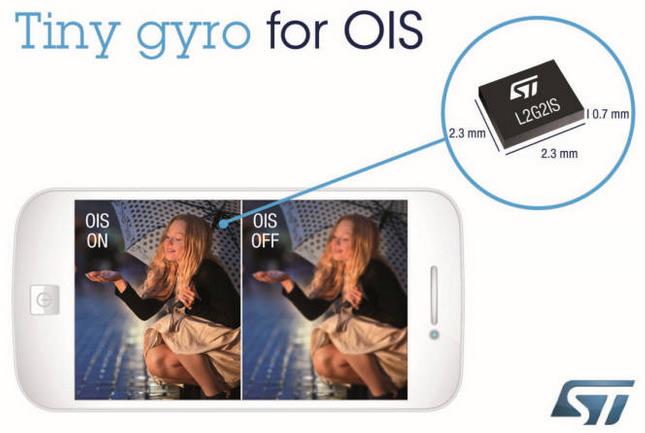 ST recently announced that its cutting-edge motion and proximity sensors have been featured in the OnePlus 2, the latest smartphone from popular Chinese mobile manufacturer OnePlus.
OnePlus' 2015 flagship, the OnePlus 2, boasts a superior camera system with ST's sensor. It boasts ultra-fast 0.2-second focus, comparable to the human eye, and advanced optical image stabilization technology, improving effective image resolution by 20%. It also reduces power consumption by 55% compared to standard optical image stabilization phone camera systems.
The OnePlus 2's optical image stabilization (OIS) feature is powered by ST's L2G2IS gyroscope, improving clarity in low-light photos and eliminating blur in mobile video. A specialized sensing element integrated into this two-axis MEMS gyro transmits the measured angular velocity to the camera via a digital interface.
Earlier, ST announced that it had completed development of the first product of iNEMO™ Ultra, LSM6DS3. The product sets a new standard for power efficiency, signal noise, and performance not only for the device itself but also for the entire system with its always-on, six-axis combo motion sensor of an accelerometer and gyroscope, the company said.
The LSM6DS3 combo, when combined with ST's ultra-low-power STM32 microcontrollers, will open new opportunities for the development of battery-powered smart sensor systems embedded in devices such as Internet of Things (IoT) products, mobile devices, wearables, indoor navigation, and portable applications, the company emphasized.
This ultra-small (2.5mm x 3.0mm x 0.8mm) iNEMO Ultra 6-axis inertial sensor combo (3-axis accelerometer and 3-axis gyroscope) not only offers the industry's lowest noise performance, but also manages system power efficiently, consuming typically 20% less power and performing better than other combo products in low-power mode during testing, and using less PCB area, which is a crucial part, the company explained.
Smart Sensing, Environmental Sensors (Presented by Deputy Director Kim Young-nam)
The world's smallest pressure sensor technology with a waterproof design
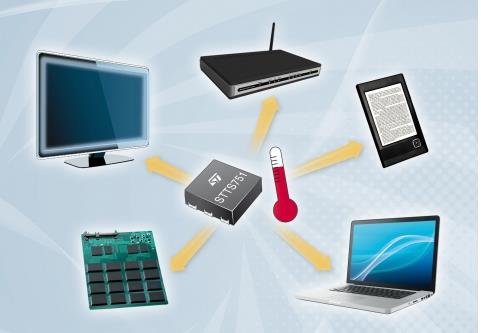
In the environmental sensor section, ST also supports various sensors. These include a pressure sensor (LPS22HB), a temperature and humidity sensor (HTS221), a digital temperature sensor (STTS751), and a UV sensor (UVIS25).
 ST added to its environmental sensor portfolio in December with the launch of a new MEMS pressure sensor, the LPS22HB.
The company stated that the world's smallest pressure sensor, the LPS22HB, achieves a new level of performance by combining high precision and robustness with an ultra-small size. Pressure sensors are increasingly being used in smartphones, tablets, and wearable technology such as sports watches, smartwatches, and fitness bands.
This enables more accurate altitude detection and improved location-based services, enabling more accurate dead-reckoning calculations and enabling the development of new smartphone apps, such as weather analysis, health monitoring, and sports monitoring. For this reason, market research firm IHS predicts that the global market for pressure sensors for home appliances will reach nearly 1 billion units by 2018.
The LPS22HB is significant not only as the world's smallest pressure sensor, but also as the only pressure sensor available in a fully molded package. Not only is it the best in thermal and mechanical robustness (high shock absorption capacity of over 20,000 g), it also has good performance and excellent trade-off between current consumption and noise.
Ultra-small and power-efficient temperature sensor
ST's temperature sensors are renowned for their compact and power-efficient design that enables features such as intelligent temperature protection in portable devices.
Electronic devices, delivering diverse performance, are packaged in confined spaces, generating heat that can lead to failure and poor reliability. ST's new STTS751 digital temperature sensor, mounted on a circuit board, provides accurate temperature data feedback, enabling systems to manage their own temperature, such as by turning on cooling fans or shutting down circuits.
The new sensor is smaller than previous generations at 2 mm x 2 mm and features an ultra-low operating current of 50 μA, a power-saving 3 μA standby current, and a one-shot mode optimized for battery-powered devices. One-shot operation allows the sensor to extend its sleep time by waking up only when the system is triggered, providing immediate readings.
ST also launched the UVIS25, the world's first sensor to provide direct digital output of the Ultraviolet Index (UVI), creating a UV sensor craze in the industry.
This product is a digital ultra-small UV sensor targeting the UV detection market, such as wearable devices, smartphone and tablet applications, and weather measuring equipment. The device, which uses ST's patented technology, is sensitive to ultraviolet wavelengths in the range of 200 to 400 nm, encompassing both UV-A (315 to 400 nm) and UV-B (280 to 315 nm) wavelengths that have a serious impact on human health. Because the UVIS25 not only detects but also calculates the UV index internally, there is no need to install a separate processing algorithm externally or apply a calibration process on the customer's manufacturing line.
 ST MEMS Microphone (Presented by Vice President Cheon Jae-seung)
The world's first plastic-packaged MEMS microphone
Implement it too
ST's MEMS microphone solutions include analog MEMS microphones (MP23AB02B, MP23ABW01) for headset and handset applications, and digital MEMS microphones (MP23DB01, MP23DB01MM, MP23DBW01, etc.) for PC, tablet, and handset applications.
In 2012, ST announced that it was the world's first to mass-produce MEMS microphones in plastic packages.
The technology is patented and is said to offer space savings and increased durability in a variety of consumer and professional voice input applications, from mobile phones and tablets to sound level meters and noise-canceling headphones.
ST's MEMS microphones facilitate assembly on flat cable PCBs, simplifying the design of modern space-constrained consumer products.
This patented packaging technology allows equipment manufacturers to mount the 'voice recognition inlet' anywhere on the top or bottom of the package, resulting in the slimmest possible design. The design, of course, ensures that the acoustic path from the surrounding environment to the microphone is as short as possible.
Microphones with a sound hole on the top (top port) are suitable for the size and sound input location constraints of laptops and tablets, while bottom microphones are mainly used in mobile phones.
Smart Brain, STM32 Cortex M (Presented by Kyung-Hwa Choi, Vice President)
Industry's first mass production of the STM32F7 based on the Cortex-M7 core begins.
The STM32, which has already created numerous MCU histories, continues to build its reputation. Equipped with the latest core and applied to a wide range of products, the STM32 is driving customer satisfaction with its low-power, integrated solutions. Vice President Choi Kyung-hwa introduced products such as the Cortex-M7 32-bit MCU, STM32 L4, STM32L0 x, -STM32L05 x, -STM32F 469/479, STM32F 401, and STM32Cube.
ST has become the first chipmaker to begin mass production of a microcontroller featuring the ARM Cortex-M7 processor. The latest, highest-performance Cortex-M cores are ideal for advanced consumer, industrial, medical, and Internet of Things (IoT) devices.
The architecture of these new STM32F7 microcontrollers combines the Cortex-M7 core with advanced peripherals to maximize design advantages and minimize the use of discrete components to reduce cost and size while boosting application performance, adding new features, extending battery life, and ensuring robust security.
 Maximize the benefits of the new Cortex-M7 core
The STM32F7 microcontroller leverages the advantages of the new Cortex-M7 core compared to previous cores such as the Cortex-M4. The new microcontroller delivers approximately twice the digital signal processing (DSP) performance for applications requiring high-speed or multi-channel audio, video, wireless, motion recognition, or motor control.
ST's STM32L4 series combines ultra-low-power microcontroller technology with the ARM Cortex-M4 processor. It targets next-generation energy-conscious applications in consumer, industrial, medical, and instrumentation markets.
The STM32L476 and STM32L486 are the first devices in the series and feature an 80MHz ARM Cortex-M4 core with DSP and floating-point unit (FPU). Adding the ST ART Accelerator, which enables zero-wait execution from flash, it can achieve performance of up to 100 DMIPS with an active power of 100 μA/MHz.
ST's STM32F469/479 product line is designed to deliver the high-performance graphics performance required to implement intuitive, smartphone-like user interfaces in wearables, smart appliances, and other Internet of Things (IoT) devices. This line combines real-time processing performance with extended connectivity for smart products like wearable fitness aids and intelligent appliances. This allows these applications to benefit from familiar software ecosystems, such as application stores.
 Smart Connection Sub-1GHz & Bluetooth Low Energy
(Presentation by Director Cheon Jae-seung)
New BlueNRG Bluetooth Smart Network Processor
ST has introduced a new version of its BlueNRG Bluetooth Smart network processor. The newly released product supports the latest Bluetooth 4.1 version and adopts 1.7V operation to enable long-term operation of battery-powered applications.
The new BlueNRG-MS network processor features an ARM Cortex-M0 microcontroller running a Bluetooth PHY and 2.4GHz wireless connection, a Bluetooth 4.1 protocol stack, and a dedicated AES-128 security coprocessor.
It has API, power management functions and flash memory already integrated, allowing direct connection to the application host controller using a simple SPI bus, and enforces a clear software partition between the network processor and the host microcontroller.
The new Bluetooth 4.1 specification further improves energy efficiency and supports a dual-mode topology, including devices in both master and slave roles. New low-duty-cycle directed advertising technology minimizes energy consumption when connecting to a recognized device.
Safe & Smart Secure MCU & NFC (Presented by Jaehyun Kwak, Manager)
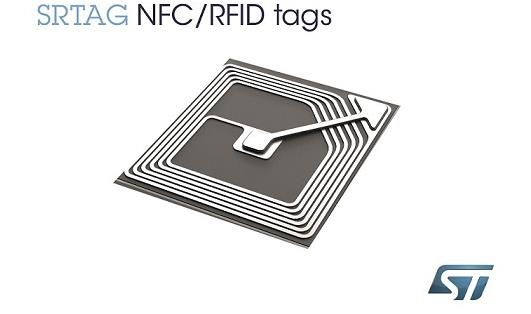
Launch of the latest NFC/RFID tag 'SRTAG'
The time continued to introduce MCU and NFC solutions for safety and security. Key products include safe & smart secure products such as TPM, Brand Protection, -e-SE, ST19WP18, ST33ZP24, ST33H768, and NFC solutions (e-SE ST21 NFC, ST95HF, ST33, ST25TA, ST33).
 The CLOUD-ST25TA evaluation board for application design is ideal for wearables, product identification, and smart cities targeting the Internet of Things (IoT). Based on ST's ST25TA02K chip, the board includes everything needed to integrate an NFC interface into electronic devices. These devices include not only Bluetooth audio products and wearables, but also products such as NFC posters and business cards.
These devices are suitable for Wi-Fi and/or Bluetooth pairing, smart posters (e.g., storing URLs and running apps), Vcards storing contacts and ID photos, product identification, asset tracking, and other consumer, industrial, and IoT applications.
Additionally, ST's SRTAG IC provides an NFC Forum Type 4 Tag RF interface and built-in NDEF (NFC Data Exchange Format) message support. Embedded EEPROM memory ranges from 512 bits to 64 kilobits, making it suitable for a wide range of applications, such as content-rich virtual business cards or smart signage.
The SRTAG series delivers cutting-edge RF performance and features user-programmable digital CMOS outputs, eliminating the need for external components for host wake-up.
Smart Charging, Wireless Charging Receiver (Presented by Manager Kim Chang-ho)
The world's first customizable wireless battery charging controller
ST's STWBC is a digital controller for wireless battery charger (WBC) transmitters. STWBC is the most flexible and efficient solution for controlling power transfer from a WBC transmitter (TX) to a receiver (RX) in mobile phones, wearables, and other battery-powered devices capable of inductive wireless charging.
ST is a member of the Qi Wireless Power Consortium (WPC) and the Power Matters Alliance (PMA). This ensures full compatibility with these major wireless charging protocols and places it among the preferred companies for certification to the latest Qi 1.1.2 A11 standard.
The STWBC provides all the key functions required for transmitter control. It precisely controls the transmit power to maximize power transfer efficiency and minimize operating temperature rise, meeting the needs of the receiver. Additionally, digital feedback between the transmitter and receiver allows detection of potentially hazardous metal objects near the receiver (Foreign Object Detection: FOD), which can interrupt power transmission when such objects are detected.
STM32 Open Development Environment and Prototyping (Presented by Won Hyeon-guk, Deputy Director)
We provide three convenient development environments.
ST goes beyond simply providing chips; it also provides a complete development environment to help customers develop products quickly and easily. We provide STM32 Nucleo development boards, STM32Cube V1, BlueNPG expansion boards, motion and environmental sensor expansion boards, X-NUCLEO sensor boards, X-CUBE MEMS1, NFC tag expansion boards, and stepper motor driver expansion boards to help with design.
ST offers the industry's widest selection of free integrated development environment (IDE) tools for STM32 MCUs, enabling developers to create new products more easily.
STM32 users can choose one of three IDEs from major vendors free of charge: ▲Eclipse-based IDE 'CooCox CoIDE' ▲Ac6 System Workbench for STM32 ▲MDK-ARM environment, and receive active support from ST during deployment.
These IDEs have no code size limitations and support all necessary STM32 configuration files and firmware, as well as easy-to-use hardware such as Nucleo boards or Discovery kits used for design verification and development.
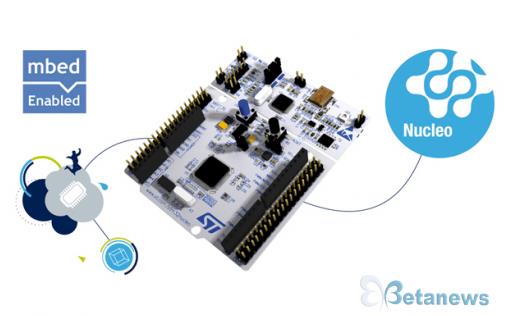
 A new prototyping board, Nucleo, is available.
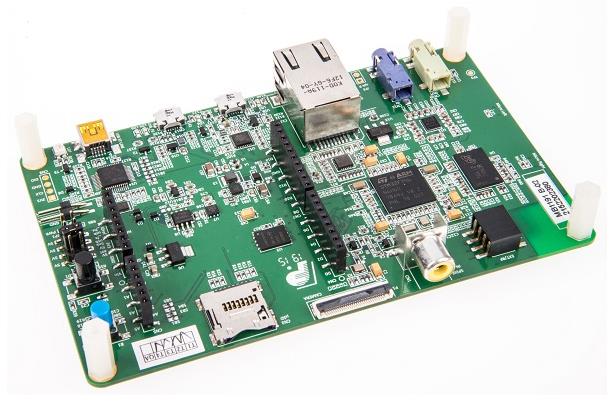
ST also introduced a new prototyping board for its STM32 product line, the Nucleo.
The Nucleo board is powered by mbed and supports Arduino connectivity, while also providing access to all of the on-chip peripherals of the STM32 microcontroller.Provides Morpho extension headers.
Because it's an mbed-based board, it can leverage the mbed open-source software platform, online tools, and collaboration infrastructure at mbed.org. The Arduino header allows for shields from the extensive Arduino ecosystem to integrate specific functions more quickly and easily. ST leverages its expertise in MEMS microphones and its capabilities in proximity sensing and wireless control to offer dedicated shields for functions such as Bluetooth LTE, Wi-Fi connectivity, GPS, and voice recording.
STM32 Nucleo supports the entire STM32 family, enabling rapid hardware and software fine-tuning as needed throughout the prototyping process. Customers can also protect their investment in application-specific shields, as all shields can be reused across STM32 Nucleo boards and various projects.

Comments
Related news
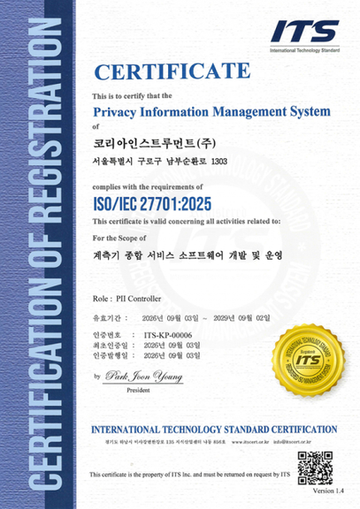
Korea Instrument, KOLAS Accredited Calibration Agency First to Simultaneously Acquire ISO/IEC 27,001·27,701
Korea Instrument has become the first among KOLAS accredited calibration agencies to simultaneously acquire ISO/IEC 27,001 and ISO/IEC 27,701 certifications. Through its proprietary platforms CWIZ Enterprise and CWIZ Partners, the company has embedded information security and personal data protection requirements across all business processes including customer information, equipment data, and calibration reports, with plans to continuously advance its management system through regular audits and security inspections.
2026.10.12by 배종인 기자

TeamViewer One, IT Incident Automation Workflow and Resolution Center Enhanced
TeamViewer has added IT incident automation capabilities and an advanced Resolution Center to its integrated digital workplace management platform 'TeamViewer ONE'. Recurrent service disruptions, configuration errors, and capacity shortages are automatically handled according to preset policies, and device status verification through script deployment can be managed in a unified interface, significantly reducing repetitive tasks for IT teams.
2026.10.12by 배종인 기자
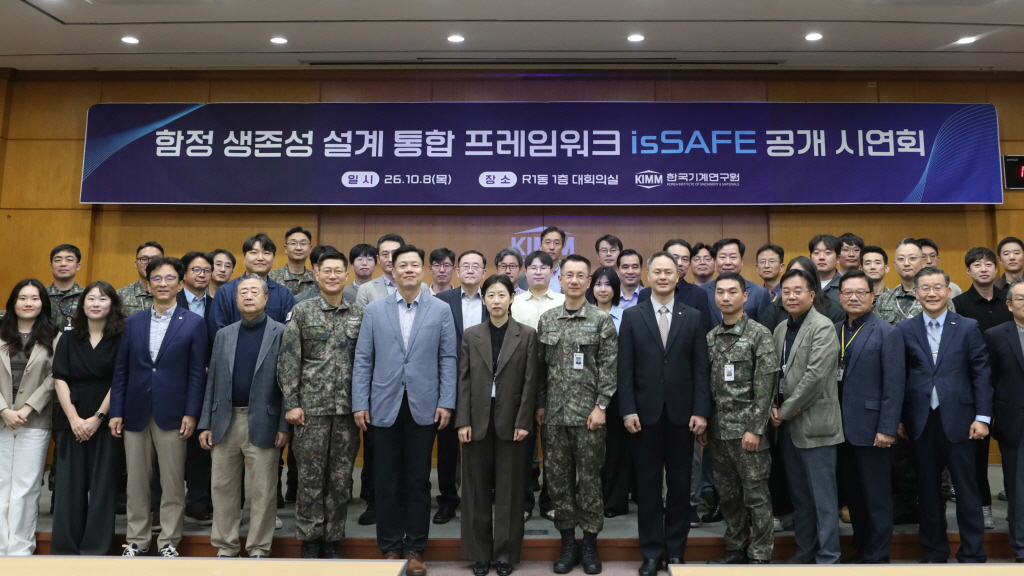
KAERI Develops Domestically-Produced SW 'isSAFE' for Integrated Warship Survivability Analysis
The Korea Institute of Machinery and Materials has developed domestically-produced software 'isSAFE' that comprehensively analyzes warship survivability. This design framework integrates the entire process—from warship modeling to hit scenario generation, vulnerability analysis, and results analysis—into a single platform, establishing an independent technology foundation in the defense technology sector that had previously relied on foreign software.
2026.10.08by 배종인 기자
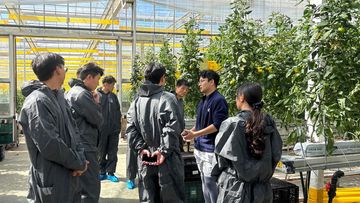
ioCrops Shares AI Smart Farm Operations Case Study
About 20 cultivators from the Agricultural Cooperative's Smart Agriculture Support Centers visited ioCrops' smart farm in Jincheon, North Chungcheong Province. They directly confirmed how data collected through substrate weight sensors, drainage weight sensors, and soil moisture sensors is applied to tomato cultivation, as well as the greenhouse pest control process using the AI-based autonomous spraying robot 'HERMAI'. By sharing on-site operational case studies combining data and automation technology, the adoption of smart farms in agricultural fields is being promoted.
2026.10.07by 배종인 기자
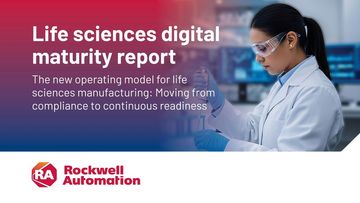
Rockwell, "90% Digital Transformation Essential in Life Sciences Manufacturing"
According to the digital transformation report for the life sciences manufacturing sector released by Rockwell Automation, 90% of responding companies recognized digital transformation as a business-critical element. Primary investment technologies include AI and machine learning (46%), process automation (44%), and cybersecurity (39%), with 64% of companies planning to expand AI utilization within the next year. However, only 32% of companies actually utilize more than half of the collected data, indicating an urgent need to strengthen data utilization capabilities.
2026.10.07by 배종인 기자











