



[Reporter's Notebook] Our Attitude to Key Words for Next Year
 Published2015.10.12 19:37
The very act of predicting the ever-changing technological trends of the information and communications age with just 10 factors is itself a topic of discussion, but perhaps what makes it even more interesting is the fact that the major issues change every year.
As the person in charge of the Information and Communications Technology Promotion Center, which announces the top 10 issues, said, it is not enough to 'lay a magnifying glass', but since it matches more than 5 trends, there is no need to argue that there are many mistakes.
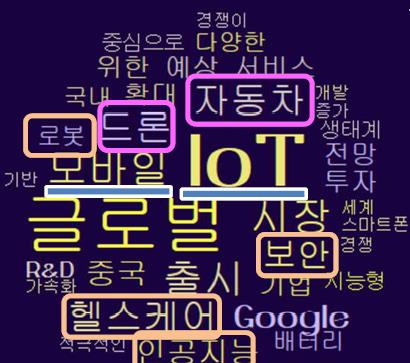 In any case, since the nearly 450 employees and project research managers in the field have selected the technologies they think are the most important, I think that observing how these technologies change each year will be one of the key points to watch in 2016.
Looking at the top 10 issues for next year announced by the agency (see this magazine's article, "The 10 Top Issues in the ICT Industry in 2016: A Look at the Future"), they can be summarized as automobiles, drones, artificial intelligence, and robots. Broadly speaking, we can see that artificial intelligence is becoming a major trend.
This trend has been in full swing since last year. For reference, let's compare the predicted issues for 2015 announced last year with the actual issues this year. The acceleration of growth and competition in the Internet of Things, new security threats, and competition in smart home appliances, which were selected as the top 10 anticipated issues for 2015 at the end of last year, have been fueled this year by the announcement of new platforms that will herald the full-scale Internet of Things market.
Last year's anticipated wearable competition diversified this year with the successive launches of smartwatches. Chinese ICT companies' dominance has been bolstered by the growing competitiveness of local smartphone makers in China and India, as well as the strengthening of their dominance in the Chinese TV panel market. Furthermore, the evolution of mobile payment platforms has led to a competition to secure leadership in the mobile ecosystem (payments, healthcare, etc.), and the content competition has led to the need to secure content for virtual and augmented reality this year.
Extending this trend back to the past six years reveals even more interesting findings. Cloud computing, which ranked 10th in 2010, rose to 3rd in 2011, 7th in 2012 (with big data 3rd), 7th in 2013 (with big data adoption 4th), and 9th in 2014 (with big data investment 4th). Finally, in 2015, the industry saw a surge in software startups, leading to the internalization of cloud computing, big data, and software.
Issues related to the mobile ecosystem remain consistent. Mobile internet (second place) and mobile security (seventh place) in 2010 were followed by mobile social networking services (eighth place) in 2012, mobile social games (third place) in 2013, mobile data (second place) in 2014, and the mobile ecosystem (fifth place) in 2015. The Internet of Things (IoT) emerged as the top issue last year and this year, while smartwatches and wearables emerged in 2013 and have become key topics.
Other opinions, in addition to the top 10 ICT issues (2016), included the expansion of the O2O sector, virtual reality preparing for a quantum leap, the crisis of global ICT companies, the rise of low-cost/low-spec ICT devices, a tectonic shift in the top 5 smartphones, the rapid growth of the domestic cloud market, the next-generation mobile OS war, and Tizen at a crossroads of expansion.
Looking at the issues discussed above, we can see that similar issues are constantly recurring, to the point where it feels like everything has already been addressed. Next year, we will see a fierce competition between global giants like Google, Apple, and Facebook and countless startups, focusing on issues we all know: artificial intelligence, automobiles, drones, robots, security, and healthcare.
The key isn't to limit trends to a few key issues, like the top ten, but to identify business opportunities that exist among key keywords. Whether it's artificial intelligence or the Internet of Things (IoT), you need to create a market that aligns with your business goals. Of course, this assumes what customers want. Our approach to the top ten issues of 2016 is also related to this.
Comments 1
1 Comments:
Related news
[Reporter's Notebook] Fintech: We're at the African level
New businesses in future finance are developing faster in countries where seeing a bank is harder than picking stars, compared to our country where there are so many banks that new financial businesses are tripping over each other as they come out the door. The decisive reason our country is falling behind is not because we lack something, but because we have too much of it. It's not because banks don't exist, but because there are far too many. Why would we need them when we already have a convenient banking system (and moreover, the banks are even pleasant to visit)?
2015.08.10by 신윤오 기자
[Reporter's Notebook] That's right! The bed was science.
The statement that "a bed is not furniture, but science" is a copy that sufficiently reflects these requirements. It is not arguing the equation 'bed ≠ furniture,' but rather emphasizing the meaning that something more than furniture is needed. Therefore, the statement 'bed = science' is not saying that a bed is science itself, but rather a figurative expression of the fact that something as sophisticated as science is required.
2015.08.24by 신윤오 기자
[Reporter's Notebook] Why Did KT Chairman Hwang Chang-kyu Take Two Devices Out of His Pocket?
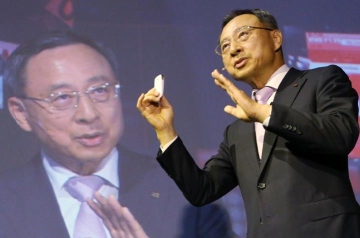
Chairman Hwang revealed a plan to build an 'Intelligent GiGA Infra' based on differentiated technological capabilities to respond to revolutionary changes that will occur in industry and daily life based on ICT. The Intelligent GiGA Infra aims to provide greater value to users by combining with cutting-edge control systems, cloud, and big data, and made a surprise announcement of investing 13 trillion won by 2020 in the Intelligent GiGA Infra and future growth businesses.
2015.09.25by 신윤오 기자
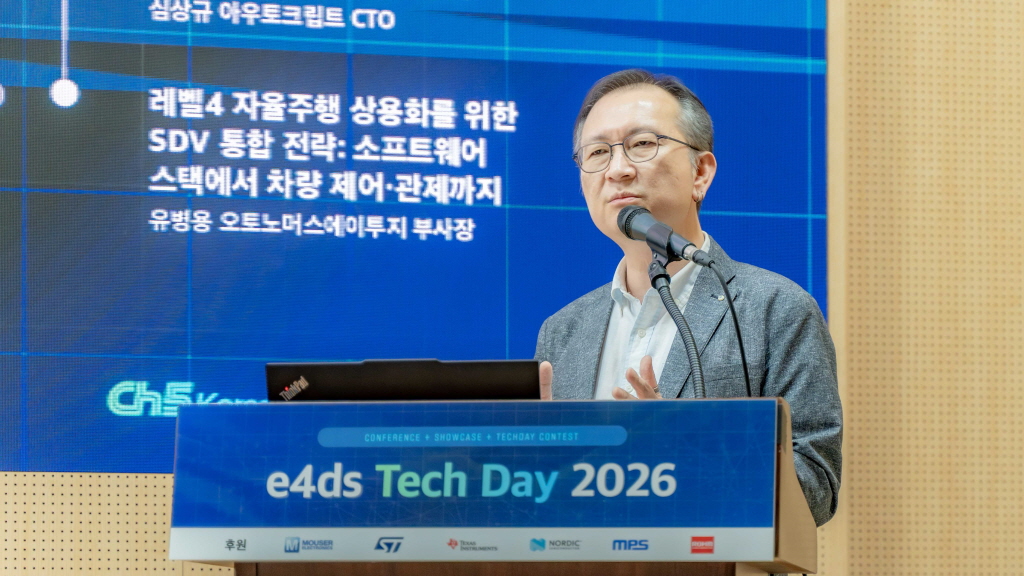
[e4ds Tech Day 2026 ⑨] Sim Sang-gyu, Autocrypt CTO: "In the Physical AI Era, Automotive Security Must Extend Beyond the Vehicle"
At e4ds Tech Day 2026, Sim Sang-gyu, CTO of Autocrypt, explained automotive cybersecurity strategies in the era of Physical AI and SDV (Software-Defined Vehicle). Automobiles are evolving as part of an ecosystem connected to AI, cloud, chargers, IoT, and robots, and he emphasized that the scope of security must expand beyond the vehicle interior to the entire connected environment. In particular, AI model tampering, adversarial attacks, OTA updates, and EV charger hacking were identified as major threats. He explained that response measures require zero trust, AI model integrity protection, intrusion detection, Security by Design and Default, and full lifecycle security management, and that proactive security system establishment beyond regulatory compliance is critical for securing future mobility competitiveness.
2026.10.12by 배종인 기자

NVIDIA to Invest $1 Billion in U.S. Science Over Next Five Years
NVIDIA has announced plans to invest $1 billion over the next five years to strengthen U.S. scientific and technological competitiveness. The company will enhance cutting-edge artificial intelligence research and development capabilities in key areas including quantum computing, healthcare, and energy security, while expanding support for higher education research institutions and cloud service providers. NVIDIA is participating as a major industry partner in the White House Office of Science and Technology Policy's Genesis Mission, and is promoting supercomputer construction in collaboration with national laboratories including Argonne and Los Alamos.
2026.10.12by 배종인 기자












2015..