


Visiting European Companies - A Visit to a Company Specializing in Multi-Core Processors for IoT and Autonomous Vehicles
 Published2015.11.03 11:54
Company Visit 1 - Kalei
Autonomous vehicles, robots, drones...Capturing future technologies with multi-core processors.
Kalray (www.kalrayinc.com), located in Grenoble, France's Silicon Valley, is a silicon solutions company founded in 2008 and a pioneer in the field of multi-core processors.
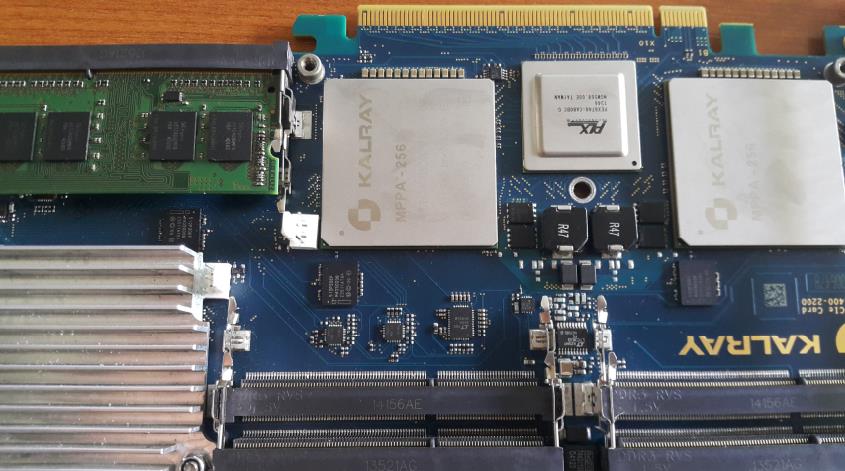
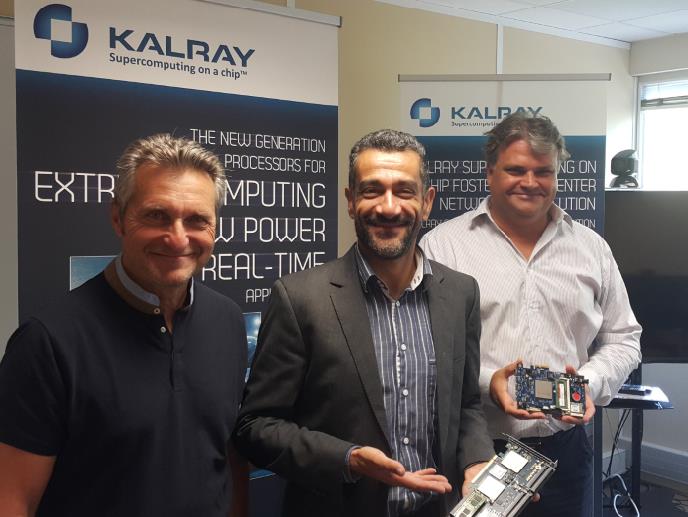 Since shipping its first core in 2013, the company has been expanding its customer base by leveraging its leading technology in the high-programmability 256 C/C++ multiprocessor segment. The company's processor, the first in the industry to use TSMC's 28mm process, is offered as a single die and differentiates itself from competitors by leveraging its patents in the field of MPPA processors, a Supercomputing on a Chip solution.
The company, which sells both accelerator cards and software as well as IP, has addressed the need for new processors with multiple cores, as processor frequencies are physically demanding for multiple tasks.
Maintaining security and stability, suitable for real-time reactive computing
For example, doubling or tripling the number of processors in luxury cars like Audi and Mercedes-Benz, which typically feature around 80 processors, would increase the price. However, the company's algorithm allows them to be integrated into a single chip, resulting in significant cost savings. Meanwhile, sales are primarily generated in the aviation industry, where computing that requires real-time response while maintaining security and stability is essential.
Specializing in applications that require extreme computing performance with low power while maintaining real-time operation, the company's technology, dubbed "Supercomputing on a Chip," boasts a solution far more powerful than ASICs, GPUs, and FPGAs. According to CEO Eric Baissus, this technology offers 10 to 30 times lower power consumption than conventional architectures.
The processor + PCI card package offered by this company is intended for use in data center applications. Operating smart NICs (Network Information Centers) requires high power consumption, necessitating a processor that utilizes 30 to 50 times less power than existing standard products. In this respect, cloud data centers such as Amazon are also essential customers.
Smart storage is also a crucial component, accounting for approximately 40 percent of data center costs. Smart storage is trending toward smaller physical sizes even as its capacity increases. Consequently, companies that manufacture data center products, including SanDisk and Toshiba, have secured it as a key customer.
We have a solution that can replace existing GPUs and FPGAs in the fields of deep learning and neural networks.
Meanwhile, Google, Facebook, and others need to constantly analyze video data reliably and frequently, and they have a brighter outlook in this field, especially in the fields of deep learning and neural networks, by possessing solutions that can replace existing GPUs and FPGAs.
Mobile broadcasting vehicles that need to process images and videos of UHD or higher, where 8K is essential, are also emerging as promising applications in fields that require a lot of processing, including computing accessories and video encoding.
Notable is GPU-based Open CL programming, which is expected to emerge as a key application for autonomous vehicles. The company has already secured clients in the aircraft industry, including Airbus, and is strengthening its engineering support for defense, robotics, and drones, targeting areas that require real-time performance while maintaining low power consumption.
In other words, as processors become more prevalent, the company plans to diversify its business to small and medium-sized markets that require a lot of computing power and functionality, such as autonomous vehicles, robots, and drones, in areas where designing such architectures becomes essential. Another competitive advantage is that it offers approximately 40 times the advantage over Intel's SHA in cryptography, which is crucial for data protection and preservation.
The company is also considering entering the bio, medical, and research sectors. It plans to expand its business into the manufacturing sector, leveraging deep learning as a foundation for image processing, and is expected to strengthen its market dominance in the future.
Operating two dealerships in Korea targeting video and networking.
Kallay is currently focusing on securing clients in the US, building on its embedded sales base in Europe. It also needs new partners in China and Taiwan. Data centers provide a stable source of revenue, and business in this sector is very active in China. In Taiwan, the company is expanding its market, focusing on small and medium-sized NAS and cloud-related companies. In Korea, the company operates two distributors, primarily targeting the video and networking markets.
With 60 engineers, Kallay boasts a significant presence even in Grenoble. With offices in the US, Japan, and Paris, the company has been recognized as a promising silicon solutions company for the future, winning awards from various investment and consulting firms, including HP and Linley. Currently engaged in joint research projects with over 50 universities worldwide, the company is currently pursuing its dream of becoming a leader in data fusion processors for autonomous vehicles.
Company Visit 2 - Utility
Leading the IoT Era with an IoT Network Specialized in Low-Power Sensors
The global solutions market for smart homes, smart cities, and smart buildings is growing. Actility (www.actility.com), a software services company that brings technology vision to these three areas, is focused on expanding its market with expertise in long-range connectivity networks for sensors and smart grid applications.
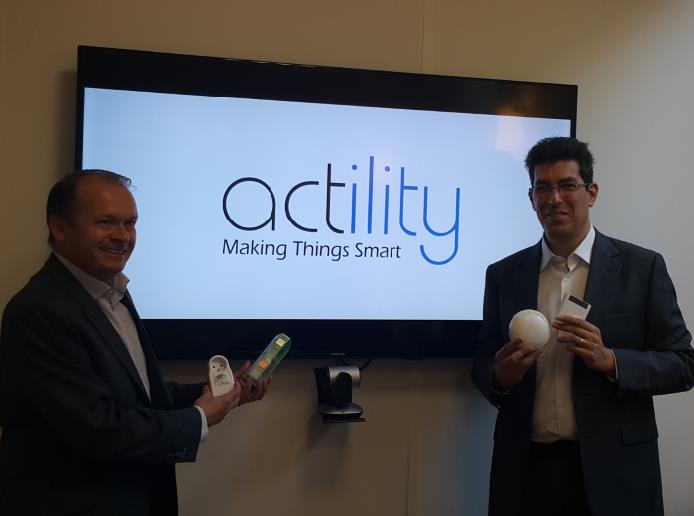 The integration of various surveillance systems, lighting solutions, and motion detectors, smoke detectors, and other solutions requires integration of individual sources. While implementing M2M technology tools requires significant capital, the company's platform technology enables mobile-based operation not only in homes and offices but also outside buildings. It provides services to 30 global operators, including www.swisscom.com and prominus.
Easily create a network by integrating SM metering and WiFi.
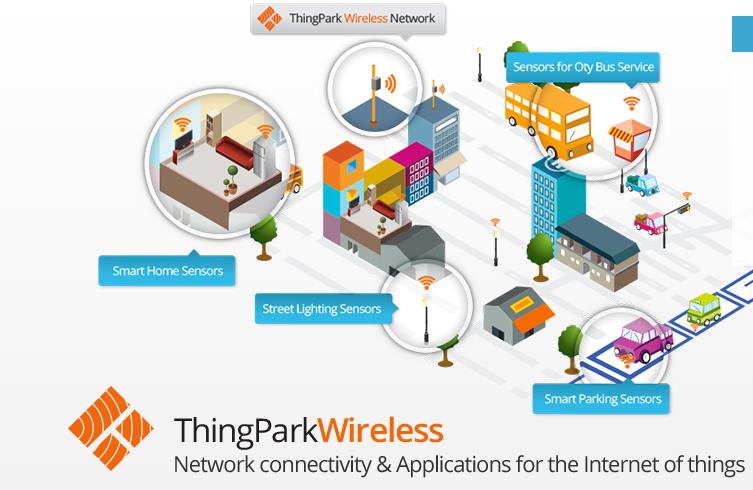
The company's LoRa ThingPark Wireless solution combines existing expensive and inefficient ISM metering with WiFi, allowing a network to be established simply by installing a 20-meter-tall transmission tower and attaching a solar-powered terminal. This smart plug is a bidirectional solution that supports up to 15 kilometers, dramatically improving the limitations of various microdevices that rely solely on cellular technology.
Since these services require different networking at the metropolitan, regional, and national levels, it is also important to adjust service coverage to suit the needs and scale of operators. The company, which has already established a foothold in Europe, is actively conducting sales and marketing in Korea, Singapore, and India.
The company, which has recently begun achieving double-digit sales growth, has already established a track record of success in the remote energy/utility metering market in Asia. Specifically, it is reportedly in the process of launching services for gas and water metering in several Asian city authorities.
Securing success stories in the Asian remote energy/utility metering market.
Michel Quazza, CEO of Actility, said, "As the LoRa Alliance, initiated by SEMTECH, has already established a technical standard in the field of WAN for IoT with over 100 member companies, we also plan to form a marketplace by bundling our own solutions with multiple member companies. To this end, we have also secured the security issue of encrypting all messages."
IoT demand is growing across all sectors of society, and solutions are rapidly advancing. However, addressing multiple targets with low power consumption remains a critical challenge. Accordingly, Actility Energy Solutions is expanding its market dominance by offering a variety of smart energy management solutions for industrial applications.
ThingPark provides end-to-end services for M2M and IoT, while ThingPark Developers provides various tools and resources for professional developers in these two fields. Building on these three platforms, the company has solidified its position in the smart energy solutions sector and was selected as one of the 20 most promising companies in the M2M sector in 2015 by CIO Review magazine.
The company, which serves as Vice Chairman of the LoRa Alliance's Wide Area Network (WAN) Committee, is steadily focusing on securing customers by exhibiting and presenting its products and technologies at events such as IoT World Europe, the M2M Innovation Show, the IBC Smart City/Smart Grid Show, and European Utilities Week.
In particular, ThingPark provides innovative software solutions for smart IoT M2M applications to device vendors and service providers under the motto of transforming existing devices and utilities into "connected things."
Recruiting partners including public and private operators and sensors
“Our ThingPark Wireless is an IoT network specialized for long-range, low-power sensors, and we leverage LoRaWAN’s bidirectional platform to maximize wireless coverage to meet our customers’ needs,” said Nicolas Jordan, Vice President of Marketing and Business Development. “This solution, which connects users as well as apps and the ThingPark Cloud, is customized to fit the needs of customers within the industry ecosystem,” he explained.
To successfully expand this ThingPark program, we have secured partners in three areas: public and private operators, sensors (covering everything from wireless integration to gateway testing, development, testing/verification, and app integration), and apps (providing standards-based application programming interfaces), and we are continuously recruiting new partners.

Comments
Related news

Will domestic production of image processing processors secure competitiveness in autonomous vehicles?
The Aldebaran processor is a purely domestic Korean CPU that does not use ARM cores and is capable of supporting high-resolution video processing, offering bright prospects for the realization of autonomous vehicles in the future. The new Aldebaran processor, AB-TS3, is equipped with a quad-core capable of 4K video processing, an H.265 (HEVC) encoder, and VD/PD/LD engines.
2015.10.12by 신윤오 기자
[Reporter's Notebook] Did you make some money with IoT?
The momentum of the Internet of Things shows no signs of slowing down. The government announced in the first half that it will invest 98.9 billion won over three years in five converging IoT fields including smart homes. Furthermore, with the goal of becoming a "hyper-connected digital revolution leading nation" that develops and utilizes IoT services by 2020, the policy aims to expand the domestic market size from 2.3 trillion won to 30 trillion won. Given that by 2020 a connected era will arrive in which 26 billion devices will be "connected" (according to Gartner), this is nothing short of true "creative economy."
2015.10.23by 신윤오 기자
Preparing for the IoT market? Thinking about how to easily develop products using MCUs.
ST continues to steadily introduce IoT-based solutions, providing engineers with diverse application development opportunities. How exactly ST will lead the IoT market with its unlimited potential remains to be seen. To find answers to this question, we met with Song Byeong-chul, manager in charge of MCUs at ST, at the Korean Semiconductor Exhibition venue on the 16th.
2015.10.23by
Korea Instrument, KOLAS Accredited Calibration Agency First to Simultaneously Acquire ISO/IEC 27,001·27,701
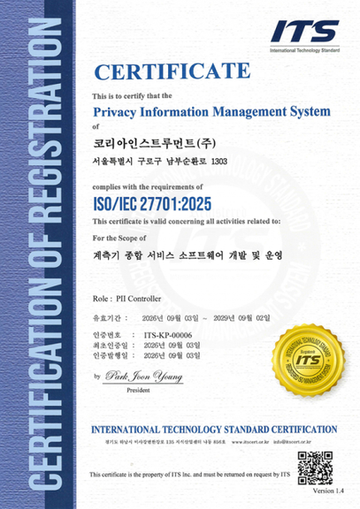
Korea Instrument has become the first among KOLAS accredited calibration agencies to simultaneously acquire ISO/IEC 27,001 and ISO/IEC 27,701 certifications. Through its proprietary platforms CWIZ Enterprise and CWIZ Partners, the company has embedded information security and personal data protection requirements across all business processes including customer information, equipment data, and calibration reports, with plans to continuously advance its management system through regular audits and security inspections.
2026.10.12by 배종인 기자
TeamViewer One, IT Incident Automation Workflow and Resolution Center Enhanced
TeamViewer has added IT incident automation capabilities and an advanced Resolution Center to its integrated digital workplace management platform 'TeamViewer ONE'. Recurrent service disruptions, configuration errors, and capacity shortages are automatically handled according to preset policies, and device status verification through script deployment can be managed in a unified interface, significantly reducing repetitive tasks for IT teams.
2026.10.12by 배종인 기자











