


[Reporter's Notebook] Ambitious Sensor Development Industry: Do You See the Future of the Sensor Industry?
 Published2015.11.09 16:48
A long journey has begun to elevate Korea's sensor industry to become one of the top four powerhouses by 2025. The Ministry of Trade, Industry and Energy has launched the "Advanced Sensor 2025 Forum," with approximately 60 participants from industry, academia, and research to foster the sensor industry as a future flagship industry. The forum's goal is clear: to elevate Korea's competitiveness from its current seventh-ranked position globally to a top four position by 2025.
The forum consists of a steering committee and four subcommittees: smart devices, automobiles, the Internet of Things (IoT), wearables, and industrial smart factories. As the forum's membership demonstrates, its core purpose is to build a close network and foster collaboration among experts from the sensor industry, academia, and research.
While Korea currently ranks seventh in the global sensor market, a closer look reveals little significance. Looking at the sensor market rankings, Korea accounts for only 1.7%, trailing the United States (31.8%), Japan (18.3%), Germany (12.2%), the United Kingdom (6.3%), France (4.3%), and China (2.9%). In monetary terms, Korea accounts for $3.9 billion of the total $70.3 billion. A closer look reveals that the domestic market consists of image sensors ($1.1 billion), chemical sensors ($800 million), flow sensors ($600 million), and other sensors.
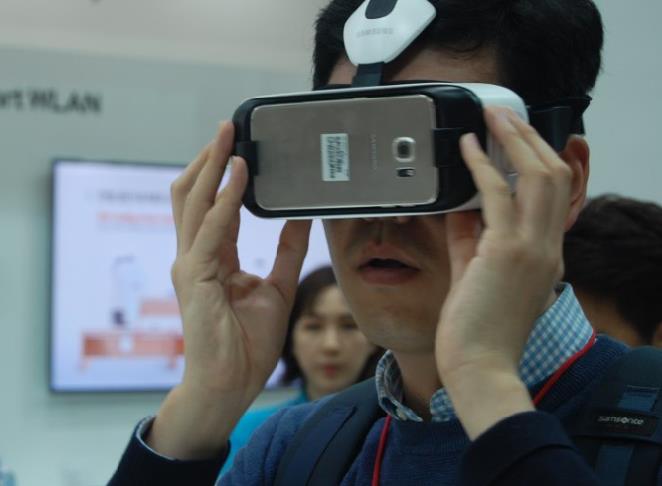 Investing 150 billion won in developing 10 key sensor components
The government plans to provide a total of 150.8 billion won (114.8 billion won from the national budget) from this year to 2020 to foster the advanced sensor industry. The strategy is to develop core sensor components such as image sensors, magnetic sensors, inertial sensors, pressure sensors, radar sensors, environmental sensors, optical sensors, infrared sensors, acoustic sensors, and bio-medical sensors through business and to foster a mid-sized sensor specialist company with overseas competitiveness.
The government's sudden(?) interest in the sensor market is largely due to the impact of the Internet of Things (IoT), which has become a global IT trend. Sensors, once simply used for physical and chemical detection, have emerged as a core element of the IoT era. In the interconnected network of objects, which forms intelligent relationships through networking and information processing, sensors are at the forefront of devices. Consequently, they have become essential components for IoT, smart cars, and wearables. This explains why the global sensor market is expected to grow rapidly, at an average annual rate of over 9%.
However, despite the resolve of those involved in the industry to replicate the memory semiconductor success story in the sensor industry, numerous obstacles lie behind the scenes. Currently, most domestic sensor companies follow a process of importing components, packaging them, and supplying them to large companies. Currently, companies with annual sales of less than 5 billion won account for more than 60% of the domestic sensor industry.
Advanced Sensors: Is This Industry Really Suitable for Small and Medium-Sized Businesses?
In this context, many voices are skeptical about the goal of overnight growth in advanced sensors (MEMS, CIS, radar, etc.) that are expected to dominate the sensor market. While the government has pledged to invest a significant amount (KRW 150 billion) over the next five years, there are global sensor companies investing more than two to three times that amount. Furthermore, advanced sensors, as the name suggests, are intelligent sensors that integrate multiple fields, and the question is whether small and medium-sized enterprises (SMEs) can secure developers skilled in these various fields. Companies are already struggling to recruit sensor professionals. This is why some question whether fostering a few small and medium-sized sensor companies will actually increase competitiveness in a situation where global sensor companies are expanding their product portfolios through alliances and collaborations.
The government promises to foster mid-sized companies with annual sales of 50 to 100 billion won to enhance their global competitiveness. However, SMEs are struggling to make ends meet. They complain that despite their painstaking product development, there are no buyers. Lack of marketing capabilities to identify and attract demand is another challenge for SMEs. In response, the government has proposed a plan to certify SME products to enhance their credibility among potential buyers.
The success or failure of the sensor development industry depends on cooperation.
Despite the current weaknesses in the sensor industry, many are hopeful that leveraging our industry's strengths can overcome them. Some argue that the domestic industry's competitiveness, boasting global IT and home appliance companies and automotive companies, is a key driver of the growth of the domestic sensor industry. They argue that we must develop products suited to the IoT era of small-batch, high-variety production and focus on sensors suited to home appliances and automobiles. Rather than trying to excel at all sensors, we should focus on developing sensor competitiveness through "selection and concentration." Examples include image sensors, radar and lidar sensors essential for autonomous vehicles, and sensors that combine these technologies, as well as sensors for healthcare.
To this end, sensor industry professionals attending the Sensor Forum emphasized the importance of "collaboration." Even if this wasn't the forum's original purpose, they unanimously agreed that cooperation among sensor companies, demanders, the government, and academia is absolutely essential for the success of the sensor development industry. This is because they have seen in other industries that simply investing hundreds of billions or trillions of won doesn't lead to successful nurturing. Whether through selective focus or the overall growth of the sensor industry, the success or failure of nurturing industries now hinges on cooperation. If, as has been the case, the government, the companies tasked with the project, the companies in need, and small businesses discuss the development of the sensor industry separately, they risk relegating themselves to the status of incompetent sensors, unable to "detect" future industries.
Comments
Related news
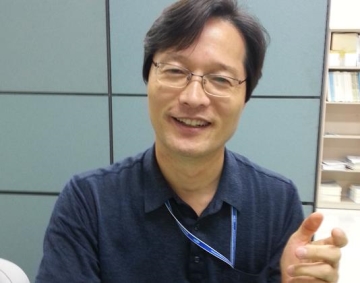
Sensors in the IoT Era: If You Don't Prepare, You'll Have to Buy Them All
Park Hyo-deok, head of the Smart Sensor Business Division at the Electronics and Telecommunications Research Institute (KETI), expressed more concern for his junior colleagues in the sensor industry than disappointment. Park, who oversaw the preliminary feasibility study and planning for the "Advanced Sensor Development Project for Sensor Industry Advancement," repeatedly emphasized the need to deliver tangible "results" from the project for the sake of the sensor industry, despite considerable regret over the failure to establish the business division that was to serve as the cornerstone of the initiative.
2015.08.03by 명세환 기자
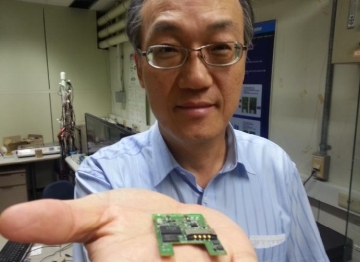
The sensor industry must also foster start-up companies through sensor development projects.
He is a representative researcher and authority in the domestic MEMS (Micro-Electro-Mechanical Systems) field. We asked him what he thinks sensors in the IoT era should be and what breakthroughs need to be found. The interview was conducted at a Seoul National University research lab about a week before the start of the semester.
2015.09.07by 신윤오 기자

The magic of sensors that make smart devices more 'smart'
Sensing technology in the IoT era has evolved beyond traditional standalone sensors such as temperature, humidity, thermal, gas, illumination, and ultrasonic sensors to encompass multi-sensor technologies at a higher level. This includes physical sensors capable of acquiring information from tangible objects and their surrounding environments, such as remote sensing, SAR, radar, positioning, motion, and imaging sensors. Consequently, more intelligent and high-level information can be extracted compared to conventional independent and individual sensors.
2015.09.21by 신윤오 기자
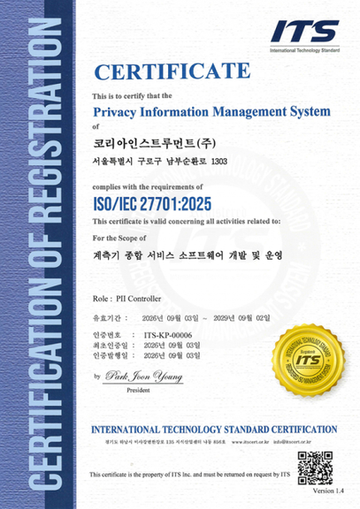
Korea Instrument, KOLAS Accredited Calibration Agency First to Simultaneously Acquire ISO/IEC 27,001·27,701
Korea Instrument has become the first among KOLAS accredited calibration agencies to simultaneously acquire ISO/IEC 27,001 and ISO/IEC 27,701 certifications. Through its proprietary platforms CWIZ Enterprise and CWIZ Partners, the company has embedded information security and personal data protection requirements across all business processes including customer information, equipment data, and calibration reports, with plans to continuously advance its management system through regular audits and security inspections.
2026.10.12by 배종인 기자

TeamViewer One, IT Incident Automation Workflow and Resolution Center Enhanced
TeamViewer has added IT incident automation capabilities and an advanced Resolution Center to its integrated digital workplace management platform 'TeamViewer ONE'. Recurrent service disruptions, configuration errors, and capacity shortages are automatically handled according to preset policies, and device status verification through script deployment can be managed in a unified interface, significantly reducing repetitive tasks for IT teams.
2026.10.12by 배종인 기자











