



Smart factories account for 27% of the IoT market, demonstrating significant market potential.
 Published2015.11.10 11:17
Global networking giant Cisco estimates the potential value of the Internet of Things (IoT) at a staggering $14 trillion. Smart factories account for 27% of that, or $3.8 trillion. Smart factories are realized through hyper-connectivity and convergence, and the IoT is the underlying technology.
The Internet of Things is transforming every industry. It will become deeply ingrained in our lives in the blink of an eye, controlling and even controlling our lives. When these rapid societal changes occur, there is bound to be a turning point.
Smart factories will also be a turning point for manufacturing. The implementation of smart manufacturing technology will determine a company's future survival. Above all, the core of this business is hyper-connectivity and hyper-convergence. The simplest example is smartphones, which connect us to friends, colleagues, and family, enabling us to do everything through apps. Even high-definition cameras now allow recording and credit card payments. If this is applied to factories, it will usher in an era of autonomous, intelligent factories.
Hyperconnectivity and Convergence: A Turning Point in Manufacturing
Smart factories, manufacturing, and production account for the largest portion of the IoT market, at 27%. This represents $3.8 trillion, and this amount will be invested in a wide range of areas related to manufacturing and production, including asset utilization, employment, productivity, supply chain logistics, customers, and value innovation. However, establishing manufacturing infrastructure requires consistent and concrete action above all else. At the Smart Manufacturing Technology Exhibition held on November 5th, a seminar on the government's smart factory expansion policy provided insight into Korea's investment and current status. The presentation was given by Lee Gyu-bong, team leader at the Ministry of Trade, Industry and Energy.
First, the concept of a smart factory aims for "automation + digitalization based on IoT and CPS (Cyber-Physical Systems). A smart factory can integrate all processes, from planning and design to production, distribution, and sales, through ICT.
Expand to 10,000 factories by 2020
In response, the government established the "Smart Factory Promotion Team," comprised of economic organizations, major companies, and small and medium-sized enterprises (SMEs) to promote and expand the adoption of smart factories. This public-private partnership, worth 1 trillion won, is leveraging the Industrial Innovation Movement 3.0 initiative to promote the adoption of smart factories for SMEs and mid-sized companies.
The expansion of smart factories aims to transform 10,000 factories into smart factories by 2020. By expanding the 3D printing production base, which will contribute to prototypes and finished products, six manufacturing innovation centers will be established to foster 3D printing talent among current and potential entrepreneurs. Efforts will also be made to industrialize high-value-added products, such as software, sensors, and solutions, which form the core foundation of the industry.
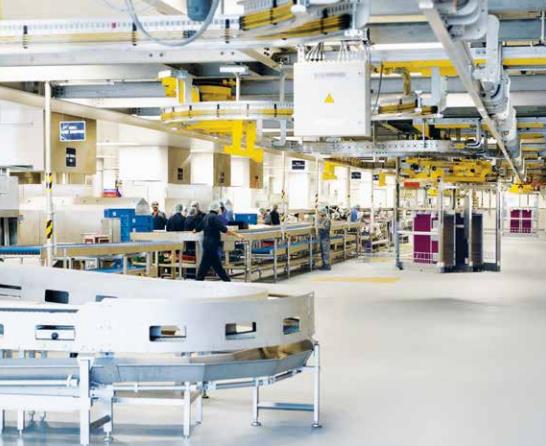
▶ Siemens Smart Factory
Siemens' Amberg plant, currently recognized as Europe's smartest factory, has achieved a 75% automation rate, enabling real-time communication between products and production facilities. It enables mass production of a wide variety of products, producing 12 million units of approximately 1,000 finished products annually while reducing energy consumption by approximately 30%.
However, he said, "Since most of the automation in the system involves high-end equipment, loans can be obtained when purchasing automation equipment through projects." He added, "The government has tools from 120 companies, so it fairly selects corporate projects within those tools."
Among the projects being pursued by companies, the Banwol Industrial Complex case last year involved installing data gathering devices and systems on existing foundry equipment to digitalize work data management. This digitalized data will strengthen the distribution model project through cloud services. Work has already begun, and the information collected in collaboration with telecommunications companies will be utilized as big data, enabling feedback.
Production time reduced by 92% from 60 minutes to 5 minutes
Team Leader Park Gyu-bong reported on the 2014 distribution project results, stating, "Automotive parts manufacturer I achieved a 33% quality improvement. By implementing a production operation management system (MES, ERP, POP, SPC), the defect rate dropped by 50%, and heat treatment company S cut costs by 23%." This was due to the introduction of a power monitoring system, which resulted in a 30% reduction (KRW 80 million per year) in energy consumption, inventory, logistics costs, and other costs, all driven by process efficiency and automation. He also said that the delivery time was also reduced by 20%. “After introducing the product lifecycle management (PLM) system, electronic component manufacturing company G automated the work instructions that were previously written by hand, and reduced the production time for one model from 60 minutes to 5 minutes, showing an amazing reduction effect of 92%.”
Lastly, he said that the future smart factory distribution policy will be largely divided into two, as shown in the picture above. “For example, if we build 100, we plan to build about 20 advanced smart factories and focus on R&D, while the remaining 80 will be distributed as universal models that can actually be demanded.”

Comments
Related news
.jpg)
Moxa Delivers Smart Factory Solutions with 360° Network Reliability
2015.04.09by 명세환 기자

The Beginning of Smart Factories, PLM Technology, and Implementation Information
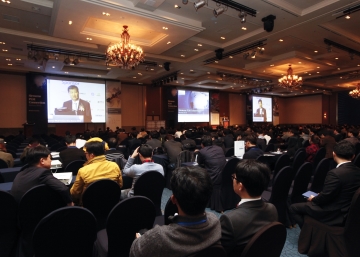
Siemens PLM Software is supporting its customers and partners in staying ahead in this competition. As part of this strategy, Siemens PLM Software held 'Siemens PLM Connection Korea 2015,' the largest PLM user conference in the domestic industry, on November 5-6. The event was a great success, drawing approximately 1,000 users and industry experts, including strategic partners of Siemens PLM Software such as Dell & NVIDIA and HP.
2015.11.09by
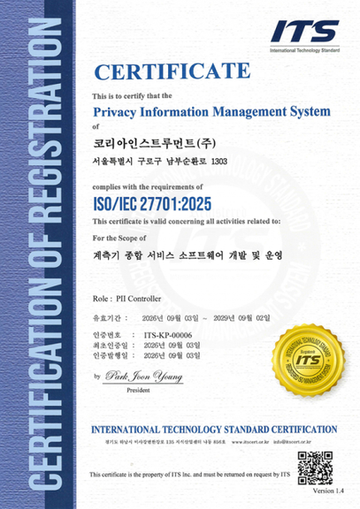
Korea Instrument, KOLAS Accredited Calibration Agency First to Simultaneously Acquire ISO/IEC 27,001·27,701
Korea Instrument has become the first among KOLAS accredited calibration agencies to simultaneously acquire ISO/IEC 27,001 and ISO/IEC 27,701 certifications. Through its proprietary platforms CWIZ Enterprise and CWIZ Partners, the company has embedded information security and personal data protection requirements across all business processes including customer information, equipment data, and calibration reports, with plans to continuously advance its management system through regular audits and security inspections.
2026.10.12by 배종인 기자

TeamViewer One, IT Incident Automation Workflow and Resolution Center Enhanced
TeamViewer has added IT incident automation capabilities and an advanced Resolution Center to its integrated digital workplace management platform 'TeamViewer ONE'. Recurrent service disruptions, configuration errors, and capacity shortages are automatically handled according to preset policies, and device status verification through script deployment can be managed in a unified interface, significantly reducing repetitive tasks for IT teams.
2026.10.12by 배종인 기자











