



The sensor industry's convergence with information and communications technology is accelerating next-generation product services.
 Published2015.11.13 15:43
As sensor technology advances significantly, it is expected to have a significant impact on various industries, including electronics, healthcare, public sector, and manufacturing.
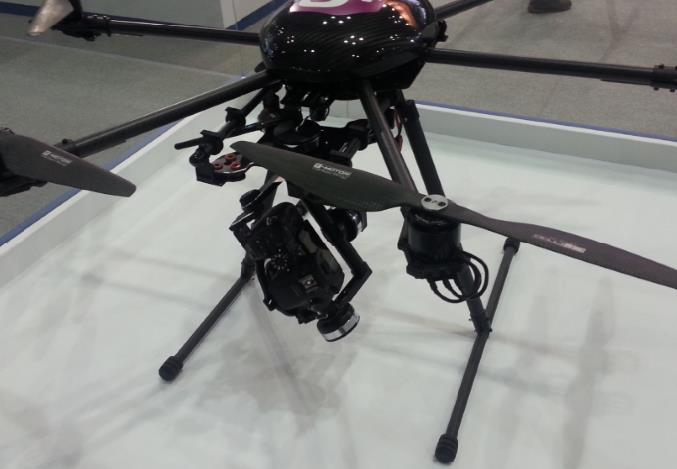
Sensor manufacturers are tailoring their developments to benefit emerging applications, particularly wearables, drones, self-powered devices, and the Internet of Things.
"Integrating information from multiple sensors to provide comprehensive sensing capabilities and increasing sensor accuracy are key factors enabling new application areas," said Sumit Kumar Pal, Senior Research Analyst at Frost & Sullivan TechVision. "The advent of flexible sensors will enable sensor solutions to be applied in even more new applications."
Sensor fusion, especially with information and communication technologies, will give rise to next-generation products and services. Significant convergence opportunities exist in energy harvesting, bendable and wearable electronics, wireless connectivity, and cloud analytics.
However, the long-term adoption of sensor technology largely depends on the customer experience in the early stages. Certain solutions, such as drones and biosensors, will likely need to overcome regulatory hurdles before achieving large-scale penetration.
“Governments need to design regulations that allow the use of new technologies without disrupting existing infrastructure and the operation of critical services,” said Kumar Pal, a researcher. “These favorable changes will propel sensor and control technologies to the forefront of innovation and enhance their potential,” he said.
Comments
Related news
Sensor annual growth rate approaches 10%, reality is that most chips are imported
Advanced sensors that support consumer safety and convenience functions at the edge device level are collectively referred to as devices that recognize the external environment and convert it into electrical signals that are easy for higher-level systems to process. Generally, they encompass sensors with dramatically improved external environment sensing through the integration of manufacturing technologies such as semiconductors and nano/MEMS, as well as intelligent sensors that organically incorporate signal processing functions including data processing, automatic calibration, self-diagnosis, and decision-making. Sensors are trending toward miniaturization, integration, and intelligence in accordance with the convenience of daily life and the intelligentization of IT, and are receiving attention as key enabling technologies for realizing smart societies as convergence points between industries and as intermediaries between humans and devices. The intelligentization of sensors is prominent in applications such as compasses and maps, GPS sensor maps, and virtual/augmented reality, while integration is manifested in single sensor modules, multi-sensor modules, and one-chip multi-sensor solutions. Examples of sensor miniaturization include gas sensing utilizing birds, gas sensors using thick-film processes, and MEMS-based gas sensors.
2015.08.10by 신윤오 기자
The sensor industry must also foster start-up companies through sensor development projects.
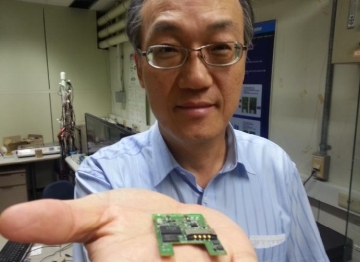
He is a representative researcher and authority in the domestic MEMS (Micro-Electro-Mechanical Systems) field. We asked him what he thinks sensors in the IoT era should be and what breakthroughs need to be found. The interview was conducted at a Seoul National University research lab about a week before the start of the semester.
2015.09.07by 신윤오 기자
[Reporter's Notebook] Ambitious Sensor Development Industry: Do You See the Future of the Sensor Industry?
A major initiative has begun to elevate the domestic sensor industry to one of the four leading nations by 2025. The Ministry of Industry, Trade and Energy has launched the "Advanced Sensor 2025 Forum," bringing together approximately 60 participants from industry, academia, research institutes, and government to nurture the sensor industry as a future flagship sector.
2015.11.09by 신윤오 기자

ESP32 Development Environment Selection and GPS Application Implementation
The ESP32 is a microcontroller that integrates Wi-Fi, Bluetooth, 12-bit ADC, capacitive touch, PWM, DAC, and UART in a single SoC. However, the abundance of features does not by itself solve the designer's problems. The real challenges lie in selecting the appropriate development environment, determining which pins can be used and which must be avoided, and converting raw data from modules into usable information. This document addresses ESP32 peripheral constraints (ADC2 and Wi-Fi coexistence limitation, UART1 occupancy, ADC non-linear regions), the trade-offs between Arduino IDE and ESP-IDF, and the process from connecting NEO-6M/NEO-M8N GPS modules to UART2, parsing NMEA sentences, and visualizing routes in Google Earth, all organized based on documented references.
2026.10.12by 편집부
MIPI CSI-2, DSI-2, C-PHY, D-PHY Test Solution Technical White Paper
The MIPI interface adopts a burst mode that transitions between low-power (LP) and high-speed (HS) states for low-power consumption, and in return, strict timing rules are imposed on state transitions. Additionally, the high-speed section operates as a packet-based protocol with headers, ECC, and CRC, so verification engineers must handle waveforms and protocols simultaneously. Traditional configurations combining general-purpose oscilloscopes and AWGs reveal limitations in setup complexity, measurement uncertainty, and lack of reproducibility when faced with these requirements. This white paper, based on webinar materials, organizes the structure of this problem and describes how the SV5C-DPTXCPTX generator for receiver testing and SV5C-DPRXCPRX analyzer for transmitter testing integrate state transition testing, stressed eye testing, and protocol analysis into a single bench, along with their application boundaries.
2026.10.12by 편집부











