


Smart factory technology that will save the oil refining industry
 Published2015.11.16 16:44
Oil refineries are shifting to operating cost efficiency (OPEX).

Source: Schneider Electric website
Schneider Electric, which acquired Invensys last year to further strengthen its process automation and software capabilities, also introduced software for customers in the refining and petrochemical industries facing new challenges and presented a new vision for growth through profit maximization.
The four major domestic oil refiners recently announced their third-quarter earnings. While all four companies successfully returned to profitability, significantly improving their operating profits compared to the same period last year, their combined sales declined by 30%, failing to achieve significant growth. This decline was due to lower product prices stemming from continued low oil prices, driven by slowing demand in China and increased oil production. With this low oil price trend expected to continue into next year, the global refining and chemical industries are scrambling to find new solutions.
As simply building new plants becomes increasingly difficult to achieve revenue growth, many refineries are shifting their investment focus from capital expenditures (CAPEX) to operating cost efficiency (OPEX). In particular, software technologies that can enhance the efficiency of complex petrochemical processes while also enhancing facility stability are attracting attention.
Schneider Electric held the '2015 APAC Optimization Leadership Forum' on Jeju Island on November 12th and 13th, inviting domestic and international industry experts and oil refiners. Around 30 representatives from major domestic oil refineries and major oil refineries from six East Asian countries, including China's state-owned oil company Sinopec, Singapore Refining Company (SRC), Japan's Tonen General Sekiyu, and Thailand's Thai Oil, also attended the meeting and participated in the discussions.
Schneider Electric announced a shift in its software business strategy from a traditional product-centric approach to a customer-centric one. It also expressed its ambition to establish itself as a total solutions provider by expanding its technology and product capabilities to deliver tailored solutions for each segment. Furthermore, the company introduced ROMeo, a process optimization solution that provides an integrated modeling environment for offline and online optimization, and ROMeo Intelligence, which enables efficient and continuous facility maintenance.
Secure plant profitability using real-time plant data and simulation models.
Romeo is a software solution capable of integrated process optimization, designed to maximize profitability in the refining, petrochemical, and chemical industries. It utilizes real-time plant data and rigorous simulation models to extract validated process and equipment performance information, continuously optimizing plant profitability in real time.
It also optimizes how the plant supplies energy by reflecting real-time data from all utility components, including steam used in the process, types of raw materials, boilers, turbines, and other power distribution systems. Additionally, by controlling the flow rate, temperature, pressure, etc. of each required raw material, the refining process is optimized to be stable and loss-free, so that operating costs can be minimized simply by following the software.
Global petrochemical companies such as ExxonMobil, Shell, and India's Reliance are achieving operating cost savings with Romeo, and it is rapidly spreading to the domestic industry. These customers are able to achieve cost savings of 1-3% of the total plant value on average, and the investment cost can be recovered within a year. In particular, domestic customers achieved a return on investment within 6 months. At the event, G Oil Company, along with Japan's Tonen General Oil and Thailand's Thai Oil, presented cases of reducing costs and operating expenses by applying Romeo. G Oil Company cited the following as reasons for adopting Romeo: continuous R&D and the ability to continuously improve products based on customer needs, and the confidence in product performance based on the cost-saving track record of global refineries.
“The importance of software that can optimize operational efficiency while increasing the stability of facilities will continue to grow,” said Taesang Park, Vice President of Software Asia Pacific at Schneider Electric, who presented at this forum. “We will help customers optimize efficiency and achieve sustainable profits through software that optimizes operational efficiency (RTO: real-time optimization).”
Comments
Related news
Korea Instrument, KOLAS Accredited Calibration Agency First to Simultaneously Acquire ISO/IEC 27,001·27,701
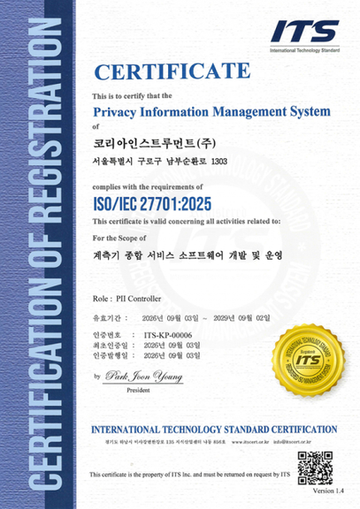
Korea Instrument has become the first among KOLAS accredited calibration agencies to simultaneously acquire ISO/IEC 27,001 and ISO/IEC 27,701 certifications. Through its proprietary platforms CWIZ Enterprise and CWIZ Partners, the company has embedded information security and personal data protection requirements across all business processes including customer information, equipment data, and calibration reports, with plans to continuously advance its management system through regular audits and security inspections.
2026.10.12by 배종인 기자
TeamViewer One, IT Incident Automation Workflow and Resolution Center Enhanced
TeamViewer has added IT incident automation capabilities and an advanced Resolution Center to its integrated digital workplace management platform 'TeamViewer ONE'. Recurrent service disruptions, configuration errors, and capacity shortages are automatically handled according to preset policies, and device status verification through script deployment can be managed in a unified interface, significantly reducing repetitive tasks for IT teams.
2026.10.12by 배종인 기자
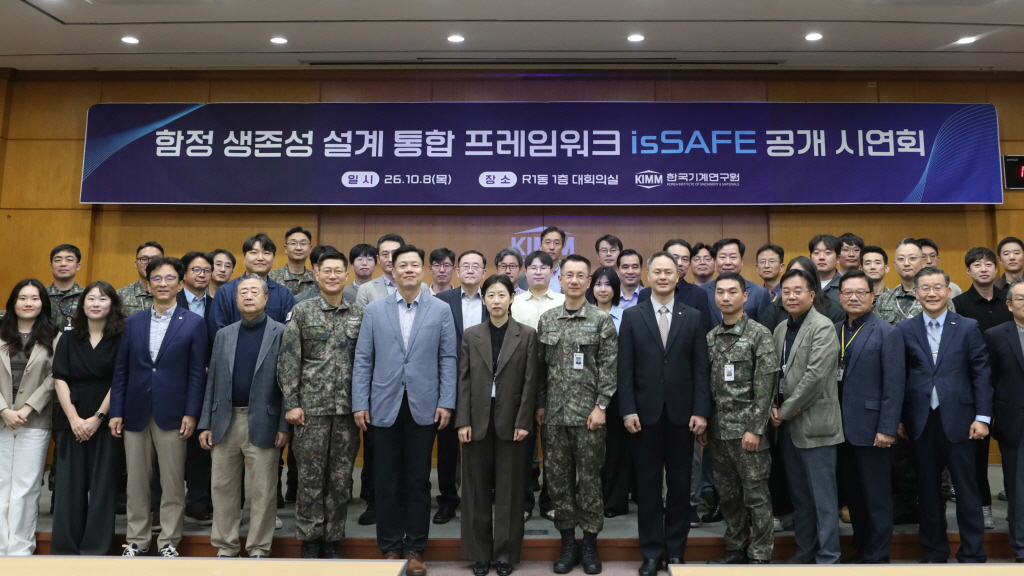
KAERI Develops Domestically-Produced SW 'isSAFE' for Integrated Warship Survivability Analysis
The Korea Institute of Machinery and Materials has developed domestically-produced software 'isSAFE' that comprehensively analyzes warship survivability. This design framework integrates the entire process—from warship modeling to hit scenario generation, vulnerability analysis, and results analysis—into a single platform, establishing an independent technology foundation in the defense technology sector that had previously relied on foreign software.
2026.10.08by 배종인 기자
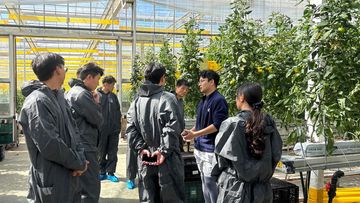
ioCrops Shares AI Smart Farm Operations Case Study
About 20 cultivators from the Agricultural Cooperative's Smart Agriculture Support Centers visited ioCrops' smart farm in Jincheon, North Chungcheong Province. They directly confirmed how data collected through substrate weight sensors, drainage weight sensors, and soil moisture sensors is applied to tomato cultivation, as well as the greenhouse pest control process using the AI-based autonomous spraying robot 'HERMAI'. By sharing on-site operational case studies combining data and automation technology, the adoption of smart farms in agricultural fields is being promoted.
2026.10.07by 배종인 기자











