



Full-scale fostering of the wearable industry, 127 billion won invested by 2020
 Published2015.11.27 17:45
The Ministry of Trade, Industry and Energy (Minister Yoon Sang-jik) and the Ministry of Science, ICT and Future Planning (Minister Choi Yang-hee) are jointly launching the 'Wearable Smart Device Project,' a representative field of the Future Growth Engine and Industrial Engine Project.
This project is scheduled to be implemented over five years from 2016 to 2020 with a total scale of 127 billion won. It plans to invest 111 billion won in the development of wearable materials, components, and platform technologies, and 16 billion won in the establishment of a commercialization support center for commercialization.
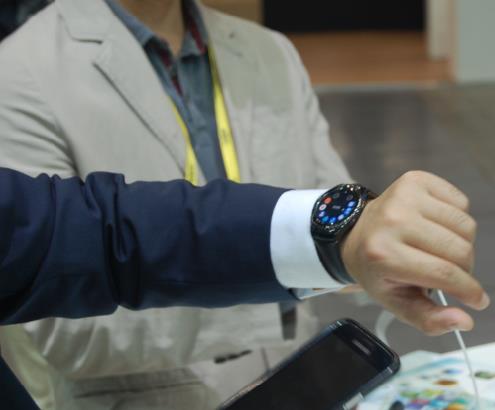
Currently, the wearable market is in its early stages of formation, but given the acceleration of related research and development and the trend of global companies successively launching new products, it is predicted that a full-scale market will be formed as early as around 2016.
Currently, the majority of applications involve providing information such as text messages, emails, and schedules in conjunction with medical devices that check users' health status and smartphones. However, as applications expand to include clothing, equipment, and lifestyle/cultural products based on communication between objects that are needed in high-risk environments such as national defense and firefighting, the global market size is expected to grow even further.
Meanwhile, if we leverage our competitive strengths in electrical, electronic, and information technology (IT), we can secure a leading position in the market within a short period, and not only in the IT sector but also in medical, defense, and middIt is also expected to lead to the advancement and sophistication of related industries such as textiles.
Accordingly, the two ministries have been seeking concrete measures to foster the industry, such as applying for a preliminary feasibility study in the first half of 2014, establishing the 'Industrial Engine Project, Comprehensive Action Plan for Future Growth Engines' which includes the wearable sector in April 2015, and jointly announcing the 'K-ICT Smart Device Development Plan' in September 2015.
Meanwhile, as developed countries such as the United States, Japan, and Europe are making all-out efforts to secure technology, there have been concerns that if the timing of technology development is delayed, technological dependence on developed countries will intensify and the growth foundation of small and medium-sized enterprises (SMEs) in the electronics, information, and information and communication technology (ICT) sectors will collapse. Furthermore, due to the nature of the information technology (IT) industry, if initial core technologies are not secured preemptively, continuous expansion of entry barriers is expected, which could make it difficult for our companies to enter the global market in the future.
Both ministries announced that they would foster this project as a flagship collaborative initiative between the Ministry of Trade, Industry and Energy and the Ministry of Science, ICT and Future Planning, emphasizing that they would actively pursue various forms of support, including not only technology development but also workforce training and corporate assistance.
Comments
Related news
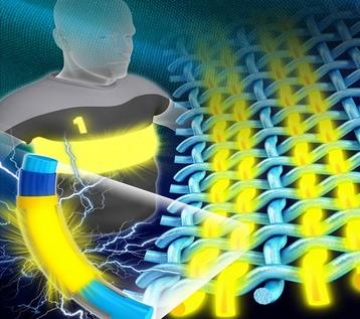
Discovered wearable display technology worn like clothes
This technology is a foundational technology that enables fabrication of organic light-emitting displays directly on fibers themselves. The achievement was recognized and published in the online edition dated July 14 of 'Advanced Electronic Materials,' an international academic journal in the field of nanoelectronics. Conventional wearable displays have been attached on top of clothing to realize aesthetic design, but this approach has limitations in that they are rigid and inflexible, making real-world application difficult, and it is challenging to maintain the inherent characteristics of textiles.
2015.08.05by 명세환 기자
Digital payment market using wearable devices to account for 20% of mobile transactions in 2020
Digital payment using wearable devices such as smartwatches, fitness trackers, and payment wristbands is an area of increasing interest among participating companies, and some prominent enterprises continue to strive to lead early market growth from initial experimentation and deployment to consumer adoption.
2015.10.21by 신윤오 기자

A low-power, secure MCU optimized for wearable devices has been released.
Maxim Integrated announced the release of the 'MAX32600MBED' microcontroller (MCU), which supports the ARM mbed IoT device platform.
2015.11.10by 신윤오 기자
ESP32 Development Environment Selection and GPS Application Implementation
The ESP32 is a microcontroller that integrates Wi-Fi, Bluetooth, 12-bit ADC, capacitive touch, PWM, DAC, and UART in a single SoC. However, the abundance of features does not by itself solve the designer's problems. The real challenges lie in selecting the appropriate development environment, determining which pins can be used and which must be avoided, and converting raw data from modules into usable information. This document addresses ESP32 peripheral constraints (ADC2 and Wi-Fi coexistence limitation, UART1 occupancy, ADC non-linear regions), the trade-offs between Arduino IDE and ESP-IDF, and the process from connecting NEO-6M/NEO-M8N GPS modules to UART2, parsing NMEA sentences, and visualizing routes in Google Earth, all organized based on documented references.
2026.10.12by 편집부

MIPI CSI-2, DSI-2, C-PHY, D-PHY Test Solution Technical White Paper
The MIPI interface adopts a burst mode that transitions between low-power (LP) and high-speed (HS) states for low-power consumption, and in return, strict timing rules are imposed on state transitions. Additionally, the high-speed section operates as a packet-based protocol with headers, ECC, and CRC, so verification engineers must handle waveforms and protocols simultaneously. Traditional configurations combining general-purpose oscilloscopes and AWGs reveal limitations in setup complexity, measurement uncertainty, and lack of reproducibility when faced with these requirements. This white paper, based on webinar materials, organizes the structure of this problem and describes how the SV5C-DPTXCPTX generator for receiver testing and SV5C-DPRXCPRX analyzer for transmitter testing integrate state transition testing, stressed eye testing, and protocol analysis into a single bench, along with their application boundaries.
2026.10.12by 편집부











