



[Reporter's Notebook] Healthcare: Why Do Auto Companies Pay Patent Fees to IT Firms?
 Published2015.12.07 17:48
LG Electronics, which has recently been achieving remarkable sales and operating profits through its Vehicle Components (VC) division, a subsidiary specializing in automotive parts, also had a significant number of electric vehicle-related patents among the 97 patents it acquired in 2014. The components that LG Electronics supplies to Chevrolet electric vehicles cover the entire vehicle, ranging from battery packs and power distribution modules to drive motors, electric compressors, and infotainment systems.
We now live in a world where the landscape of the market changes depending on the ownership of intellectual property, specifically patents. Future market conditions are often predicted based on which patents Google and Apple hold and which companies (technologies) they acquire. For instance, seeing that Apple has secured gesture-based user interface technology and speech control system technology, one can surmise that they are preparing another artificial intelligence voice recognition technology following Siri.
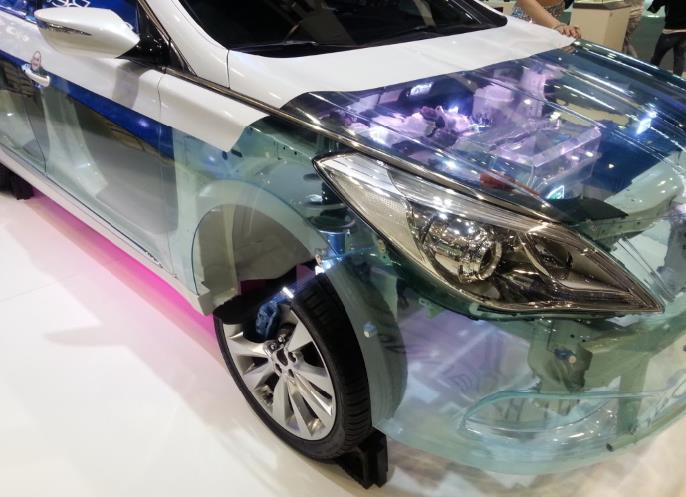 The same applies to the healthcare and automotive sectors, which are considered promising fields for the future. What does it signify that companies holding numerous patents in the medical equipment field are not specialized medical firms, but rather IT companies such as Siemens, GE, Microsoft, and Sony? One can predict future moves simply by observing that Tesla, the U.S. company famous for electric vehicles, has been intensively citing smart car technology patents in recent years. Just like in healthcare, global IT companies are increasingly securing automotive technology IP in the automotive sector.
So, what is the current state of patent competitiveness in domestic industries? The results of the analysis of patent competitiveness by future growth engine technology sectors by the Korea Institute of Intellectual Property Strategy (KISTA) reveal the reality we face. The analysis of patent competitiveness by future growth engine technology sectors covered smart automobiles, 5G mobile communications, offshore plants, intelligent robots, wearable smart devices, immersive content, personalized wellness care, smart systems for disaster safety management, new and renewable energy, intelligent semiconductors, convergence materials, intelligent Internet of Things, and big data.
The share of applications in these technology fields over the past four years (47.0%) was higher than the overall industry average (35.6%), indicating active global technology development. The average number of countries for overseas applications was 3.61, which is higher than the overall industry average (3.2 countries). However, when applying this to Korea's patent competitiveness, the results are somewhat pessimistic. In terms of the scale of patent applications, Korea (22.4%) ranks third globally following the U.S. and Japan, a level comparable to developed nations; yet, the number of citations for Korean patents (5.2) is only half that of the leading nation, the United States (11.3).
In particular, the fact that the rate of securing patents in major countries such as the U.S., Japan, and Europe is only 10.6% is a problem. This is because it directly relates to the question of whether we can secure global competitiveness in key technology fields. An official involved in the domestic patent business stated, "Korean patents are not of interest even to large Korean corporations," adding, "If domestic companies are confident in a technology, they must file for patents not only in Korea but also in other countries like the U.S. to have its value recognized."
For example, Korea's share of patent applications in smart cars was 53% of that of Japan (Toyota, Denso, Honda, etc.), indicating a low level of competitiveness compared to other fields. Personalized wellness care is a representative field where Korea's patent competitiveness is lacking, with Toshiba, GE, and Siemens occupying the top three spots in terms of patent applications. Nevertheless, Samsung Electronics is active in patenting in the U.S., with U.S. applications accounting for 37.7% of its total in the intelligent robot sector, and active patenting by Korean companies is also continuing in the field of wearable smart devices.
Consequently, while our companies' patented technologies do not lag far behind in quantity, an analysis that their "substance" is lacking when examining their content is unavoidable. This is because if this situation persists, it is obvious that they will eventually end up like "bears that perform tricks but fail to secure any profit." This is also the basis for the analysis that while the competitiveness of the technology itself is excellent, overall competitiveness is somewhat low.
Patent barriers have now collapsed. IT companies are crossing industrial boundaries to secure patented technologies. An official in the patent industry stated, "Automotive companies currently paying royalties to NPEs (Non-Practicing Entities) will soon find themselves having to pay royalties to IT firms." This implies that the day is not far off when domestic automobile manufacturers and medical equipment manufacturers will have to pay royalties to global IT companies. This is also the reason why we must increase the proportion of overseas patent applications while simultaneously securing technological competitiveness in terms of quality.
Comments
Related news
The healthcare market is on the rise, from fitness to disease treatment.
The Healthcare Pavilion featured everything from wearable devices to specialized medical equipment, demonstrating the rapid expansion of the related market. Among these, we introduce 2 notable fitness products, 1 medical device, and 2 specialized medical equipment.
2015.10.16by
[Reporter's Notebook] Do you know how to catch crocodiles in the Yangtze River?
The crocodile of the Yangtze River no longer refers solely to Alibaba. This Chinese crocodile, which has swallowed sharks, is now poised to devour semiconductors—the symbol of advanced industry—following smartphones, TVs, and displays. When did this crocodile of the Yangtze River become such a formidable entity that indiscriminately swallows everything in its path?
2015.11.17by 신윤오 기자
[Editor's Notebook] The Reality of China's Semiconductor Rise Through IP Patents
In the semiconductor industry recently, China is undoubtedly the biggest issue. This is because the Chinese government has decided to invest approximately 180 trillion won in the coming years to localize semiconductors with high foreign content. China's goal is to achieve an annual average growth rate exceeding 20% for all companies' sales by 2020. The ambition is to realize large-scale mass production at 16/14 nanometer process nodes and elevate packaging and testing technologies to world-class standards.
2015.11.23by 신윤오 기자

[e4ds Tech Day 2026 ⑨] Sim Sang-gyu, Autocrypt CTO: "In the Physical AI Era, Automotive Security Must Extend Beyond the Vehicle"
At e4ds Tech Day 2026, Sim Sang-gyu, CTO of Autocrypt, explained automotive cybersecurity strategies in the era of Physical AI and SDV (Software-Defined Vehicle). Automobiles are evolving as part of an ecosystem connected to AI, cloud, chargers, IoT, and robots, and he emphasized that the scope of security must expand beyond the vehicle interior to the entire connected environment. In particular, AI model tampering, adversarial attacks, OTA updates, and EV charger hacking were identified as major threats. He explained that response measures require zero trust, AI model integrity protection, intrusion detection, Security by Design and Default, and full lifecycle security management, and that proactive security system establishment beyond regulatory compliance is critical for securing future mobility competitiveness.
2026.10.12by 배종인 기자

Practical HIL Construction Strategy for Automotive and Off-Highway Controller Validation
As vehicle E/E architecture transitions to zonal structures and shifts to software-defined vehicles (SDV), the number of controllers (ECUs) requiring validation and software complexity are surging dramatically. Meanwhile, real vehicle testing cannot provide repeated verification under identical conditions and entails lead time and safety concerns. This white paper explains the principles of HIL (Hardware-in-the-Loop) validation and the structure of the NI platform composed of PXI, SLSC, and VeriStand, and through two actual implementation cases—Camera Record & Replay HIL for In-Cabin Monitoring Controller (ICMU) and Forklift Controller (VCU) HILS—describes how controller-level regression testing becomes possible. Additionally, it explicitly states application boundaries and limitations, such as lack of A2B support.
2026.10.12by 편집부











