



Polycom Announces "Five Major Trends in Video Collaboration for 2016"
 Published2015.12.21 15:29
Polycom Korea, a unified communications company, has announced its outlook on the video collaboration market for 2016.
Polycom identified the following trends to watch in next year's video collaboration market: ▲distribution of high-function collaboration solutions that enhance presenter engagement to increase efficiency in meetings and collaboration ▲expansion of cloud-based collaboration solutions ▲securing business intelligence by analyzing big data containing information about collaboration solution usage patterns ▲generalization of simple and easy-to-use collaboration solutions that require no separate user training ▲popularization of content sharing and utilization for business progress leveraging cloud technology.
The detailed contents of Polycom's "Five Major Trends in Video Collaboration for 2016" are as follows.
Distribution of Solutions Enhancing Presenter Engagement and Collaboration Efficiency

Fundamentally, as can be seen from dinner conversations, pre-game strategy meetings, and brainstorming sessions for problem-solving and new ideas, natural human collaboration and interaction have traditionally occurred in round-table settings. However, traditional video collaboration systems positioned participants in a line on both ends of a rectangular conference table, which further narrowed the field of vision for interaction among members.
Recently, as people-centric collaboration has been emphasized, collaboration solutions designed to fit natural work patterns have gained attention. Solutions necessary for collaboration such as cameras and displays are shifting toward conference room-centered deployments. Additionally, these solutions are equipped with various features including intelligent 360-degree video technology supporting human-centric collaboration, automatic mute, noise suppression, and technology that automatically detects and zooms in on speakers, thereby facilitating intuitive collaboration.
Expansion of Cloud-Based Collaboration Solutions
According to the "Cloud Adoption & Risk Report" released by cloud security company Skyhigh Networks in the fourth quarter this year, the number of cloud-based solutions typically used by general enterprises for collaboration and resource sharing exceeds 1,100. Cloud-based collaboration applications are expected to continue increasing in the future. In cloud environments, video, voice, and content can be easily integrated, and cloud collaboration solutions do not require separate software deployment, enabling vendors to supply solutions quickly and conveniently to many customers. Most importantly, since all solution upgrades and improvements are conducted at a single central data center, consistent and professional technical support is possible.
Securing Business Intelligence by Analyzing Big Data on Collaboration Solution Usage Patterns
As securing business intelligence through big data utilization becomes increasingly important, many enterprises are investing in technology to collect and properly leverage data. The same applies to the collaboration field. Starting in 2016, it is expected that the ways people use collaboration solutions and their reasons for use can be analyzed in real-time. Going forward, analysis will extend beyond simple numerical metrics such as meeting time and conference room utilization rates to identify preferred work methods of employees, types and characteristics of applications used by employees, and difficulties employees encounter while performing their duties.
Such information helps optimize business operations and create work environments capable of improving productivity. Additionally, collaboration solution providers can use such data to eliminate unused features and develop innovative capabilities that customers require.
Generalization of Simple and Easy-to-Use Collaboration Solutions
Today's workers are already a generation that comfortably utilizes IT technology. They continuously demand innovative products and technologies, and user expectations rise as solutions released on the market perform increasingly better. Simultaneously, people require intuitive and simple usage methods to fully understand and use solutions. Therefore, for collaboration solution usage to become an everyday practice, the use of collaboration solutions must be easy, convenient, and intuitive. Accordingly, many recently launched collaboration solutions feature simplified usage that requires no separate user training, and this trend is expected to continue in the future.

Popularization of Content Sharing and Utilization for Business Using Cloud Technology
The volume and variety of content used in business continues to increase, and accordingly, modifying, producing, and sharing it becomes increasingly complex. Solutions to address this complexity and facilitate easier content management are essential. Content is no longer simply material displayed on screens but rather output created by knowledge workers and the most important asset in collaboration. Within a few years, solutions that help employees manage and share content more easily and conveniently will emerge, and these are likely to be mostly cloud-based solutions. The future work environment will be characterized by the ability to retrieve, view, edit, save, and share content anytime and anywhere, whether from personal devices, cloud storage, or physical content existing in offices.

Comments
Related news

Polycom Unveils Integrated Solutions for Next-Generation Business Workflow
As the role of traditional offices and large conference rooms shrinks and open work spaces and small meeting rooms become the norm, efforts are underway to achieve effective collaboration. Suitable collaboration tools are needed for this, and the solution that Polycom is launching this time is characterized by being designed to enable work in business environments of various scales and formats.
2015.10.21by
.jpg)
SalePoint Signs Multi-Year Partnership Agreement with AWS… Promoting Identity Security that Integrates Even AI Agents
Sailpoint has entered into a multi-year strategic partnership agreement with AWS and is moving forward with establishing an integrated governance system that manages both human and non-human identities together. The plan is to consistently manage access permissions in an environment where AI agents are increasing as work execution entities, while applying the principle of least privilege and automated policy enforcement. The two companies plan to jointly expand capabilities to manage the identities of various entities, including AI agents, within a single layer in the AWS environment. This collaboration is interpreted as a move to design security and governance together in corporate environments where AI adoption is expanding.
2026.03.26by 배종인 기자
.png)
Databricks Unveils Open AI Security Monitoring 'Lakewatch'
Databricks entered the security market on March 24 by unveiling LakeWatch, an open-source agentic SIEM. The core functionality of this product is to integrate and analyze security, IT, and business data in a single environment to support AI-based threat detection and investigation. The company explained that it reduces the limitations of existing security operations centers, which have had to forgo some data due to high cost structures, and enables large-scale data analysis and automation based on open formats and ecosystems. LakeWatch is currently offered as a private preview, with Adobe and Dropbox mentioned as early customers. Databricks also announced an expanded partnership with Anthropic as well as the acquisition of Antimatter and SiftD.ai.
2026.03.26by 배종인 기자
Ecolab Expands AI Data Center Cooling Business Through Acquisition of CoolIT
Ecolab has agreed to acquire CoolIT Systems, a liquid cooling company for AI data centers, for approximately $4.75 billion. The transaction is expected to close by Q3 2026, subject to regulatory approvals. CoolIT has been supplying direct-to-chip cooling-based coolant distribution units, cold plates, and manifolds, serving hyperscale data centers and colocation operators as customers. This acquisition is a measure to address the high-heat and high-density server environments created by AI proliferation. Ecolab plans to combine its water management and digital monitoring capabilities with CoolIT's hardware technology to expand its data center cooling business.
2026.03.26by 명세환 기자
Arm Unveils First Data Center CPU Targeting 'Agentic AI' Era… Securing Both Cost-Effectiveness and Scalability for Large-Scale AI Infrastructure
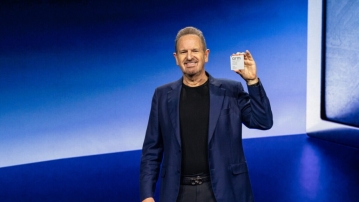
Arm has unveiled the 'Arm AGI CPU,' the first data center CPU that simultaneously secures cost-efficiency and scalability for large-scale AI infrastructure, marking a new turning point in artificial intelligence (AI) infrastructure as it targets the 'agentic AI' era.
2026.03.25by 배종인 기자











