


Why should engineers choose the Maxim Wellness Platform? It offers design flexibility, low power, and robust security for sports wearables!
 Published2015.12.24 14:52
Applications in the wearable sports and fitness market include wristband-type devices, sensor-embedded devices, and smart clothing utilizing woven or printed electronic fabrics. A recent Forrester Research survey on consumer interest in wearable sensor devices found that wristband-type wearables received the highest level of consumer interest.
For example, in golf, wearable GPS sports watches are commonly used to improve swing mechanics. Spectators can monitor movement data and performance statistics like acceleration and top speed in real time through wireless sensors embedded in players' equipment or uniforms. This technology, along with analytics and enhanced graphics, could significantly transform the live broadcast of major sporting events.
Optimized for wearable product characteristics
Maxim's "Wellness Platform" consists of hardware and software solutions that flexibly integrate healthcare technologies into wearable applications, optimizing the capabilities of wearable products. The solutions included in the Wellness Platform offer industry-leading technologies in power and battery management, digital processing, high-density integrated sensors, and ultra-low-power information and communication, while also boasting robust security features.
The MAX32600 'Wasp' is a highly integrated ARM Cortex-M3 low-power, high-precision analog performance microcontroller. TPU (Trust Protection Unit) provides the highest level of security with built-in public key authentication, data encryption, and tamper detection functions.
Additionally, the MAX14676, an ultra-compact energy and battery management solution, enables space savings through high-density integration. This solution extends the battery life of wearable devices. The MAX30100 is an opto-biosensor solution that integrates two LEDs, a photodetector, an optimized optical sensor, and a low-noise AFE. It is the industry's smallest and lowest-energy pulse oximetry and heart rate measurement solution.
We met with Damian Anzaldo, Chief Technology Officer, who visited Korea to introduce Maxim's wellness platform, to learn more.
Q: What was the background behind developing an MCU optimized for sports wearables?
A: Because we believe interest in sports and fitness is growing, and the sports wearable market is becoming increasingly important and has significant growth potential. Furthermore, sports wearables require SOCs with unique characteristics, requiring specialized components such as ultra-low power, more precise analog signal processing, and security.
Q: What are the key technological elements that enable the newly developed MCU platform to achieve low power consumption?
A: Ultra-low power on MCU platforms is achieved through power management. The first element is Maxim's peripheral management unit (PMU). It reduces power consumption by minimizing power consumption during memory access and offloading significant portions of the core CPU. Another technology related to power management is security. We have highly integrated core hardware building blocks, and in the security area, the die size itself has been reduced, and the power used in the security-related processor has also been reduced, achieving ultra-low power consumption.
Q: How much impact do you think SOC has on power in wearable systems?
A: This is crucial, because wearable devices themselves are very different from mobile devices. Wearables spend much more time in standby mode, performing tasks like conditioning incoming sensor signals and transmitting data to a network in a very static, low-power state. Standby mode consumes up to 25% of the total power, requiring a more unique approach to power management. The remaining 75% of power is consumed by sensing and communication in normal mode, significantly impacting battery life. Therefore, power management ICs must be much more efficient and able to handle a wide range of loads.
Q: This product is said to provide integrated security with a single-board TPU (Trusted Protection Unit). I assume it incorporates Maxim's existing security technology.
A: Yes, that's right. Hardware related to encryption, pseudo-random number generation or prevention, or intrusion prevention is equipped with Maxim's security technology.
Q: The MAX32600 EMBED includes an Arduino board, so I'm wondering if this fully covers Maxim's portfolio for developing IoT devices.
A: While it's not completely finished, we plan to continue developing the next-generation IoT platform, and we believe the 32600 EMBED has reached a significant level of completion.
Q: Is Maxim's MCU strategy to develop MCUs that support specific open OSs, such as this product that supports the MAX 32600 EMBED?
A: Yes, that's right. We have that strategic direction, and that's why we chose ARM. As a processor core, it supports many open systems and is widely adopted, which is why we chose ARM. Our goal is to make it easier for customers to implement new IoT and wearable products.
Q: Maxim is expanding its presence in the IoT market through its strength in power solutions. What are Maxim's goals for the IoT era ?
A: Our core goal is to help our customers launch successful products in the IoT space. The IoT field is incredibly broad, encompassing a wide range of sectors, including automotive, wearables, and enterprise. We help our customers achieve even greater business success by selecting the right segments within these diverse fields.
Q: Why should developers choose Maxim's MCU products for wearable development? Also, is there anything you would like to say to Korean engineers?
A: First, when developing various wearable devices, we offer a wide range of MCU options, allowing developers to select the right MCU for their process. For example, if you're looking for a device with high-performance, pre-integrated analog, the MAX36200 is a perfect choice. Equipped with an AFE, highly efficient ADCs, and multi-channel DACs, it's the perfect processor for devices that require extensive analog signal conditioning, such as converting and processing analog signals generated from the skin into digital signals. We also have a wide range of reference designs, making development easier. For devices that don't require extensive analog processing within the same processor family, we offer two CPUs. To summarize, our products offer a wide range of options, allowing developers to choose the right CPU for their analog needs and sensor interface types. Second, we offer low power consumption, ensuring minimal CPU consumption. Third, it is equipped with various security features to help you quickly launch successful products to the market.
Comments
Related news
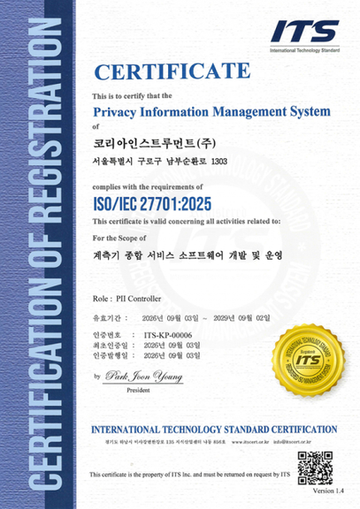
Korea Instrument, KOLAS Accredited Calibration Agency First to Simultaneously Acquire ISO/IEC 27,001·27,701
Korea Instrument has become the first among KOLAS accredited calibration agencies to simultaneously acquire ISO/IEC 27,001 and ISO/IEC 27,701 certifications. Through its proprietary platforms CWIZ Enterprise and CWIZ Partners, the company has embedded information security and personal data protection requirements across all business processes including customer information, equipment data, and calibration reports, with plans to continuously advance its management system through regular audits and security inspections.
2026.10.12by 배종인 기자

TeamViewer One, IT Incident Automation Workflow and Resolution Center Enhanced
TeamViewer has added IT incident automation capabilities and an advanced Resolution Center to its integrated digital workplace management platform 'TeamViewer ONE'. Recurrent service disruptions, configuration errors, and capacity shortages are automatically handled according to preset policies, and device status verification through script deployment can be managed in a unified interface, significantly reducing repetitive tasks for IT teams.
2026.10.12by 배종인 기자
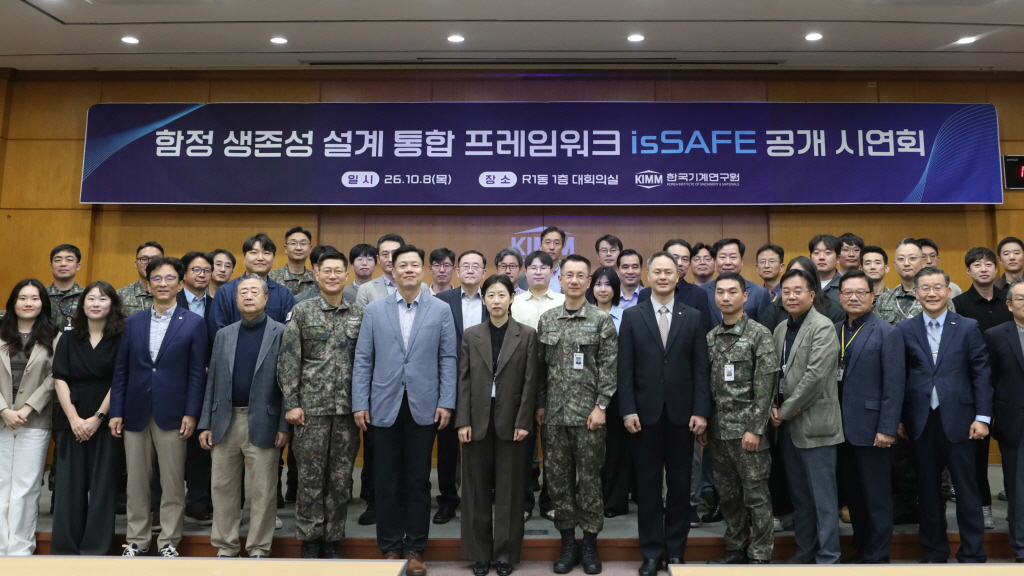
KAERI Develops Domestically-Produced SW 'isSAFE' for Integrated Warship Survivability Analysis
The Korea Institute of Machinery and Materials has developed domestically-produced software 'isSAFE' that comprehensively analyzes warship survivability. This design framework integrates the entire process—from warship modeling to hit scenario generation, vulnerability analysis, and results analysis—into a single platform, establishing an independent technology foundation in the defense technology sector that had previously relied on foreign software.
2026.10.08by 배종인 기자

ioCrops Shares AI Smart Farm Operations Case Study
About 20 cultivators from the Agricultural Cooperative's Smart Agriculture Support Centers visited ioCrops' smart farm in Jincheon, North Chungcheong Province. They directly confirmed how data collected through substrate weight sensors, drainage weight sensors, and soil moisture sensors is applied to tomato cultivation, as well as the greenhouse pest control process using the AI-based autonomous spraying robot 'HERMAI'. By sharing on-site operational case studies combining data and automation technology, the adoption of smart farms in agricultural fields is being promoted.
2026.10.07by 배종인 기자
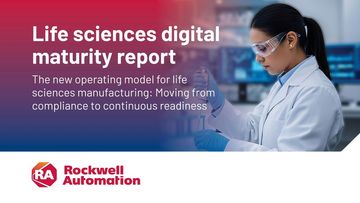
Rockwell, "90% Digital Transformation Essential in Life Sciences Manufacturing"
According to the digital transformation report for the life sciences manufacturing sector released by Rockwell Automation, 90% of responding companies recognized digital transformation as a business-critical element. Primary investment technologies include AI and machine learning (46%), process automation (44%), and cybersecurity (39%), with 64% of companies planning to expand AI utilization within the next year. However, only 32% of companies actually utilize more than half of the collected data, indicating an urgent need to strengthen data utilization capabilities.
2026.10.07by 배종인 기자











