



They say this is different in the 2nd generation Apple Watch...
 Published2016.01.04 10:23
Building on the success of the first-generation Apple Watch, what will the second-generation product look like?
The most anticipated aspect of the second-generation Apple Watch is the improvement in battery capacity. This is because criticism regarding the Apple Watch's insufficient battery capacity has persisted since its initial launch. Additionally, a recent report by DigiEco (KT Economic & Management Research Institute) stated that while Apple announced the provision of FaceTime voice calling features with the release of watchOS 2.0, the second-generation product is expected to support video calls along with voice.
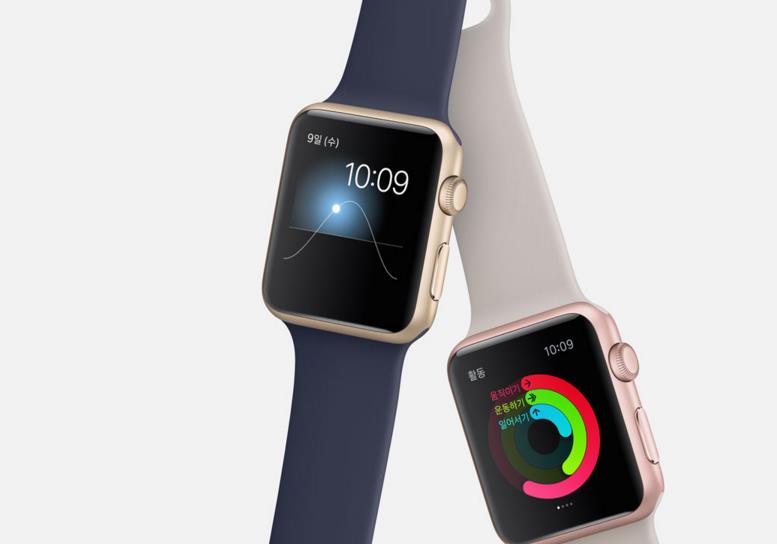 If video calls are supported, taking photos and videos is also possible.
If video calling is supported, it implies that a camera is included, suggesting that taking photos and recording videos will also be possible. The Apple Watch was released in a total of three models: a low-cost sports model, stainless steel, and a luxury edition. According to rumors, there is talk of adding a new lineup, while others predict that they will be integrated into a single model.
The Apple Watch, which was released last April, was the hottest IT device of 2015 and received a lot of attention from users and the industry. The first-generation Apple Watch, which recorded lower-than-expected sales in the early stages of its launch, gradually dominated the smartwatch market with its stylish design and various features, and market research firm IDC predicted that a total of 13 million units would be sold by the end of 2015.
Investment firm FBR Capital Markets forecasts that approximately 6 million units will be sold in the fourth quarter alone, driven by the special demand during the Christmas and year-end holiday season. According to recently released Securities and Exchange Commission (SEC) data, Apple generated nearly $1.7 billion in revenue from Apple Watch sales within just five months of its launch. Horace Dediu, an analyst well-versed in Apple, projected that 21 million units would be sold within the first year of release. Based on an average price of $400, revenue from the Apple Watch is expected to reach a staggering $8.4 billion by April 2016.
The Apple Watch took the overwhelming first place in the overall smartwatch market with a 61.3% share, far exceeding the initial sales forecast of 11 million units. Immediately after launch, the app ecosystem, which was initially lacking, also steadily expanded, with over 15,000 apps registered on the App Store—a fivefold increase over the past eight months.
Accordingly, companies involved in Apple Watch development and various experts believe that Apple has already opened the second-generation watch.
Rumors are constantly circulating that it is in the works. The Apple specialist community 9to5Mac reported that Apple plans to announce the Apple Watch 2 at a new product launch event in March 2016.
Overseas media reported that the new Apple Watch would be unveiled at an event in March and officially launched in April. According to media reports, Apple is expected to announce the iPhone 6C with a 4-inch display along with the Apple Watch 2.
Evaluations are mixed regarding the differentiation of the content.
With high expectations for the second-generation Apple Watch leading to significant pent-up demand, opinions have been raised that usability and killer apps need to be addressed, along with the shortcomings of the hardware.
Despite high device sales, evaluations are mixed regarding the differentiation of content, which is the most important aspect for smart devices. According to the Mobile Life Research Center at Stockholm University in Sweden, the most used app on the Apple Watch was found to be 'Watch Faces,' and the second most used feature was 'Notifications.' These results are also the reason why the Apple Watch is receiving criticism for failing to go beyond traditional watch functions.
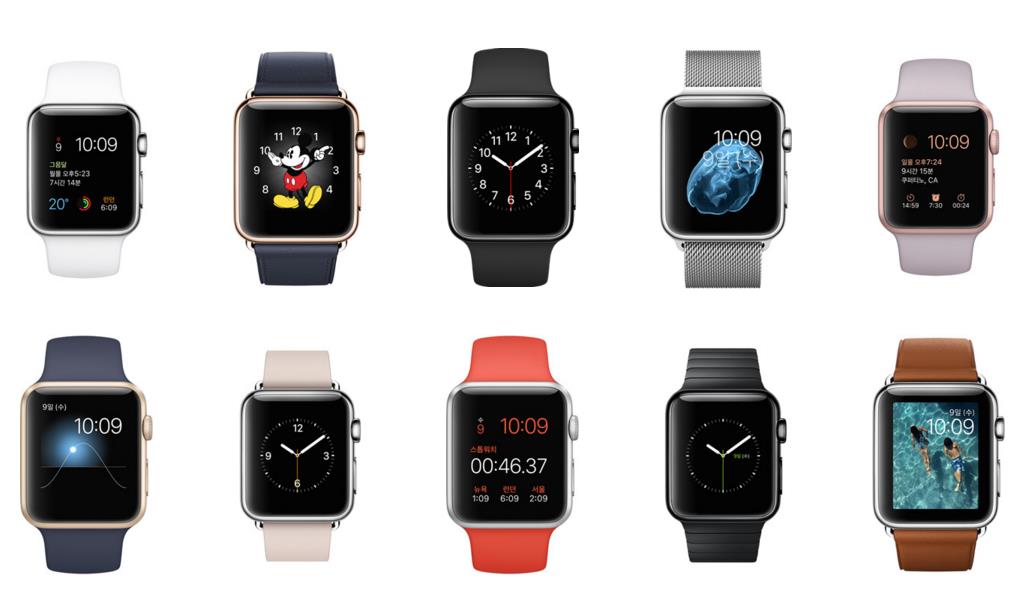
Critics point out that the iPhone demonstrated innovation distinct from existing smartphones by delivering an experience that went beyond a 'mobile phone,' whereas the Apple Watch does not exhibit such advantages.
Finally, the report stated that, realistically, innovation in smartwatches is not easy, so it remains to be seen whether the second generation can maintain as much interest and viability as the first.
The report analyzed that while it is difficult to accurately predict the release date of the second-generation Apple Watch, the product is likely to be unveiled at an event in March 2016. It further noted that with new demand for the iPhone gradually declining, Apple needs a new breakthrough and is in a situation where it has no choice but to invest heavily in the second-generation Apple Watch for this purpose.
Comments
Related news
Apple and Google virtually dominate the wearable standard, while China holds the advantage in the low-end market.
While wearable devices show little differentiation in specifications and functionality due to standardization and leveling, Kim, the CEO, emphasized that these three factors are Korea's remaining competitive advantages compared to China, stating: "Even these comparative advantages are not significant differences, and it's unclear how long they can be maintained. Ultimately, the only element left for differentiation is brand." He continued, "To build a brand, there must be clear corporate philosophy and corporate culture based on it. A brand cannot be created simply because one or two products are decent or by pouring marketing costs into it in the short term. This is an issue that Korean companies need to think about carefully and take a long-term perspective on."
2015.07.27by 신윤오 기자
Will Smartwatches Become a Key Variable in Mobile Payments Along with Design?
It is being evaluated that the wearable market, which had been stagnant until now, is gaining momentum. While the Apple Watch, which accounted for 75% of global Q2 sales, enjoyed success in the United States and Japan, its sales surge in Korea could be considered a "breakthrough" by comparison. What changes have actually taken place up until now?
2015.10.23by
The Present and Future of the Wearable Business: Case Studies from Two Companies
Interest in wearable devices, regarded as the next major player in the post-smartphone era, is growing increasingly fierce. The wearable device market, which generally encompasses smart devices that are worn or attached to the body to input, output, and process information, is growing at a compound annual growth rate of 21.5%, with projections indicating it will expand to a 70 billion dollar market by 2024.
2015.12.21by 신윤오 기자

ESP32 Development Environment Selection and GPS Application Implementation
The ESP32 is a microcontroller that integrates Wi-Fi, Bluetooth, 12-bit ADC, capacitive touch, PWM, DAC, and UART in a single SoC. However, the abundance of features does not by itself solve the designer's problems. The real challenges lie in selecting the appropriate development environment, determining which pins can be used and which must be avoided, and converting raw data from modules into usable information. This document addresses ESP32 peripheral constraints (ADC2 and Wi-Fi coexistence limitation, UART1 occupancy, ADC non-linear regions), the trade-offs between Arduino IDE and ESP-IDF, and the process from connecting NEO-6M/NEO-M8N GPS modules to UART2, parsing NMEA sentences, and visualizing routes in Google Earth, all organized based on documented references.
2026.10.12by 편집부

MIPI CSI-2, DSI-2, C-PHY, D-PHY Test Solution Technical White Paper
The MIPI interface adopts a burst mode that transitions between low-power (LP) and high-speed (HS) states for low-power consumption, and in return, strict timing rules are imposed on state transitions. Additionally, the high-speed section operates as a packet-based protocol with headers, ECC, and CRC, so verification engineers must handle waveforms and protocols simultaneously. Traditional configurations combining general-purpose oscilloscopes and AWGs reveal limitations in setup complexity, measurement uncertainty, and lack of reproducibility when faced with these requirements. This white paper, based on webinar materials, organizes the structure of this problem and describes how the SV5C-DPTXCPTX generator for receiver testing and SV5C-DPRXCPRX analyzer for transmitter testing integrate state transition testing, stressed eye testing, and protocol analysis into a single bench, along with their application boundaries.
2026.10.12by 편집부











