



Smartphones, tablets, Apple Watches, VR... Is this year a new turning point?
 Published2016.01.19 12:38
Will the virtual reality device market explode? Why is the Apple Watch 2 unlikely to succeed? Digieco announced its mobile trends for the new year in its "2016 Mobile Trend Forecast Report."
This report broadly covers trends in the smartphone and tablet PC markets, changes in mobile social media, virtual reality, and the growing importance of smartphones in automobiles. We examine trends for each issue.
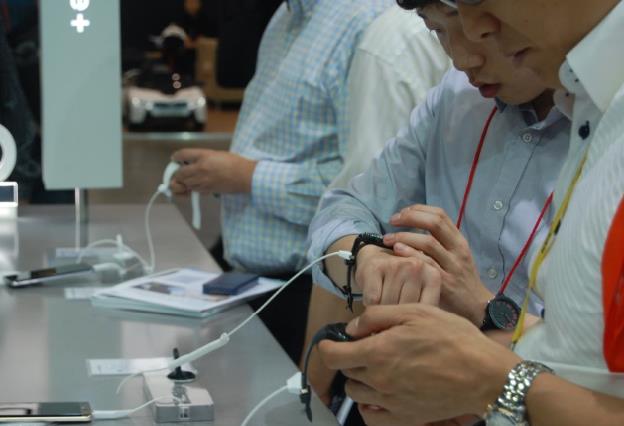
1. 70% of Samsung's devices are mid- to low-priced, making profitability unlikely to improve.
As major smartphone markets, including China and the US, reach saturation, the growth axis of the smartphone market is expected to shift further toward emerging markets, further increasing the share of low- to mid-priced smartphone shipments. For example, in the third quarter of 2015, emerging markets accounted for 73% of global smartphone sales, and 70% of Samsung Electronics' device shipments in the same quarter were low- to mid-priced devices.
In the 2016 smartphone market, it is expected that in mature markets, device upgrade programs will act as a support for the decline in high-end device shipments as they generate replacement demand, while in emerging markets, low- to mid-priced devices with high-end device performance will drive market growth.
Samsung Electronics may be able to prevent a decline in sales by expanding the release of low- to mid-priced devices, but it seems unlikely to improve profitability. However, it predicted that efforts to expand support for Android Marshmallow and improve the TouchWiz UI could mitigate the decline in sales of high-end devices. Xiaomi's surge in 2015, heavily reliant on China, has waned, and while it is making efforts to expand into overseas markets, it expects sales growth to be challenging. Huawei, the first Chinese company to surpass 100 million smartphone shipments in 2015, is expected to continue its strong performance in 2016 with its entry into the US market.
2. The tablet PC market's decline will continue.
To counter the decline in tablet PC shipments, manufacturers have expanded the release of tablet PCs with larger screens and dedicated keyboards and styluses. However, a recovery in sales will not be easy, and the tablet PC market is expected to continue its decline in 2016.
Apple's iPad Pro has become a laptop replacement with its larger size and dedicated Smart Keyboard and Apple Pencil, but it is mainly for professionals working on graphics and is not suitable for document work. Even if it supports mouse-like use by applying the double-click function of a mouse, it does not seem to provide the same convenience as a mouse.
3. Entering an era where mobile is the internet
Contrary to the slowing growth rate of the smartphone market, the influence of mobile devices on Internet usage is expanding further as the number of smart device users increases, and the mobile-only trend of using the Internet only through mobile devices is expected to accelerate further.
As a representative example, Amit Singhal, Vice President in charge of Google Search, announced in October 2015 that the number of Google searches was approximately 100 billion per month, and that in the summer of 2015, the number of mobile searches (excluding tablet PCs) surpassed the number of desktop searches for the first time. He also said that as of the third quarter of 2015, Facebook's monthly average mobile active users were 1.385 billion, accounting for 89% of the total number of active users, and that the number of mobile-only users had expanded to 727 million, accounting for 47% of the total number of active users.
4. Social media is launching new services to increase user retention and revenue.
The evolution of social media has virtually come to an end, and further user expansion is no longer feasible. Therefore, based on the current user base, new services aimed at increasing user retention time and revenue growth are expected to be launched in earnest. Furthermore, mobile personal broadcasting services that share "Live Moments" rather than "Filtered Moments" are expected to expand as a new type of social media.
Facebook, a representative example of existing SNS, is adding new services to increase revenue along with services that allow users to check content more easily and stay on Facebook longer based on the content posted and shared by users on Facebook, such as a video-only section, a shopping section, a new Google Now-style notification page, enhanced Facebook Search, and a multi-newsfeed based on user preferences.
5. Mobile messengers are growing into a bigger platform than social media.
Mobile messengers have already surpassed social media in terms of the number of users, and have grown into platforms with greater importance than social media in terms of service platforms, adding games, shopping, news content, search, payment services, music streaming services, OTT video services, taxi-hailing services, and AI-based on-demand commerce services to their basic communication functions.
This trend is exemplified by Facebook adding an AI-powered on-demand commerce service, 'M', and an Uber calling function to Facebook Messenger, and Google's development of a new mobile IM that incorporates a chatbot. Mobile messengers, with their massive subscriber bases, are poised to absorb more and more internet services, perhaps even becoming a more important platform than the operating system.
6. Music streaming service revenue surpasses download revenue.
As music streaming services expand, global music streaming revenue is expected to grow to a level similar to download revenue, and in the U.S. market, music streaming revenue is expected to surpass download revenue.
The music industry's growth axis is expected to rapidly shift to music streaming services, and this trend is defined by the fact that Apple Corps, which owns the Beatles' music, made the Beatles' music available for the first time ever on music streaming services such as Spotify, Apple Music, Google Play, and Tidal on Christmas Day, December 25, 2015.
7. Transition to an OOT service that can be used without a TV service subscription.
As competition in OTT (Over The Top) video services intensifies, pay TV operators' OTT strategies shifted in 2015 from bundling services with existing pay TV services to offering OOT (Online-Only TV) services, accessible without a TV subscription, to prevent cord-cutting. Starting in 2016, the shift among pay TV subscribers to OOT and OTT services is expected to gradually increase, and competition surrounding OTT video services is expected to focus on expanding their own content offerings.
8. Apple Watch 2 unlikely to achieve last year's sales figures without significant feature improvements.
As shipments of fitness trackers and smartwatches increase, the wrist-worn wearables market is gradually showing signs of blooming. However, compared to fitness trackers with distinct use cases, smartwatches still have not found a solution for their unique use case (killer app), and it is unlikely that shipments will increase significantly in 2016.
Fitness trackers, which added 24-hour heart rate monitoring as a core feature in 2014, improved in 2015 to enable tracking not only walking, running, cycling, basketball, soccer, and tennis, but also detailed exercise movements like push-ups, sit-ups, and squats. A representative feature is Fitbit's SmartTrack function, and in 2016, the range of trackable exercises and movements will expand, along with improved accuracy.
In the case of smartwatches, shipments increased significantly with the launch of the Apple Watch in early 2015, but the market is monopolized by Apple, so the possibility of market expansion is low. It is known that the Apple Watch 2 will be released in March 2016, but without major functional improvements, it is expected that it will be difficult to achieve the same sales volume as in 2015.
9. This will be the year when the hype around virtual reality devices fades.
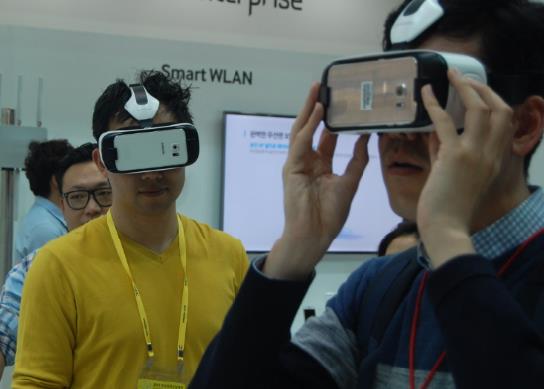
Samsung Electronics opened the door to the virtual reality terminal market by releasing the Gear VR at the end of 2015, and in the first quarter of 2016, virtual reality terminal company Oculus and Taiwan's HTC are scheduled to release their own virtual reality terminals, the Oculus Rift and the Vive, respectively. However, the initial content is limited to games and videos, and the interface is not equipped with a level similar to the multi-touch of a smartphone, and the related ecosystem is unlikely to expand quickly, so it is expected that it will be difficult to maintain a continuous response from consumers.
However, as 360-degree cameras for virtual reality terminals are equipped with real-time editing functions, 360-degree personal broadcasting is expected to become possible, and as the development of smart gloves for virtual reality terminals is expanding, the market is expected to expand in earnest from 2017.
10. Magic Leap will drive interest in virtual reality devices.
Magic Leap, which raised $500 million in investment from investors led by Google in late 2014, has not disclosed any information regarding the device, but it is expected that the device will be released in 2016, as it was reported that it released a demo video in October 2015 and that it would secure $827 million in new investment in December 2015. If it provides the same functions as the released demo video, it is expected to receive a response better than the iPhone as a next-generation platform to succeed smartphones.
11. Domestic robots could replace pets
In 2015, Japan's Softbank released Pepper, an emotion-recognition robot, and Jibo, the first family social robot, is scheduled to be officially released in the summer of 2016. Although its voice recognition speed is not fast enough to converse with actual people, it is capable of some level of emotional interaction with users, such as joking or dancing, so it seems that home social robots could replace pets.
12. Cars are evolving into smartphones on wheels.
Interest in autonomous vehicles has grown since Apple entered the market in 2015, a market previously dominated by Google and established automakers. This development is expected to accelerate further in 2016. Companies currently developing autonomous vehicles can be broadly categorized into four groups: internet giant Google, device manufacturers Apple and Samsung Electronics, companies involved in similar taxi services, and established automakers.
While the individual companies' goals for developing autonomous vehicles are unknown, Google's is believed to be for a driverless taxi service and to use vehicles as outdoor advertising and service delivery channels. Apple, on the other hand, appears to have begun developing autonomous vehicles after seeing the potential for the company to turn the tables on in-vehicle infotainment systems.
In the case of similar taxi services, it is believed that the development of self-driving cars is being promoted as a form of competition between similar taxi companies, along with the development of Google's self-driving cars and the launch of a taxi service based on self-driving cars. Traditional automakers, which have been somewhat passive in the development of autonomous and electric vehicles, appear to be accelerating the development of autonomous vehicles to avoid becoming the "Nokia of the auto industry," unlike Nokia, which disappeared with the entry of Google and Apple into the smartphone market.
Comments
Related news

The Future Can Be Seen by Looking at the Top 10 Issues in the ICT Industry of 2016
According to a report released by the Information and Communications Technology Promotion Center (IITP), the top 10 ICT industry issues in 2016 were identified as IoT (Internet of Things), automobiles, mobile, drones, artificial intelligence, robotics, China, batteries, and healthcare.
2015.10.06by 신윤오 기자
2016 will be the year IoT becomes visible in actual applications.
CA forecasts that the application economy will accelerate in 2016 across business and IT operations, app development, and data management approaches. The company has identified five key IT technologies: ▲accelerated flexible and scalable development through containers ▲full-scale adoption of agile security ▲emergence of analytics-driven customer experience ▲visualization of the Internet of Things (IoT) in real-world applications ▲revival of blockchain technology.
2015.12.28by 신윤오 기자
They say this is different in the 2nd generation Apple Watch...
The most anticipated aspect of the second-generation Apple Watch is an improvement in battery capacity. This is because the Apple Watch has faced continuous criticism regarding insufficient battery capacity since its initial launch. Additionally, as Apple unveiled Watch OS 2.0 with FaceTime voice call functionality, a recent report from Digieco (KT Economic and Management Research Institute) indicated that the second-generation product is expected to support video calls along with voice calls.
2016.01.04by 신윤오 기자

ESP32 Development Environment Selection and GPS Application Implementation
The ESP32 is a microcontroller that integrates Wi-Fi, Bluetooth, 12-bit ADC, capacitive touch, PWM, DAC, and UART in a single SoC. However, the abundance of features does not by itself solve the designer's problems. The real challenges lie in selecting the appropriate development environment, determining which pins can be used and which must be avoided, and converting raw data from modules into usable information. This document addresses ESP32 peripheral constraints (ADC2 and Wi-Fi coexistence limitation, UART1 occupancy, ADC non-linear regions), the trade-offs between Arduino IDE and ESP-IDF, and the process from connecting NEO-6M/NEO-M8N GPS modules to UART2, parsing NMEA sentences, and visualizing routes in Google Earth, all organized based on documented references.
2026.10.12by 편집부

MIPI CSI-2, DSI-2, C-PHY, D-PHY Test Solution Technical White Paper
The MIPI interface adopts a burst mode that transitions between low-power (LP) and high-speed (HS) states for low-power consumption, and in return, strict timing rules are imposed on state transitions. Additionally, the high-speed section operates as a packet-based protocol with headers, ECC, and CRC, so verification engineers must handle waveforms and protocols simultaneously. Traditional configurations combining general-purpose oscilloscopes and AWGs reveal limitations in setup complexity, measurement uncertainty, and lack of reproducibility when faced with these requirements. This white paper, based on webinar materials, organizes the structure of this problem and describes how the SV5C-DPTXCPTX generator for receiver testing and SV5C-DPRXCPRX analyzer for transmitter testing integrate state transition testing, stressed eye testing, and protocol analysis into a single bench, along with their application boundaries.
2026.10.12by 편집부











