



Domestic push for autonomous vehicles on actual roads is in its infancy, while overseas markets are racing to fully apply artificial intelligence.
 Published2016.02.01 16:01
Fostering autonomous vehicles as one of the seven new industries in the Ministry of Land, Infrastructure and Transport
Will we be able to see self-driving cars driving on actual roads in Korea as well?
With the government deciding to conduct real-road test runs of autonomous vehicles, attention is once again focused on core technologies for autonomous vehicles. On the 28th of last month, the Ministry of Land, Infrastructure and Transport (Minister Kang Ho-in) announced its '2016 Work Plan' and selected the fostering of the autonomous vehicle industry as one of the seven new industries in the land, infrastructure, and transport sector. This plan includes support projects for technology development, such as real-road test runs of autonomous vehicles, the designation of pilot operation complexes, and the establishment of experimental cities.
An official from the Ministry of Land, Infrastructure and Transport stated, “We will spare no support to help Korea emerge as a leading nation in autonomous driving technology by expanding support infrastructure, such as constructing high-precision road maps, commercializing high-precision GPS technology, and establishing C-ITS (Next-Generation Intelligent Transportation Systems), as well as developing safety evaluation technologies and participating in the establishment of international standards related to autonomous vehicles.”
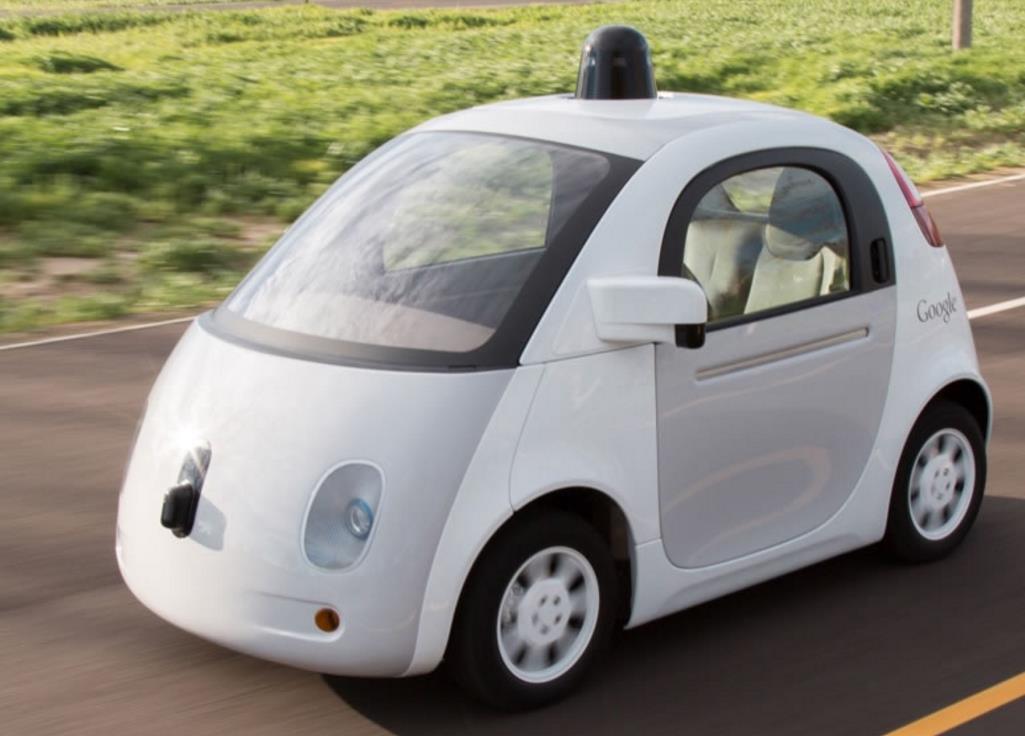
Google's self-driving car
Prior to this, Minister of Land, Infrastructure and Transport Kang Ho-in made clear the government's commitment to promoting the autonomous vehicle industry during a visit to Hyundai Motor Company's Namyang Research Center and the Korea Transportation Safety Authority's Automotive Safety Research Institute on the 22nd of last month. “We will actively support the commercialization of autonomous vehicles by 2020, which is a leading technology driving the Fourth Industrial Revolution,” he said. “As autonomous vehicles are an important technology that will bring innovation to the entire transportation and logistics sector, the Ministry of Land, Infrastructure and Transport, which is responsible for automotive regulations and the transportation and logistics industry, will pursue the development of related systems, support for technology development, and expansion of autonomous driving infrastructure with a sense of mission so that Korea can lead the world.”
Test runs of autonomous vehicles on public roads starting in March?
Production of high-precision road maps including 3D coordinates
First, regarding actual road test runs, the plan is to implement a temporary operating permit system for autonomous vehicles starting in February, and after going through the process of receiving permit applications and verifying the functions of autonomous vehicles, full-scale test runs of autonomous vehicles on general roads will begin in March. The Ministry of Land, Infrastructure and Transport explains that there are no legal issues. They state that the 'Automobile Management Act' has been amended to allow the operation of autonomous vehicles for testing and research purposes, and that this can be implemented starting February 12 of this year.
The Ministry of Land, Infrastructure and Transport already designated one section of expressway (42 km) and five sections of general roads (318 km) as test sections last October, and plans to gradually expand test areas, including the autonomous vehicle regulation-free zone in Daegu Metropolitan City. The operation complex to be designated this coming July will prioritize support for autonomous driving infrastructure, such as vehicle-infrastructure communication facilities.
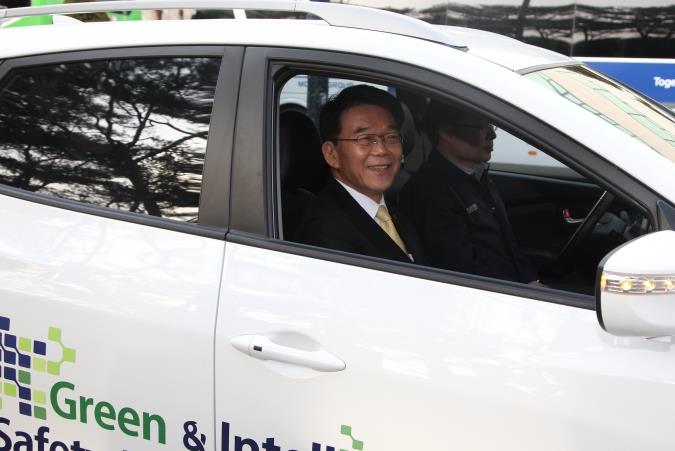
On the 22nd of last month, Minister of Land, Infrastructure and Transport Kang Ho-in visited Hyundai Motor's Namyang Research Center and test-drove an autonomous vehicle.
In addition, plans are underway to construct a small-scale experimental city (K-City) capable of conducting research by reproducing various traffic conditions of actual roads and urban areas in a controlled environment. High-precision road maps containing 3D coordinates, which are essential for the commercialization of autonomous vehicles, will be produced starting from the test operation sections. These 3D high-precision road maps display road information such as lanes and road markings, as well as facility information such as median strips, traffic lights, and traffic signs (accuracy 25cm). They will be constructed starting from the autonomous driving test operation sections and will be gradually expanded nationwide in the future.
In addition, based on the precision GPS source technology secured through the Ministry of Land, Infrastructure and Transport's R&D project, we will build a GPS infrastructure to transmit correction signals nationwide and promote the commercialization of precision GPS technology by 2018 through the transfer of terminal technology to the private sector. We plan to pilot the C-ITS (Cooperative ITS, next-generation intelligent transportation system), which can provide various traffic information through communication between autonomous vehicles and road infrastructure, on the Sejong-Daejeon road this year and expand it to roads nationwide, focusing on expressways, starting in 2018.
Advanced sensor technology and the construction of high-precision urban road maps are lacking.
However, despite the government's plans, industry insiders unanimously agree that the development of autonomous vehicle technology faces significant challenges. The reality is that the vehicles currently lack the advanced in-house technology necessary for autonomous driving, and legal restrictions exist for testing and actual road operation.
A prime example is the urgent need to develop advanced sensor technology and precision road maps, which are essential for autonomous vehicles. Although the government launched a project to advance advanced sensors this year, it targets the general sensor industry rather than focusing specifically on autonomous vehicles. Automotive-related sensor projects are limited to specific radar sensors. Furthermore, regarding precision road maps, while there are plans to produce them starting with test drive sections, there are no plans to create maps for the urban areas where they are actually needed. Additionally, regarding the autonomous vehicle test city, there is only a plan to benchmark the University of Michigan's M-City, but no concrete implementation plan exists.
Speaking at the Automotive Testing Expo conference last month, Professor Heo Gun-soo of Hanyang University stated, “Autonomous vehicle technology requires the complex development of digital map technology, precise positioning technology, V2X technology, map matching technology, path generation and vehicle control technology, IVN technology, and ADR alongside existing smart car technology.” He further pointed out, “As the technological level of smart cars—which are currently the subject of fierce competition for enhanced safety and convenience—advances, core technologies for autonomous vehicles will be secured.”
Even when compared to the example of Google in the U.S., which continuously accumulates data through test drives on actual roads, there is still a long way to go. This means that we need technology that goes beyond simply driving on test tracks and encompasses artificial intelligence.
Leading overseas companies begin full-scale adoption of artificial intelligence technology
Cha Won-yong, Director of the ASPAC Future Technology Management Research Institute, stated, “Google reported experiencing 341 instances of ‘autonomous driving function disengagement’ during autonomous driving tests, having conducted nearly 3 million kilometers of driving tests to date. While conducting these tests, Google collects the experiences between users and vehicles as big data, and then trains the vehicles using artificial intelligence, machine learning, and deep learning based on this data.” He added, “They are training and updating functions such as driving on curves, collision avoidance, and route changes upon detecting the appearance of emergency vehicles, and are subsequently filing patents for these technologies.” "Sensors are important, but computing systems are also important, and detailed road maps are also important," he said.
In the case of the Audi A7, an autonomous vehicle from the overseas automotive company Audi, it achieved autonomous driving by applying deep learning for pedestrian recognition and judgment of the driving environment, while BMW plans to unveil a fully autonomous vehicle to commemorate its 100th anniversary this coming March. Toyota of Japan, which has already demonstrated urban autonomous driving technology, has equipped its driverless car with an automatic highway driving assistance system, cooperative-coordinated cruise control, and lane tracking control devices.
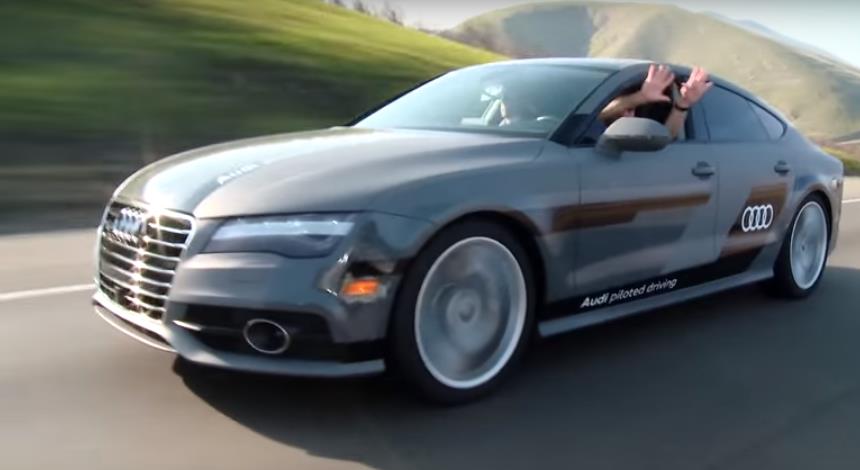
Audi successfully drove an autonomous vehicle from San Francisco to Las Vegas last year.
At the 2016 CES held in Las Vegas, USA last month, numerous automakers such as Ford, Toyota, and Chevrolet showcased autonomous driving technology, and numerous parts companies such as Qualcomm, Delphi, Bosch, and ZF showcased autonomous driving-related parts.
Dr. Lee Kyu-bok of the Electronics Components Research Institute, who visited the exhibition, wrote on his Facebook page, “It was an exhibition where the convergence between ICT and automobiles became more diversified and deepened based on ICT technology,” adding, “In addition, the entry of IT companies such as Google and Apple, and semiconductor companies such as TI, Intel, and Qualcomm into the automotive electronics sector has expanded.” “One example is the collaboration between Ford and Google in the fields of connectivity, consumer experience, and data analytics. Focusing on the advancement of situational awareness technologies for autonomous driving, such as NVIDIA’s Drive PX2 platform, also appears to be an important issue, indicating that intelligent information technology (artificial intelligence, AI) has begun to be applied to autonomous driving in earnest,” he stated.
The Ministry of Land, Infrastructure and Transport announced its plan to support the technical aspects of related regulations necessary for the commercialization of autonomous vehicles by 2020 and to respond to continuously improving autonomous driving technology through follow-up research. However, voices from the industry are loudly voicing that, even before considering deregulation or accountability, there are many "obstacles" in the path of autonomous vehicles in terms of key advanced technologies. This is because the autonomous vehicle industry transcends a single automotive sector and represents the culmination of complex future technologies.
Comments
Related news

[Reporter's Notebook] The Current State of Self-Driving Cars: A Technology That Has Made Imagination a Reality
Google has passed autonomous vehicle safety testing in Las Vegas and other locations, and California is in the process of revising autonomous vehicle operation laws. Nevada has permitted autonomous vehicle operation and issued licenses for the first time in the world. Meanwhile, IT companies were advancing on the road. As is well known, Google has been focusing on autonomous driving technology development since 2009. Google's autonomous vehicle, which garnered more attention due to minor accidents (14 incidents total) in June, has traveled approximately 2.896 million kilometers from 2009 to the present. Google stated that it is traveling an average of 16,000 kilometers per week through autonomous driving mode in its autonomous vehicles. Additionally, Apple, which announced autonomous driving technology development in 2015, is aiming for fully autonomous driving.
2015.08.03by 명세환 기자
LG Electronics “Found Partner to Strengthen Autonomous Vehicle Component Development Capabilities”
LG Electronics announced that it will jointly develop core components for an Advanced Driver Assistance System (ADAS) for next-generation autonomous vehicles with Freescale, a U.S. semiconductor company.
2015.10.07by 신윤오 기자

Where Are We in Core Sensor Element Development? ② “Development of 79GHz Automotive Radar Sensor to Preempt the Autonomous Vehicle Market”
Following last week's updates on smart motion sensors, metabolic rate measurement sensors, harmful gas sensors, and optical sensors, we introduce the following technologies: ▲automotive shunt resistance current sensors ▲lidar sensors for autonomous vehicles ▲automotive 79GHz radar sensor technology.
2015.11.23by 신윤오 기자
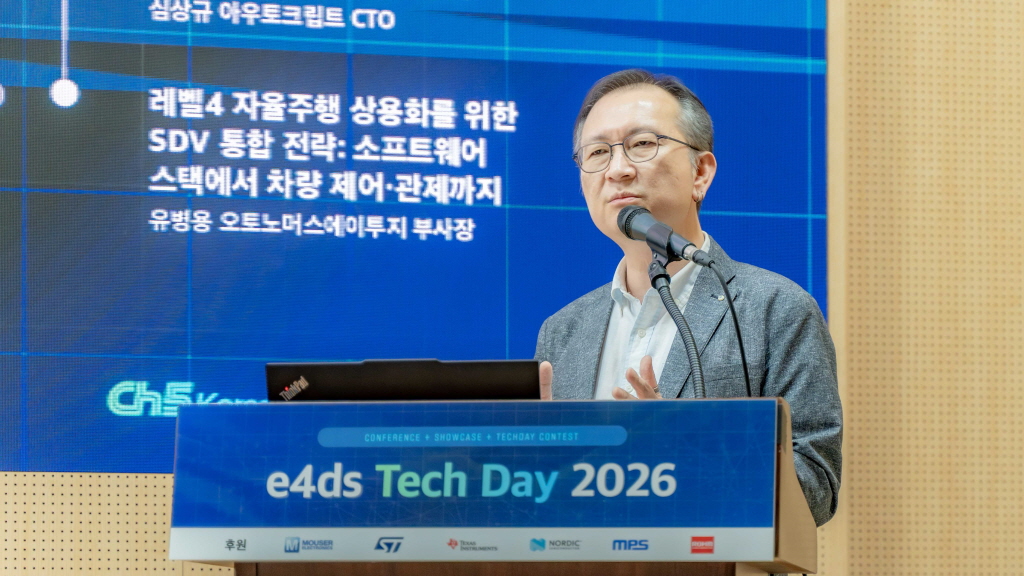
[e4ds Tech Day 2026 ⑨] Sim Sang-gyu, Autocrypt CTO: "In the Physical AI Era, Automotive Security Must Extend Beyond the Vehicle"
At e4ds Tech Day 2026, Sim Sang-gyu, CTO of Autocrypt, explained automotive cybersecurity strategies in the era of Physical AI and SDV (Software-Defined Vehicle). Automobiles are evolving as part of an ecosystem connected to AI, cloud, chargers, IoT, and robots, and he emphasized that the scope of security must expand beyond the vehicle interior to the entire connected environment. In particular, AI model tampering, adversarial attacks, OTA updates, and EV charger hacking were identified as major threats. He explained that response measures require zero trust, AI model integrity protection, intrusion detection, Security by Design and Default, and full lifecycle security management, and that proactive security system establishment beyond regulatory compliance is critical for securing future mobility competitiveness.
2026.10.12by 배종인 기자

Practical HIL Construction Strategy for Automotive and Off-Highway Controller Validation
As vehicle E/E architecture transitions to zonal structures and shifts to software-defined vehicles (SDV), the number of controllers (ECUs) requiring validation and software complexity are surging dramatically. Meanwhile, real vehicle testing cannot provide repeated verification under identical conditions and entails lead time and safety concerns. This white paper explains the principles of HIL (Hardware-in-the-Loop) validation and the structure of the NI platform composed of PXI, SLSC, and VeriStand, and through two actual implementation cases—Camera Record & Replay HIL for In-Cabin Monitoring Controller (ICMU) and Forklift Controller (VCU) HILS—describes how controller-level regression testing becomes possible. Additionally, it explicitly states application boundaries and limitations, such as lack of A2B support.
2026.10.12by 편집부











