


Korean Air Develops Unmanned Aerial Vehicle Flight Control Software Using MathWorks' Model-Based Design
 Published2016.02.02 11:30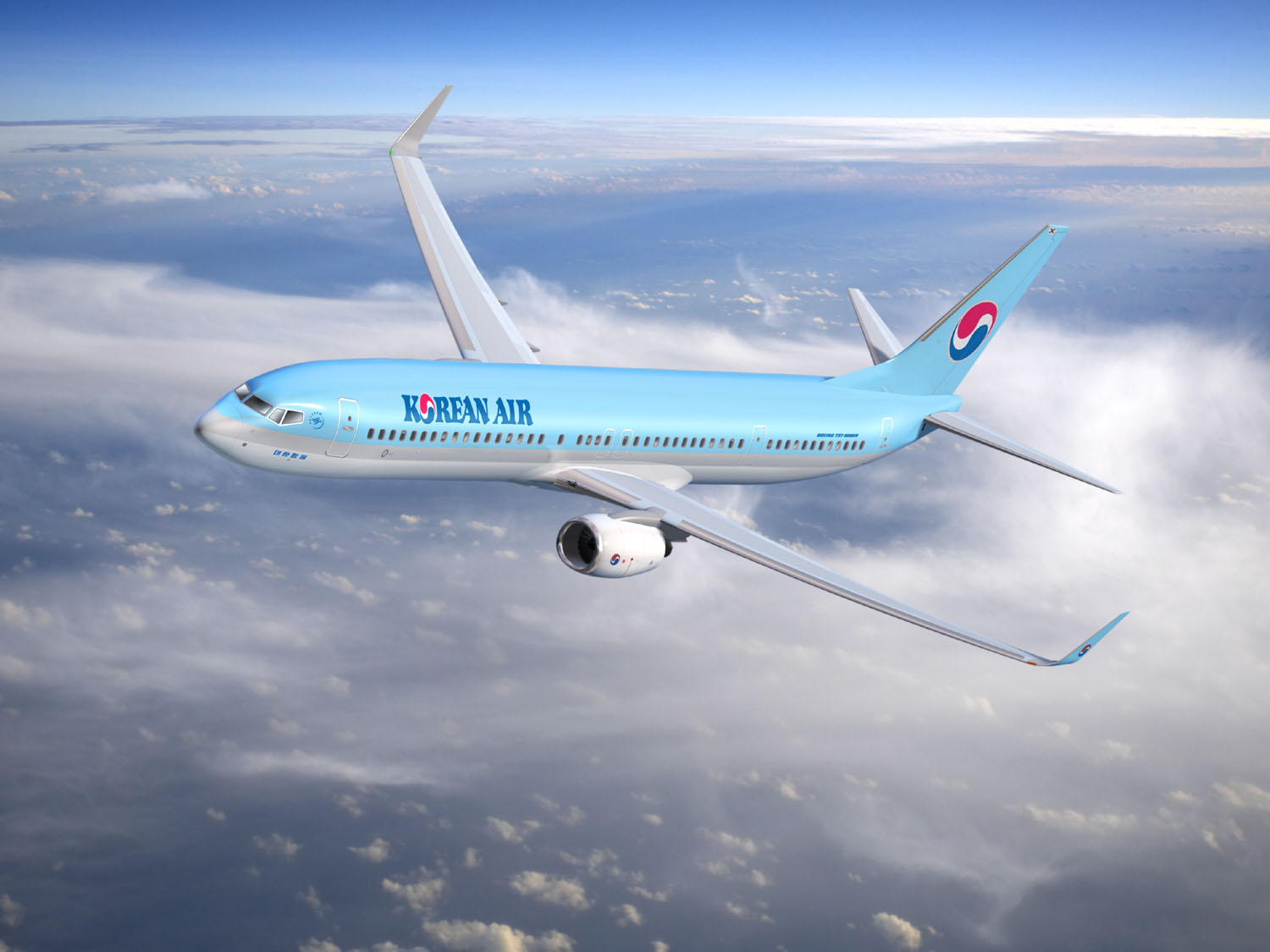
MathWorks (kr.mathworks.com), a leader in technical computing software, announced that Korean Air has developed new UAV flight control software using MathWorks' model-based design.
Engineers at Korean Air’s Aerospace Division directly coded the UAV flight control software, but several drawbacks were discovered in a single flight control system targeting multiple UAV platforms. The algorithms being developed by the engineering team were too complex to be programmed manually using C, and delays occurred due to poor communication between control rule development engineers and implementation programmers. Furthermore, manual code review and unit testing required a significant amount of time and effort.
In order to meet the set deadlines for flight testing and certification, Korean Air needed to shorten the development period by performing design model simulations, automatic code generation, and verification of the existence of runtime errors in the generated and manually written code. Korean Air's engineering team accelerated not only these verification stages but also the entire development process of UAV flight (Unmanned aerial vehicle) control software through model-based design.
Engineers developed Simulink models to specify high-level requirements and modeled flight management and control systems, such as the automatic landing guidance subsystem. Additionally, after performing desktop simulations to verify flight control rules and collect control response data, the Korean Air engineering team analyzed flight test results using MATLAB. Furthermore, they utilized toolboxes provided by MathWorks to predict model parameters related to flight dynamics and performance verification, and designed flight control rules to predict optimal control gains.
Model-based design enabled model reuse and reduced code generation and testing times, resulting in a 60% reduction in the time engineers invest in development. Additionally, while flight testing is costly, model-based design allowed for verification of whether simulations were being performed correctly. For example, the number of flight tests required to verify basic autopilot functions was reduced from 10 to 3. By utilizing MathWorks solutions, Korean Air's engineering team was able to complete development on schedule, and the developed UAV obtained Airworthiness Certification from the Korean government.
Moon Jeong-ho, Senior Flight Control System Engineer at Korean Air, stated, “By utilizing MATLAB and Simulink, we were able to save time and costs by enabling model reuse and improved efficiency,” adding, “Thanks to model-based design, the time required has been reduced by more than 50% compared to manual coding, and the advantages of model-based design have grown as the complexity of the project has increased.”

Comments
Related news
MathWorks Hosts 'GPU and Cluster Computing and MATLAB' Seminar
MathWorks, a leading company in the computing software field, has announced that it will host a seminar at the Seoul COEX Conference Room with the theme of "GPU and Cluster Computing with MATLAB."
2015.12.08by 명세환 기자
MathWorks Calls for Papers on Use Cases of MATLAB and Simulink Product Families
MathWorks, a leading company in the technical computing software field (kr.mathworks.com), announced that ahead of the MATLAB EXPO 2016 Korea, it is calling for submissions of papers and research cases detailing experiences of successfully applying MATLAB and Simulink product families to projects.
2015.12.22by 명세환 기자
.jpg)
SalePoint Signs Multi-Year Partnership Agreement with AWS… Promoting Identity Security that Integrates Even AI Agents
Sailpoint has entered into a multi-year strategic partnership agreement with AWS and is moving forward with establishing an integrated governance system that manages both human and non-human identities together. The plan is to consistently manage access permissions in an environment where AI agents are increasing as work execution entities, while applying the principle of least privilege and automated policy enforcement. The two companies plan to jointly expand capabilities to manage the identities of various entities, including AI agents, within a single layer in the AWS environment. This collaboration is interpreted as a move to design security and governance together in corporate environments where AI adoption is expanding.
2026.03.26by 배종인 기자
.png)
Databricks Unveils Open AI Security Monitoring 'Lakewatch'
Databricks entered the security market on March 24 by unveiling LakeWatch, an open-source agentic SIEM. The core functionality of this product is to integrate and analyze security, IT, and business data in a single environment to support AI-based threat detection and investigation. The company explained that it reduces the limitations of existing security operations centers, which have had to forgo some data due to high cost structures, and enables large-scale data analysis and automation based on open formats and ecosystems. LakeWatch is currently offered as a private preview, with Adobe and Dropbox mentioned as early customers. Databricks also announced an expanded partnership with Anthropic as well as the acquisition of Antimatter and SiftD.ai.
2026.03.26by 배종인 기자

Ecolab Expands AI Data Center Cooling Business Through Acquisition of CoolIT
Ecolab has agreed to acquire CoolIT Systems, a liquid cooling company for AI data centers, for approximately $4.75 billion. The transaction is expected to close by Q3 2026, subject to regulatory approvals. CoolIT has been supplying direct-to-chip cooling-based coolant distribution units, cold plates, and manifolds, serving hyperscale data centers and colocation operators as customers. This acquisition is a measure to address the high-heat and high-density server environments created by AI proliferation. Ecolab plans to combine its water management and digital monitoring capabilities with CoolIT's hardware technology to expand its data center cooling business.
2026.03.26by 명세환 기자











