


Aiming for the voluntary spread of smart factories through “Smart Factory Standards”
 Published2016.02.09 22:43
The Ministry of Trade, Industry and Energy (Minister Joo Hyung-hwan) held a symposium on “Smart Factory Standardization,” a key foundation for the voluntary expansion of smart factories.
At the symposium held on this day, the achievements of smart factory standardization efforts to date were shared, and in-depth discussions were conducted regarding future policy directions for smart factory standardization.
The Ministry of Trade, Industry and Energy has been promoting smart factory standardization in cooperation with the industry and announced the resulting standard framework, standard library, standardization roadmap, and national standard development plan.
The smart factory standard promotes voluntary diffusion in the private sector by enabling small and medium-sized enterprises to easily transition to smart factories and by providing a direction for continuous upgrades.
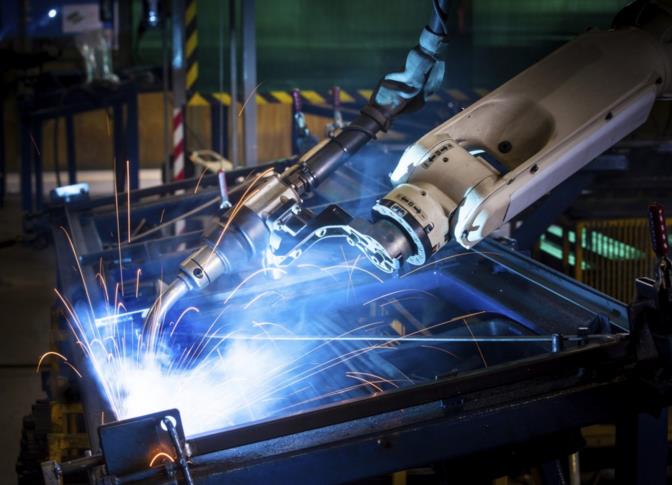
The paradigm shift in the manufacturing industry has already established itself as an unstoppable trend. However, there are still numerous challenges remaining to realize it. [Source: GE Report Korea]
Key achievements of smart factory standardization include the smart factory standard framework, smart factory standard library, standardization roadmap, and national standard development plan for smart factories.
First, the Smart Factory Standard Framework (Smart Factory Comprehensive Blueprint) is a comprehensive blueprint that views smart factory components, such as operating systems, from a standard perspective, defining the standard functions, roles, and interrelationships among the smart factory components. It presents a scalable standardization direction that considers the development of the smart manufacturing sector, the enhancement of understanding of smart factories, and the strengthening of connectivity between systems and functions.
The Smart Factory Standard Library and Standardization Roadmap refer to the support system for utilizing smart factory standards. The Library is a smart factory standard encyclopedia that compiles existing standards for smart factory technologies, systems, and devices in an easy-to-understand manner, while the Roadmap presents future response strategies and directions based on the current status of key existing standards related to smart factories.
The proposed national standard development plan for smart factories lays the foundation for KS standards for smart factories. It promotes the voluntary diffusion of smart factories by fostering a common perception and enhancing understanding of smart factories, checking the level of smartification, and suggesting directions for development.
We are also actively responding to international standardization movements, such as the International Electrotechnical Commission and the International Organization for Standardization (IEC and ISO). International standardization, centered on Germany and the United States, is developing an architecture (RAMI 4.0) for smart factory components and standards to ensure interoperability of elemental technologies related to smart factories.
In the future, the government plans to establish a representative factory based on smart factory standards and utilize it as a benchmark for demand companies and a testing ground for products and technologies of supply companies.
Comments
Related news
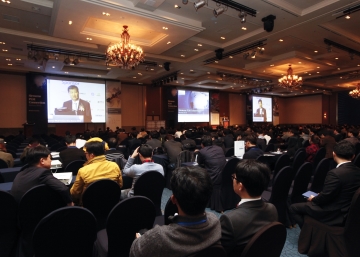
The Beginning of Smart Factories, PLM Technology, and Implementation Information
Siemens PLM Software is supporting its customers and partners in staying ahead in this competition. As part of this strategy, Siemens PLM Software held 'Siemens PLM Connection Korea 2015,' the largest PLM user conference in the domestic industry, on November 5-6. The event was a great success, drawing approximately 1,000 users and industry experts, including strategic partners of Siemens PLM Software such as Dell & NVIDIA and HP.
2015.11.09by

Smart factory technology that will save the oil refining industry
Schneider Electric, which strengthened its process automation and software capabilities by acquiring Invensys last year, introduced software for refining and petrochemical customers facing new challenges, and presented a new growth vision through revenue maximization.
2015.11.16by 명세환 기자
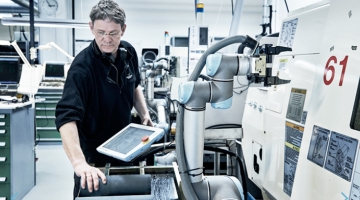
[CASE STUDY] Robots are the central axis of the 'Smart Factory,' innovation in the manufacturing field.
A 'smart factory' is a manufacturing system that integrates the entire manufacturing process—from product planning and design through production, distribution, and sales—using ICT (Information and Communications Technologies). Through systems equipped within the factory and sensors installed on machinery, a 'smart factory' autonomously controls production and processes while managing workplace safety. It is truly a 'smart factory' in the literal sense of the word.
2016.01.28by 명세환 기자
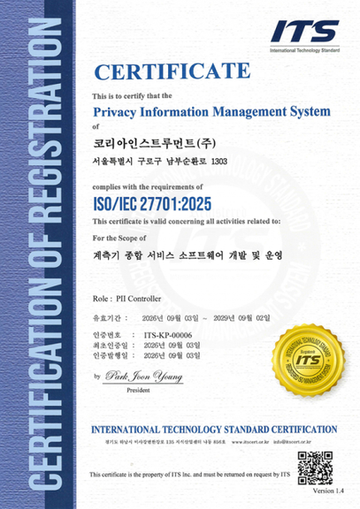
Korea Instrument, KOLAS Accredited Calibration Agency First to Simultaneously Acquire ISO/IEC 27,001·27,701
Korea Instrument has become the first among KOLAS accredited calibration agencies to simultaneously acquire ISO/IEC 27,001 and ISO/IEC 27,701 certifications. Through its proprietary platforms CWIZ Enterprise and CWIZ Partners, the company has embedded information security and personal data protection requirements across all business processes including customer information, equipment data, and calibration reports, with plans to continuously advance its management system through regular audits and security inspections.
2026.10.12by 배종인 기자
TeamViewer One, IT Incident Automation Workflow and Resolution Center Enhanced
TeamViewer has added IT incident automation capabilities and an advanced Resolution Center to its integrated digital workplace management platform 'TeamViewer ONE'. Recurrent service disruptions, configuration errors, and capacity shortages are automatically handled according to preset policies, and device status verification through script deployment can be managed in a unified interface, significantly reducing repetitive tasks for IT teams.
2026.10.12by 배종인 기자











