



Will the overall export slump in smartphones, semiconductors, displays, etc., continue?
 Published2016.02.17 06:00
Slowing smartphone growth, impact of China's aggressive production
In January, ICT exports amounted to $11.86 billion and imports to $6.79 billion, resulting in a trade surplus of $5.07 billion. The Ministry of Trade, Industry and Energy announced that ICT exports in January decreased by 17.8% compared to the same month of the previous year.
Looking at the breakdown by item, overall performance was sluggish, including mobile phones ($1.9 billion -7.3%), semiconductors ($4.53 billion -13.9%), displays ($2.01 billion -30.7%), and computers and peripherals ($590 million -10.1%).
ICT exports $11.86 billion, imports $6.79 billion… Trade surplus of $5.07 billion
The Ministry of Trade, Industry and Energy analyzed the reasons for this sluggish performance, stating that mobile phone exports declined due to offensives by latecomers such as Huawei, a slowdown in smartphone market growth, and the expansion of the mid-to-low price market, while the decline in display exports intensified due to stagnant global demand and falling unit prices resulting from the aggressive production expansion of Chinese companies.
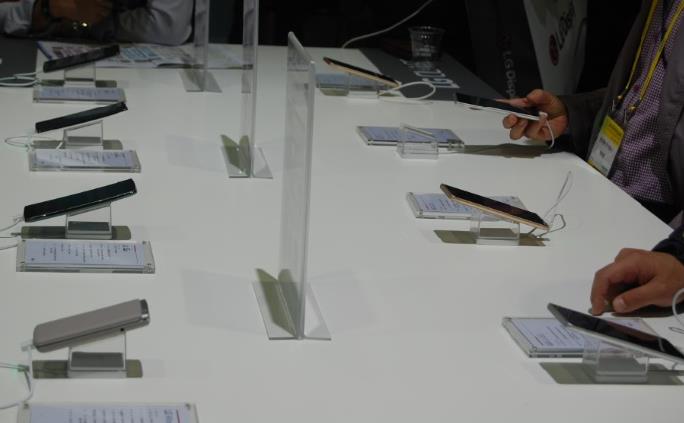
▲ Visitors to the exhibition hall are examining a company's smartphone (Reference photo)
Semiconductor exports also decreased due to falling DRAM prices and slowing global market demand for smartphones, while computers and peripherals showed a double-digit decline due to reduced global market demand and the base effect of the previous year for auxiliary storage devices (SSDs, etc.) (exports in January 2015 increased by 54.9%).
By region, exports to ASEAN ($1.85 billion, 0.4% increase) increased, but exports to most other regions decreased, including China (including Hong Kong, $6.41 billion, 17.3% decrease), the United States ($1.17 billion, 2.8% decrease), the EU ($750 million, 20.2% decrease), and the Middle East ($280 million, 29.6% decrease).
th: 600px; height: 163px;" />
▲ Status of ICT Exports (billion USD) and ICT Imports (billion USD) in January by Year
Exports to the ASEAN region increased by 0.4%, driven by expansion in mobile phones ($370 million, 15.8%) and displays ($120 million, 21.6%), despite a decline in semiconductor exports ($870 million, -3.2%). China, the largest export market, recorded a double-digit decline, centered on displays ($1.62 billion, -24.9%) and semiconductors ($2.84 billion, -13.7%).
Exports to the U.S. increased for mobile phones ($440 million, 7.5%↑) and displays ($10 million, 32.1%↑), but declined due to sluggish performance in semiconductors ($260 million, △14.6%) and computers and peripherals ($100 million, △17.5%). Exports to the EU decreased for 13 consecutive months due to economic slowdown and sluggish performance in displays ($90 million, △61.7%) and semiconductors ($120 million, △21.0%), excluding mobile phones ($90 million, 11.0%↑).
Memory semiconductor imports increased, while system semiconductor imports decreased.
On the other hand, ICT imports amounted to $6.79 billion, down 15.1% from the same month of the previous year.
By item, imports of D-TVs increased ($0.4 billion, 15.4%↑), while imports of semiconductors ($2.8 billion, △16.5%), displays ($3.7 billion, △31.8%), mobile phones ($6.3 billion, △30.4%), and computers and peripherals ($900 million, △2.4%) decreased.
Regarding semiconductors, imports of memory semiconductors ($610 million, 11.8% increase) increased, centered on DRAM back-end processing volume, but imports of system semiconductors ($1.75 billion, 23.0% decrease) decreased due to increased in-house production by domestic companies. Mobile phone sales declined due to lower demand for foreign smartphones compared to their predecessors and pent-up demand resulting from the launch of new smartphones.
By region, imports decreased in most countries, including China (including Hong Kong, $2.49 billion, down 28.1%), ASEAN ($910 million, down 18.5%), Japan ($700 million, down 16.4%), the United States ($620 million, down 11.3%), and the EU ($440 million, down 12.4%).
The ICT balance recorded a surplus of $5.07 billion driven by surpluses in key items such as semiconductors, mobile phones, and displays, leading to the achievement of an overall trade surplus of $5.33 billion. The trend of ICT trade surpluses continued with China ($3.92 billion, the largest surplus country), the European Union ($310 million), and the United States ($550 million), while a trade deficit of $400 million was recorded with Japan.
Comments
Related news
Semiconductor exports in the second half are bright, while home appliances and flat-panel displays are cloudy.
According to the first-half export and import trends announced by the Ministry of Trade, Industry and Energy (Minister Yoon Sang-jik), first-half exports declined 5.0% year-on-year, while information technology (IT) products such as semiconductors and computers showed strong performance. Breaking down first-half export growth rates (%) by product category, the IT sector saw increases in computers (9.6), semiconductors (6.1), wireless communication devices (1.5), and flat panel displays (10.8).
2015.07.03by 명세환 기자

The Future Can Be Seen by Looking at the Top 10 Issues in the ICT Industry of 2016
According to a report released by the Information and Communications Technology Promotion Center (IITP), the top 10 ICT industry issues in 2016 were identified as IoT (Internet of Things), automobiles, mobile, drones, artificial intelligence, robotics, China, batteries, and healthcare.
2015.10.06by 신윤오 기자
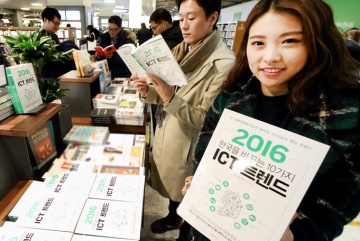
10 selected, including fintech and the Internet of Things, as part of the 4th Industrial Revolution based on ICT convergence.
KT (Chairman Hwang Chang-gyu) announced that it will publish "10 Key ICT Trends Transforming Korea in 2016," which examines the core keywords of the Fourth Industrial Revolution that will reshape the future.
2015.12.08by 명세환 기자

Intel Unveils Next-Generation 'Core Ultra Series 3' and vPro Platform for Enterprise PCs
Intel has officially unveiled the "Intel Core Ultra Series 3" for next-generation enterprise PCs and the latest vPro platform, addressing a wide range of demands from enterprise notebooks to high-performance workstations.
2026.03.26by 배종인 기자

ROHM Launches ESD Protection Diode Compatible with High-Speed Interfaces of 10Gbps or Higher
Semiconductor specialist ROHM has developed the 'RESDxVx series' of ESD (electrostatic discharge) protection diodes capable of responding to next-generation high-speed data communication environments exceeding 10Gbps, simultaneously enhancing both signal quality maintenance required in high-speed interfaces and IC protection performance.
2026.03.26by 배종인 기자











