



To Avoid Repeating the Failure of 3D TV in the Virtual Reality (VR) Industry...
 Published2016.02.22 16:05
Will virtual reality (VR) technology follow the same path as 3D TV, which is currently struggling?
As virtual reality (VR) technology, which enables a sense of realism through real-time interaction with humans in a three-dimensional virtual space built using computers, gains popularity, there is a growing voice that the problems of 3D TV should be used as a lesson to popularize VR.
VR is a user interface technology that uses special glasses and gloves to allow users to experience what is possible within a computer software program as if it were reality, through human senses such as sight and hearing. It makes users feel as if they have entered and can interact with environments that are difficult to experience in everyday life. Accordingly, VR is being utilized in various fields, including military, entertainment, medical, educational, film, and tourism.
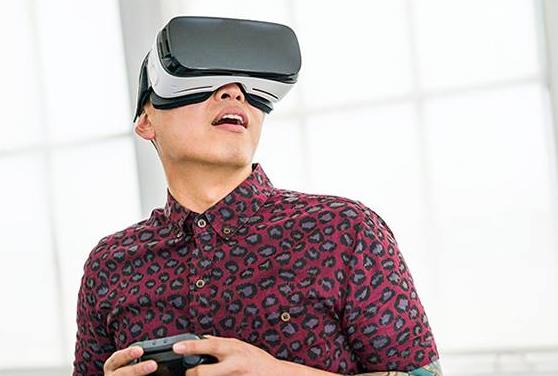
▲ The Oculus Rift boasts a higher resolution (2160x1200) compared to previous products.
Augmented Reality (AR) technology, which is frequently discussed alongside this, processes information or images of objects using computer graphics and overlays them onto real-world space. By synthesizing real-world and virtual information, it augments the details of objects or images, enabling real-time interaction.
AR technology is a convergence content technology that can blend virtual objects while maintaining a sense of reality, offering diverse applications and high scalability. The AR/VR market is expected to reach nearly $150 billion by 2020, with AR projected to account for $120 billion of that total.
Consequently, the development of VR/AR technology has been active recently. Last August, Stanford University collaborated with Nvidia to unveil a next-generation virtual reality device utilizing Light Field Stereoscopy technology. The Light Field Stereo HMD is an attempt to resolve motion sickness and depth perception, which are the biggest obstacles to the commercialization of VR.
Microsoft announced HoloLens, a type of holographic device, and Innovega developed 'iOptik,' which includes contact lenses that improve long-distance and near-distance vision and a glass-type product equipped with a very small, high-resolution display.
The reason related companies are making such diverse attempts is that VR experiences induce dizziness. The direct cause of motion sickness is the physical confusion resulting from the difference in information collected by the ears and eyes. When wearing a VR headset and moving the head, the ears detect the movement while the eyes provide a horizontal image, causing a kind of delay between the sensory organs. Experts say that at least 90 frames per second, or 20 microseconds, must be provided to perfectly trick our brain and create a virtual reality similar to the present.
In particular, the improvement of the market environment following the commercialization of VR technology is emerging as an important issue. This implies that we must learn from the problems of 3D TVs, which are struggling to expand their market. In other words, it is pointed out that the same issues that emerged during the popularization of 3D TVs—such as incompatibility of hardware and content, distribution problems, and uncomfortable glasses—could be repeated in the VR industry.
At a seminar held by the Immersive Media Industry Performance Dissemination Project Group on the 19th, Jeong Gwang-mo, head of the Electronics Components Research Center, stated, “The compatibility issues between the VR hardware currently flooding the market, the ease of creating VR content, and finally, the need to revitalize VR distribution are factors that were also experienced with 3D TVs,” adding, “If these challenges are not resolved, the VR industry cannot succeed.”
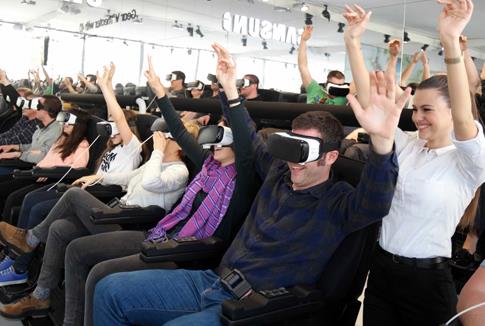
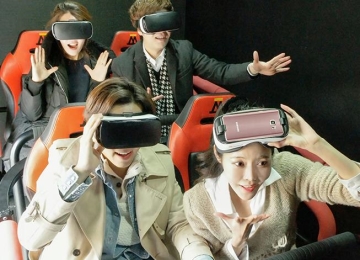
Samsung Electronics held the MWC 2016 opening ceremony using Gear VR.
Accordingly, technologies such as mobile-based AR service technology, mobile 360-degree content technology, and vertical video view technology are being developed to diversify VR/AR content. Mobile-based AR service technology includes 360-degree 3D cameras that allow users to create AR content using a simple UI. Examples include marker (market)-based AR, feature-point-based AR, glass-type AR, and lens-type AR. Smartphone 360-degree cameras are necessary for the popularization of mobile 360-degree content. Furthermore, the Vertical Video View trend, led by Snapchat and Vervid, reflects solutions for smartphone-centric vertical video, moving away from the horizontal screens of traditional movie theaters, TVs, and PCs.
At CES 2016, the global consumer electronics trade show held in the U.S. last month, numerous HMDs for immersive virtual reality services were exhibited. Oculus’s Oculus Rift raised its resolution to 2160x1200 compared to its previous model (1920x1080), while Samsung unveiled the Gear VR, which utilizes a smartphone. France’s Homido released a product incorporating vision correction and interpupillary distance adjustment functions, and Japan’s PlayStation VR was designed to be compatible with the PlayStation 4 console. In particular, the emergence of HMDs from various Chinese companies suggests that VR services in the Chinese market will become more diverse in the future. These products were predominantly those providing augmented reality functions in the form of glasses or lenses, as well as 350-degree cameras.
Center Director Jeong predicted that the virtual reality market would successfully grow if interoperability with other hardware, low cost, overcoming of human factors, convenient and natural interfaces, and content sharing platforms become active, driven by the rapid advancement of computer graphics and communication technologies.
Comments
Related news
The future of virtual reality (VR) is quickly becoming the present.
Anderson's CTO stated, "Our focus areas include industry, education, and entertainment, and last year we particularly concentrated on the education sector," adding, "By utilizing our VR prototype solutions in actual industrial sites, we have achieved dramatic improvements in safety and accuracy, resulting in cost reduction effects, and the learning effectiveness demonstrated in educational settings shows a retention rate of over 80% compared to traditional education methods."
2015.09.09by 신윤오 기자
Will Virtual Reality (VR) News Usher in a New Era of Journalism?
AMD has announced that it has implemented next-generation journalism utilizing virtual reality (VR) in collaboration with the global news organization Associated Press (AP). As part of the cooperation between the two companies, AP is building an immersive virtual reality environment for its news and content using AMD's Radeon™ graphics technology, while AMD provides hardware platforms, software technology, and virtual reality expertise to support AP's journalism implemented through virtual reality and 360-degree video.
2016.02.19by 명세환 기자
We are investing heavily in the game industry integrated with ICT, such as cloud computing and VR.
The Ministry of Culture, Sports and Tourism and the Ministry of Science, ICT and Future Planning held a "Content New Market Creation Discussion Forum through the Convergence of Culture and Information and Communications Technology (ICT)" on the morning of the 19th at the Kensington Hotel in Yeouido, Seoul, and announced plans to foster next-generation game content. The government assessed that the gaming industry, where the application of new information and communications technologies (ICT) such as cloud and virtual reality (VR) is active, has high growth potential going forward, and it is projected that if new markets incorporating virtual reality (VR) and other technologies are created, they will be able to make significant contributions to economic revitalization.
2016.02.19by 신윤오 기자

ESP32 Development Environment Selection and GPS Application Implementation
The ESP32 is a microcontroller that integrates Wi-Fi, Bluetooth, 12-bit ADC, capacitive touch, PWM, DAC, and UART in a single SoC. However, the abundance of features does not by itself solve the designer's problems. The real challenges lie in selecting the appropriate development environment, determining which pins can be used and which must be avoided, and converting raw data from modules into usable information. This document addresses ESP32 peripheral constraints (ADC2 and Wi-Fi coexistence limitation, UART1 occupancy, ADC non-linear regions), the trade-offs between Arduino IDE and ESP-IDF, and the process from connecting NEO-6M/NEO-M8N GPS modules to UART2, parsing NMEA sentences, and visualizing routes in Google Earth, all organized based on documented references.
2026.10.12by 편집부

MIPI CSI-2, DSI-2, C-PHY, D-PHY Test Solution Technical White Paper
The MIPI interface adopts a burst mode that transitions between low-power (LP) and high-speed (HS) states for low-power consumption, and in return, strict timing rules are imposed on state transitions. Additionally, the high-speed section operates as a packet-based protocol with headers, ECC, and CRC, so verification engineers must handle waveforms and protocols simultaneously. Traditional configurations combining general-purpose oscilloscopes and AWGs reveal limitations in setup complexity, measurement uncertainty, and lack of reproducibility when faced with these requirements. This white paper, based on webinar materials, organizes the structure of this problem and describes how the SV5C-DPTXCPTX generator for receiver testing and SV5C-DPRXCPRX analyzer for transmitter testing integrate state transition testing, stressed eye testing, and protocol analysis into a single bench, along with their application boundaries.
2026.10.12by 편집부











