



Universal Robots' Profitability Soars with Robot Arms
 Published2016.03.02 17:34
Active in the global robot arm market
Universal Robots has reaffirmed the infinite growth potential of the robotics industry with its recently released financial statements. Generating revenue of approximately 418 million Danish kroner (approximately US$62 million) last year (2015), Universal Robots achieved a profit of approximately 65.4 million Danish kroner (approximately US$9.65 million), recording a revenue growth rate of about 91% compared to 2014.
Last spring, the U.S. IT company Teradyne attracted significant attention in the industry by acquiring Universal Robots for approximately $285 million. Universal Robots, with a headquarters workforce of around 150 employees, has consistently demonstrated the high growth potential of the industrial robot market. In particular, boasting easy installation, simple operation, and reasonable costs, it has continued to expand the high growth potential of the industrial collaborative robot market by guaranteeing corporate production efficiency and product quality as a robot that collaborates safely with humans.
Universal Robots is the company that invented the world's first collaborative robot, and the first collaborative robot was sold in December 2008. Experts predict that the collaborative robot market, which was estimated at $100 million in 2015, will grow to approximately $3 billion by 2020. In this way, Teradyne acquired Universal Robots, a leader in collaborative robots, and secured a firm position in the collaborative robot market, which has high growth potential.
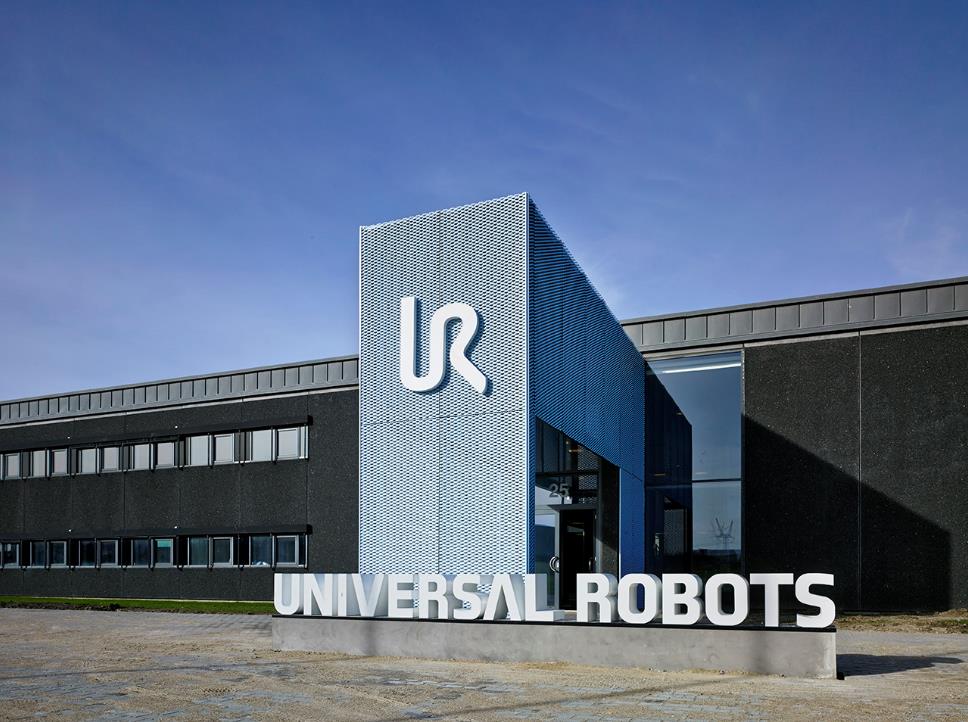
Universal Robots, which achieved revenue of approximately 418 million Danish kroner (approx. US$62 million) last year, grew by 91% compared to 2014 and 223% compared to 2013, and recorded a profit of approximately 65.4 million Danish kroner (approx. US$9.65 million), an increase of 122% compared to 2014. In 2015, the profit growth rate was higher than the revenue growth rate, indicating that the robot manufacturer reduced robot manufacturing costs while increasing profits.
Universal Robots has recorded a continuous sales growth rate of nearly 75% on average every year since 2012. Universal Robots' robot arms, manufactured in Odense, Denmark, are sold through more than 200 distributors, with sales in Europe (45%), the Americas (30%), and Asia (25%) as of 2015.
Teradyne stated that it will strive to help Universal Robots maintain its leading position in the collaborative robot market through continuous investment. In fact, Universal Robots' development team has more than doubled its workforce last year, including additional robot developers hired.
Enrico Krog Iversen, CEO of Universal Robots, said, “Collaborative robots have the advantage of having a low burden of initial investment costs because the investment can usually be recouped within one year. “Based on these advantages, we forecast that the collaborative robot industry market will continue to grow by more than 50% annually,” he stated, adding, “Universal Robotics is constantly investing in sales, development, and customer support to maintain its position as a leader in the collaborative robot industry.” He also predicted, “Although I will be stepping down from the CEO position in the second half of this year, I am confident that Universal Robots will continue to grow steadily under the three keywords of ‘focus,’ ‘simplicity,’ and ‘steadfast management.’”

Comments
Related news
Universal Robots Partners with Korean Distributors to Target the Market
Universal Robots announced that it has selected ㈜TES (True Engineering Solutions Co., Ltd.), Korea's first vacuum robot developer for the semiconductor and display industries, and ㈜A&G Technology (A&G Technology Co., Ltd.), which manufactures quality testing equipment for completed vehicle, engine, and transmission production lines in the automotive industry, as additional official distributors for Universal Robots in Korea. With this appointment, Universal Robots is now partnering with a total of three domestic distributors, including existing distributor Vision Semiconductor Co., Ltd., to pursue the Korean market.
2015.11.26by 명세환 기자
What will the factories of the future be like, working alongside robots?
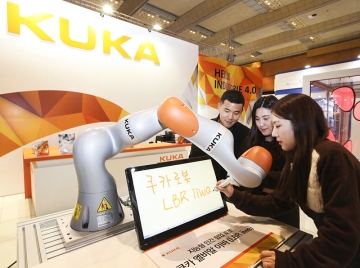
KUKA Robotics Korea Co., Ltd. will participate in the '2015 Creative Economy Expo' running for four days starting today, showcasing the intelligent collaborative robot 'LBR iiwa' as a solution for realizing the creative economy.
2015.11.26by 명세환 기자
We will actively support smart factories using the Internet of Things, robots, sensors, etc.
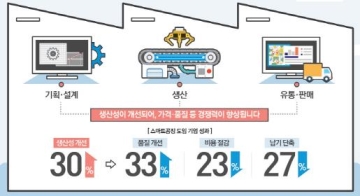
Minister Ju Hyung-hwan of the Ministry of Trade, Industry and Energy visited a company site on Monday the 22nd to review the progress of smart factory policy initiatives and discuss development strategies. At the visit to Yudo Co., Ltd. (located in Hwaseong, Gyeonggi Province), an excellent smart factory implementation company, Minister Ju stated, "For the high-value-added transformation of our leading industries, which is an urgent task for our industry, and for the early creation of alternative new industries, it is very important that small and medium-sized enterprises, which are the foundation of industrial competitiveness, transform into smart factories."
2016.02.22by 명세환 기자

Korea Instrument, KOLAS Accredited Calibration Agency First to Simultaneously Acquire ISO/IEC 27,001·27,701
Korea Instrument has become the first among KOLAS accredited calibration agencies to simultaneously acquire ISO/IEC 27,001 and ISO/IEC 27,701 certifications. Through its proprietary platforms CWIZ Enterprise and CWIZ Partners, the company has embedded information security and personal data protection requirements across all business processes including customer information, equipment data, and calibration reports, with plans to continuously advance its management system through regular audits and security inspections.
2026.10.12by 배종인 기자
TeamViewer One, IT Incident Automation Workflow and Resolution Center Enhanced
TeamViewer has added IT incident automation capabilities and an advanced Resolution Center to its integrated digital workplace management platform 'TeamViewer ONE'. Recurrent service disruptions, configuration errors, and capacity shortages are automatically handled according to preset policies, and device status verification through script deployment can be managed in a unified interface, significantly reducing repetitive tasks for IT teams.
2026.10.12by 배종인 기자











