


Autodesk and Siemens Sign Agreement to Strengthen Support for Multi-CAD Environments
 Published2016.03.03 17:26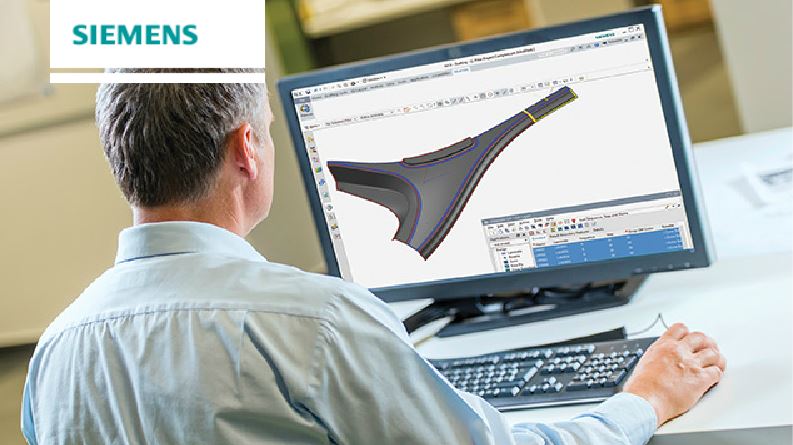
Common goal: Optimizing data sharing and reducing costs in a multi-CAD environment
Autodesk and Siemens announced that they have signed an interoperability agreement to help manufacturing companies reduce costs resulting from incompatibility between product development software applications and prevent potential data integrity issues.
Through this agreement, Autodesk and Siemens' PLM software divisions are taking steps to significantly improve compatibility between their software products. With this agreement, the two companies, leaders in the CAD software market, are expected to optimize data sharing and achieve the common goal of reducing costs in multi-CAD environments.
Today, manufacturing companies are under pressure to bring higher-quality products to market faster. At the same time, they face the challenge of increasing efficiency while reducing consumer costs. Most of these companies operate in environments composed of solutions from different CAD software vendors. These multi-CAD environments can exist between departments or between external partners within the supply chain. Consequently, compatibility between CAD software has emerged as a critical issue for design and engineering software users, and ensuring compatibility has become a major challenge for the manufacturing industry.
The interoperability agreement announced this time aims to reduce the overall effort and cost involved in supporting such multi-environments. In particular, by ensuring compatibility between the product families provided by Siemens and Autodesk, significant improvements are expected in various work environments where these software products are used together.
Under the terms of this agreement, both companies will share toolkit technology and exchange end-user software applications to build and market software applications that ensure mutual compatibility.
Lisa Campbell, Vice President of Manufacturing Strategy and Marketing at Autodesk, stated, “Interoperability has been one of the primary challenges customers face across the manufacturing industry. Accordingly, Autodesk has continuously strived to increase the openness of the environment using our technology platform.” She added, “Autodesk understands that customers mix and match products in their workflows, and providing the flexibility they require is our top priority.”
Dr. Stefan Jockusch, Vice President of PLM Software Strategy at Siemens, stated, “Incompatibility between various CAD systems has long been an issue negatively impacting manufacturers worldwide and is a major culprit in increasing production costs for a wide range of products, from automobiles and aircraft to smartphones and golf clubs.” He continued, “Siemens has been making leading efforts to resolve this incompatibility problem and has actively provided open software solutions as part of this initiative. Thanks to these open product families, compatibility has improved significantly, and this agreement marks another positive and important step forward in Siemens’ efforts to enhance openness and interoperability. Through this, we expect to contribute to cost reductions for manufacturers worldwide by fostering company-wide collaboration.”

Comments
Related news

Autodesk Korea Appoints New Head of Manufacturing Industry
Autodesk Korea announced the appointment of Brian Sung, 46, an industry veteran in sales and engineering management at advanced technology companies, as head of the manufacturing sector. In response, newly appointed CEO Brian Sung stated, "Autodesk is an innovative company transforming the future of design and manufacturing methods across all industries. I am very pleased to join such a company, and I will do my best to contribute to Autodesk's future growth, innovation, and customer acquisition."
2015.10.07by 명세환 기자

Autodesk Strengthens IoT Services and 3D Printing Technology
Strengthening enterprise Internet of Things (IoT) cloud services through acquisition of 'C-Control', and enhancing 3D printing technology through acquisition of 'NetFabb'
2015.10.12by

Autodesk supporting innovative startups
On November 12, 2015, at the opening ceremony of Autodesk University Korea, which runs for two days through the 13th, Autodesk announced that it will provide its software free of charge to domestic companies that make significant contributions to society.
2015.11.12by 명세환 기자
European Patent Applications Surpass 200,000 for the First Time… South Korea Maintains 5th Place, Led by Batteries and Telecommunications
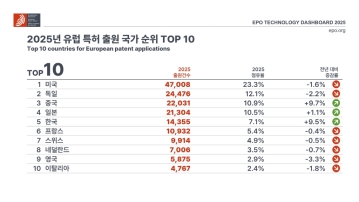
According to the European Patent Office (EPO)'s 'Technology Dashboard 2025', European patent applications last year reached 201,974, surpassing 200,000 for the first time. Korean companies and inventors filed 14,355 applications, representing a 9.5% increase from the previous year and maintaining 5th place by country. Battery, digital communication, and semiconductor technologies led the growth, with Samsung ranking as the top EPO applicant for the second consecutive year and LG reaching 3rd place. The presence of major domestic cities such as Seoul, Suwon, and Yongin was also confirmed. It was also revealed that Korea's European patent strategy is expanding beyond individual technologies to span the entire industry.
2026.03.24by 명세환 기자

SK Telecom First Applies AI-Based Network Operations at Gwanghwamun K-Pop Concert
SK Telecom announced that it applied an AI-based network operation system for the first time at a large-scale K-pop concert held in the Gwanghwamun area of Seoul on March 21st, managing communication quality throughout the event. Mobile data usage during the three hours before and after the concert reached 12.15TB, approximately doubling compared to the same time slot the previous weekend. SK Telecom monitored traffic using the AI system 'A-One' in five-minute and 50-meter units to respond to potential overload situations, while also operating temporary communication facilities and on-site personnel in parallel. This case is interpreted as confirmation of the practical applicability of AI-based autonomous network operation in an environment where demand from dense events and foreign users increases simultaneously.
2026.03.23by 명세환 기자











