


NI Announces Testbed for LTE-U/LAA to Improve Data Performance
 Published2016.03.17 11:57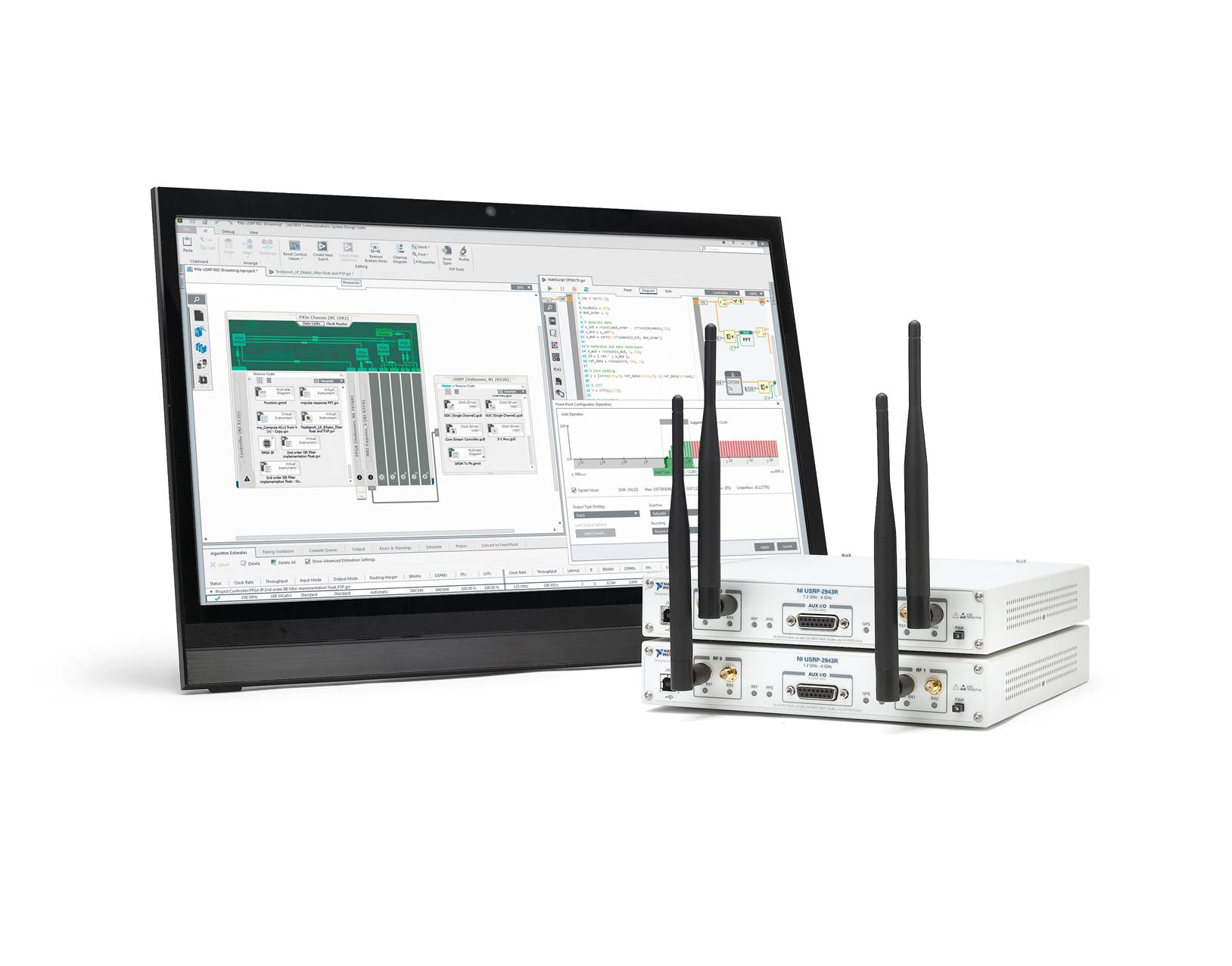
Testing and evaluating various scenarios of LTE-U and LAA
NI unveiled a real-time testbed capable of testing and prototyping LTE-U (LTE Unlicensed Spectrum) and LAA (License Assisted Access) wireless access technologies at Mobile World Congress (MWC 2016).
While 5G is generating significant interest, advancements in LTE-U and LAA technologies are essential to improving current 4G data performance before it becomes a reality. LTE-U (Unlicensed Spectrum) utilizes Wi-Fi frequency bands as LTE frequencies to boost network speeds. LAA (License Assited Access) combines LTE-U (LTE Unlicensed), which utilizes unlicensed frequency bands, such as Wi-Fi frequencies, for LTE use, using CA (Carrier Aggregation) technology to transmit them.
The NI real-time testbed demonstrated at MWC includes an FPGA-based LTE physical layer in its source code, enabling testing and evaluation of various LTE-U and LAA scenarios, and can be used to improve systems built on existing LTE and 802.11 infrastructure to diagnose performance and improve data rates.
Because LTE-U and LAA use the 5.9 GHz unlicensed ISM band to augment the cellular spectrum, LTE-U and LAA compatible devices must "share" channels with WiFi devices such as 802.11a and 802.11ac. While LTE-U can be deployed regionally, LAA is more universally compliant with global spectrum regulations, so the 3GPP technical specifications group is focusing more on LAA.
“The 3GPP standard has introduced several suggestions to minimize interference with existing unlicensed spectrum users, but thorough prototyping and testing are essential to ensure a smooth adoption of the new standard,” said James Kimery, director of RF research and SDR marketing at NI. “NI’s LTE-U/LAA testbed will help diagnose the impact of the new standard.”

Comments
Related news
NI Opens Wireless Innovation Lab to Advance 5G Research
2015.06.17by 명세환 기자
NI Expands IoT Market with Graphical System Design
National Instruments Korea held the graphical system design conference NIDays 2015 last month in Yangjae-dong, Seoul. NIDays is an annual event hosted by National Instruments Korea where engineers and researchers participate to exchange new technologies and information. The event commenced with a keynote address titled "Innovative Graphical-Based Platform for Industrial IoT Engineers."
2015.11.13by 신윤오 기자
[Automoive Testing]NI is collecting autonomous vehicle data with DAQ devices
At CES 2016, it emerged as the clear topic of discussion, surpassing conventional home appliances and mobile devices. This is because we have moved one step closer to the era of autonomous vehicles that were once only seen in movies, starting with driver assistance systems (ADAS) which are currently in progress. However, there are not only optimistic outlooks. Since 'automobiles' are deeply related to human life, they must reduce accident rates at a probability far lower than that of people. Accordingly, as the number of advanced components increases, the importance of 'functional safety' is also growing.
2016.01.28by
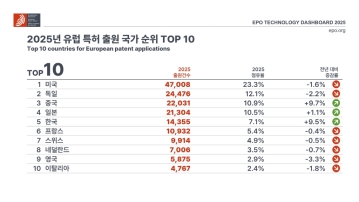
European Patent Applications Surpass 200,000 for the First Time… South Korea Maintains 5th Place, Led by Batteries and Telecommunications
According to the European Patent Office (EPO)'s 'Technology Dashboard 2025', European patent applications last year reached 201,974, surpassing 200,000 for the first time. Korean companies and inventors filed 14,355 applications, representing a 9.5% increase from the previous year and maintaining 5th place by country. Battery, digital communication, and semiconductor technologies led the growth, with Samsung ranking as the top EPO applicant for the second consecutive year and LG reaching 3rd place. The presence of major domestic cities such as Seoul, Suwon, and Yongin was also confirmed. It was also revealed that Korea's European patent strategy is expanding beyond individual technologies to span the entire industry.
2026.03.24by 명세환 기자
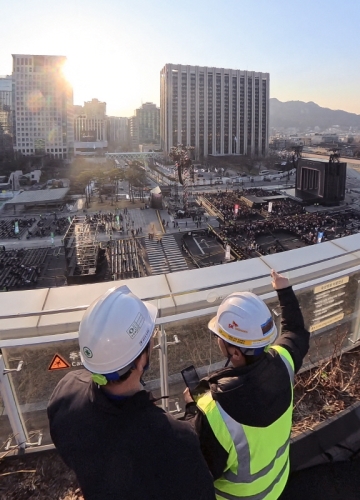
SK Telecom First Applies AI-Based Network Operations at Gwanghwamun K-Pop Concert
SK Telecom announced that it applied an AI-based network operation system for the first time at a large-scale K-pop concert held in the Gwanghwamun area of Seoul on March 21st, managing communication quality throughout the event. Mobile data usage during the three hours before and after the concert reached 12.15TB, approximately doubling compared to the same time slot the previous weekend. SK Telecom monitored traffic using the AI system 'A-One' in five-minute and 50-meter units to respond to potential overload situations, while also operating temporary communication facilities and on-site personnel in parallel. This case is interpreted as confirmation of the practical applicability of AI-based autonomous network operation in an environment where demand from dense events and foreign users increases simultaneously.
2026.03.23by 명세환 기자











