



What are the power requirements for implementing a smart factory automation system?
 Published2016.03.28 14:10
In Korea as well, production site systems are becoming smart as manufacturers introduce sensors and new control structures. At this time, industrial form factors are shrinking to accommodate more features, and there is a growing trend of configuring boards with fewer components within that space.
However, the problem is that the high temperatures generated by the reduced size and increased functions can reduce the safety and reliability of the system. At this time, developers face the critical challenge of lowering the temperature by increasing efficiency because they cannot install devices such as cooling fans in the confined space.
Then, how can the high temperatures that threaten automation systems be lowered? To prevent overheating, the efficiency of the system must be maximized. This is made possible through power control, and Maxim has introduced a solution that enhances the efficiency of such automation systems.
Maxim's Himalaya series voltage regulator ICs and power modules enable smaller and simpler power supply solutions with low heat generation. The MAXM17504 integrates a switching-mode power supply controller, dual n-channel MOSFET power switches, fully shielded inductors, and compensation components into a single thermally efficient System-in-Package (SiP), offering a compact size of 9mm x 15mm x 2.8mm. This package not only reduces power loss and increases efficiency but is also suitable for automated circuit board assembly methods as it can be easily soldered onto a printed circuit board (PCB). This device can operate over an industrial temperature range of -40°C to +125°C. This high level of integration will reduce the development time and cost involved in power control, thereby easing the burden on engineers.
System efficiency is based on safety and reliability. However, in harsh industrial environments, there are cases where voltage and current are not input or output stably. For instance, even with an input voltage of 24V, the voltage can momentarily spike to 50V when a connector is plugged in; therefore, safety and reliability must be ensured for a voltage range of 50V or higher when using a 24V input voltage. Maxim supports a maximum of 60V as required by safety standards IEC61131-2 and IEC60664-1.
The MAX17504 operates over a wide input voltage range of 4.5V to 60V. It provides a continuous output current of up to 3.5A in an output voltage range of 0.9V to 12V with excellent input voltage regulation (Line Regulation) and output load regulation (Load Regulation), maintaining a constant output even with changes in input voltage, thereby enhancing stability and reliability. In addition, it operates using pulse width modulation (PWM), pulse-frequency modulation (PFM), or discontinuous mode (DCM) control methods to increase system efficiency.

ly: verdana, Dotum, AppleGothic, sans-serif; font-size: 12px; line-height: normal;" />
According to one research firm, experts predict that the industrial Internet of Things (IoT) market, which was valued at $20 billion (approximately 21.31 trillion won) in 2012, will grow 25-fold to $500 billion (532.75 trillion won) by 2020. In particular, as it spreads across the entire industrial sector rather than just manufacturing, it is expected to be widely utilized in areas ranging from hospitals and port operations to logistics systems and healthcare. These changes will accelerate smart factories, and the stability and reliability of power systems depend on high-efficiency, low-power integrated technologies.

Comments
Related news
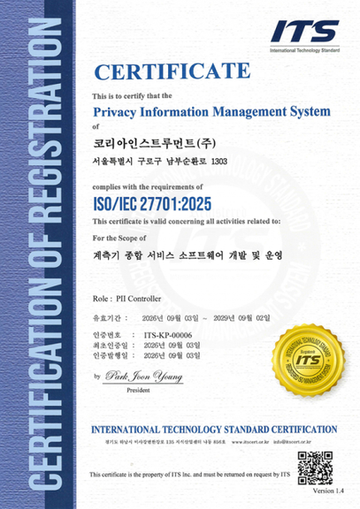
Korea Instrument, KOLAS Accredited Calibration Agency First to Simultaneously Acquire ISO/IEC 27,001·27,701
Korea Instrument has become the first among KOLAS accredited calibration agencies to simultaneously acquire ISO/IEC 27,001 and ISO/IEC 27,701 certifications. Through its proprietary platforms CWIZ Enterprise and CWIZ Partners, the company has embedded information security and personal data protection requirements across all business processes including customer information, equipment data, and calibration reports, with plans to continuously advance its management system through regular audits and security inspections.
2026.10.12by 배종인 기자

TeamViewer One, IT Incident Automation Workflow and Resolution Center Enhanced
TeamViewer has added IT incident automation capabilities and an advanced Resolution Center to its integrated digital workplace management platform 'TeamViewer ONE'. Recurrent service disruptions, configuration errors, and capacity shortages are automatically handled according to preset policies, and device status verification through script deployment can be managed in a unified interface, significantly reducing repetitive tasks for IT teams.
2026.10.12by 배종인 기자
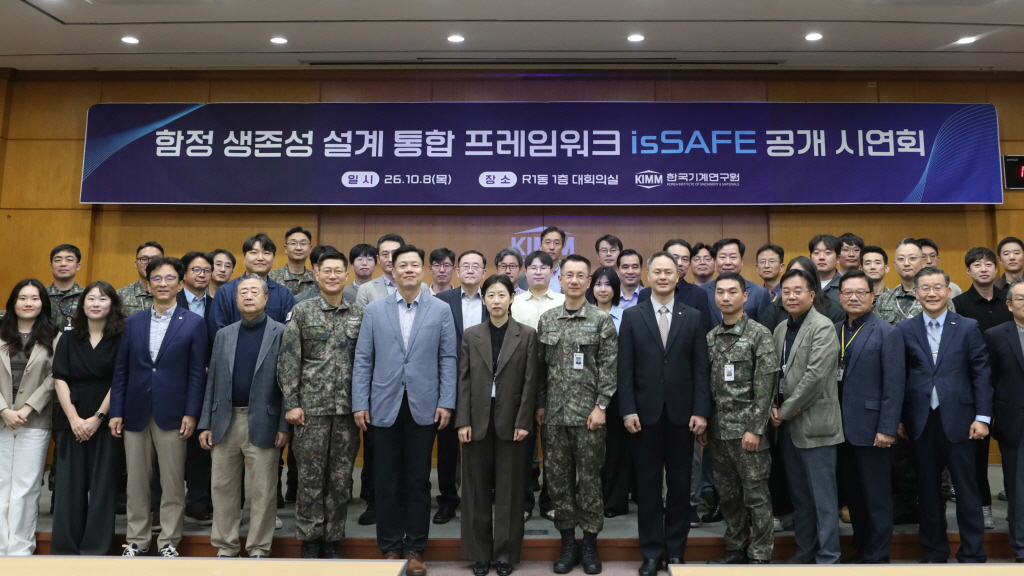
KAERI Develops Domestically-Produced SW 'isSAFE' for Integrated Warship Survivability Analysis
The Korea Institute of Machinery and Materials has developed domestically-produced software 'isSAFE' that comprehensively analyzes warship survivability. This design framework integrates the entire process—from warship modeling to hit scenario generation, vulnerability analysis, and results analysis—into a single platform, establishing an independent technology foundation in the defense technology sector that had previously relied on foreign software.
2026.10.08by 배종인 기자
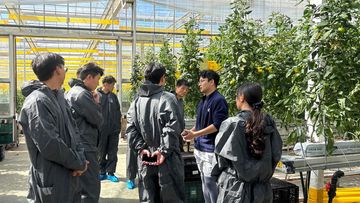
ioCrops Shares AI Smart Farm Operations Case Study
About 20 cultivators from the Agricultural Cooperative's Smart Agriculture Support Centers visited ioCrops' smart farm in Jincheon, North Chungcheong Province. They directly confirmed how data collected through substrate weight sensors, drainage weight sensors, and soil moisture sensors is applied to tomato cultivation, as well as the greenhouse pest control process using the AI-based autonomous spraying robot 'HERMAI'. By sharing on-site operational case studies combining data and automation technology, the adoption of smart farms in agricultural fields is being promoted.
2026.10.07by 배종인 기자

Rockwell, "90% Digital Transformation Essential in Life Sciences Manufacturing"
According to the digital transformation report for the life sciences manufacturing sector released by Rockwell Automation, 90% of responding companies recognized digital transformation as a business-critical element. Primary investment technologies include AI and machine learning (46%), process automation (44%), and cybersecurity (39%), with 64% of companies planning to expand AI utilization within the next year. However, only 32% of companies actually utilize more than half of the collected data, indicating an urgent need to strengthen data utilization capabilities.
2026.10.07by 배종인 기자











