


LG Innotek Develops Ultra-Slim Pulse Sensor Module Suitable for Wearable Devices
 Published2016.03.31 11:32
Measure heart rate, stress level, oxygen saturation, etc.
LG Innotek (CEO Park Jong-seok) announced that it has succeeded in developing a world-class ultra-slim pulse sensor module.
Pulse sensors are mainly installed in wearable devices and smartphones and are used to measure heart rate, stress levels, oxygen saturation, etc.
The newly developed pulse sensor module is thin, reduces power consumption, and significantly enhances measurement performance. Users of IT devices equipped with this module can now receive more accurate health information in a small and lightweight product.
Wearable device? Smartphone-embedded, lower power consumption, higher accuracy
The key to wearable technology is minimizing power consumption while reducing device size. If the device is cumbersome to wear on the body and the battery drains quickly, it will be difficult to achieve mass adoption, no matter how excellent the functionality is.
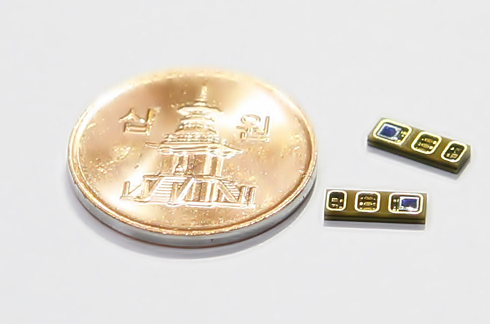
LG Innotek's pulse sensor module is thin at 1mm in thickness, even though it incorporates a photodiode (PD), LED, and semiconductor chip into a single module. Applying this module to wearable devices and smartphones allows for slimmer products and greater design flexibility.
LG Innotek utilized embedded technology in the field of Printed Circuit Boards (PCBs) to reduce module thickness. Embedded PCB technology is a technique that embeds semiconductor chips into a PCB. Previously, there were limitations in reducing module thickness because components such as photodiodes had to be placed on top of a semiconductor chip that processes biosignals on a PCB.
It maintains an ultra-slim thickness while reducing power consumption of the pulse sensor module compared to similar products. LG Innotek's module measures changes in blood flow using an LED light source, and minimizes light loss by gold-plating the interior. The increased light efficiency increases the magnitude of detected biosignals by approximately 30%, enabling accurate biosignal detection even with low power consumption. Using this module reduces battery consumption caused by the sensor by about 20% compared to existing products.
The accuracy of the measurement information has been improved. The newly developed pulse sensor module has a heart rate error range of ±5 bpm (beats per minute) during exercise and can measure precisely up to ±2 bpm in a resting state, reaching the level of medical devices.
When a user measuring their heart rate with a wearable device while exercising, the margin of error of existing modules is ±8 bpm. This means that if the user's actual heart rate is 120 bpm, the value measured by the wearable device will be between 112 and 128 bpm. LG Innotek's pulse sensor module has improved accuracy to 115–125 bpm.
Developed by converging strengths such as embedded PCBs and LEDs
LG Innotek developed a pulse sensor module by integrating differentiated technologies such as embedded PCBs and LEDs. The company possesses core sensor technologies in various fields, including torque angle sensors for vehicles and photo sensors for network cameras.
This company has been integrating its technologies to discover new growth engines, expanding its business areas, and strengthening its portfolio.
Kim Chang-hwan, Head of the Parts & Materials R&D Center (Executive Vice President), said, “The core of the IoT era is sensors that enable information collection and analysis,” adding, “We will develop cutting-edge sensors that can enhance customer value and actively target the IoT market by integrating them with various objects such as automobiles, home appliances, wearable devices, and smartphones.”
Comments
Related news
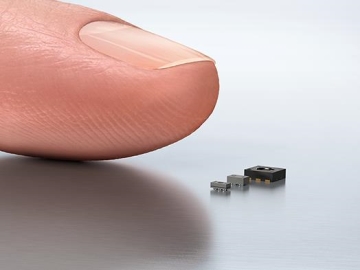
Environmental sensors that meet IoT are expanding in all directions, including “indoor car environments, mobile, and smart homes”
As Internet of Things (IoT) technology spreads, demand for environmental sensors such as temperature/humidity sensors, gas sensors, and pressure sensors is rapidly increasing. This is because demand for sensors that meet requirements such as ultra-miniaturization and low power consumption is surging in order to collect object information across various IoT application fields. In particular, smart environmental sensors are high-functionality, high-precision, high-convenience, and high-value-added sensors that combine sensing elements with intelligent signal processing to perform data processing, automatic calibration, self-diagnosis, and decision-making functions. Environmental sensors include temperature/humidity sensors, gas/pressure sensors, as well as dust sensors, ultraviolet sensors, and water quality sensors, and these sensors support real-time environmental monitoring regarding the effects of environmental pollutants in environmental media such as water and atmosphere, humans, and ecosystems.
2016.03.21by 신윤오 기자
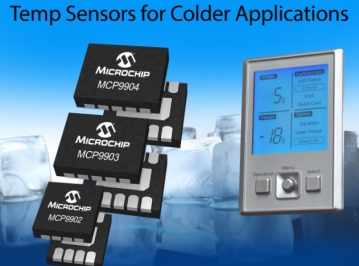
Microchip Launches Multi-Channel Temperature Sensor with Built-in Resistance Error Correction Function
Microchip Technology (Korea Representative: Han Byung-don) has launched the MCP990X System Management Bus (SMBus) temperature sensor IC product family, which can monitor up to 4 channels in cold environment outdoor and industrial low-temperature measurement applications ranging from freezers and refrigerators to base stations and remote wireless devices. This IC features maximum accuracy of ±1°C for external and internal diode temperatures in the range of -40°C to +65°C, and provides a low-cost, highly flexible solution for low-temperature environments requiring high precision.
2016.03.29by 신윤오 기자

ESP32 Development Environment Selection and GPS Application Implementation
The ESP32 is a microcontroller that integrates Wi-Fi, Bluetooth, 12-bit ADC, capacitive touch, PWM, DAC, and UART in a single SoC. However, the abundance of features does not by itself solve the designer's problems. The real challenges lie in selecting the appropriate development environment, determining which pins can be used and which must be avoided, and converting raw data from modules into usable information. This document addresses ESP32 peripheral constraints (ADC2 and Wi-Fi coexistence limitation, UART1 occupancy, ADC non-linear regions), the trade-offs between Arduino IDE and ESP-IDF, and the process from connecting NEO-6M/NEO-M8N GPS modules to UART2, parsing NMEA sentences, and visualizing routes in Google Earth, all organized based on documented references.
2026.10.12by 편집부

MIPI CSI-2, DSI-2, C-PHY, D-PHY Test Solution Technical White Paper
The MIPI interface adopts a burst mode that transitions between low-power (LP) and high-speed (HS) states for low-power consumption, and in return, strict timing rules are imposed on state transitions. Additionally, the high-speed section operates as a packet-based protocol with headers, ECC, and CRC, so verification engineers must handle waveforms and protocols simultaneously. Traditional configurations combining general-purpose oscilloscopes and AWGs reveal limitations in setup complexity, measurement uncertainty, and lack of reproducibility when faced with these requirements. This white paper, based on webinar materials, organizes the structure of this problem and describes how the SV5C-DPTXCPTX generator for receiver testing and SV5C-DPRXCPRX analyzer for transmitter testing integrate state transition testing, stressed eye testing, and protocol analysis into a single bench, along with their application boundaries.
2026.10.12by 편집부

NVIDIA to Invest $1 Billion in U.S. Science Over Next Five Years
NVIDIA has announced plans to invest $1 billion over the next five years to strengthen U.S. scientific and technological competitiveness. The company will enhance cutting-edge artificial intelligence research and development capabilities in key areas including quantum computing, healthcare, and energy security, while expanding support for higher education research institutions and cloud service providers. NVIDIA is participating as a major industry partner in the White House Office of Science and Technology Policy's Genesis Mission, and is promoting supercomputer construction in collaboration with national laboratories including Argonne and Los Alamos.
2026.10.12by 배종인 기자











