


[Reporter's Notebook] The Autonomous Vehicle Industry: How to Avoid Going Backwards
 Published2016.04.04 20:00
Autonomous vehicles are racing through the industrial sector. These days, the hot topic in both the automotive and IT industries is undoubtedly the self-driving car. Some call it the "near future," while others claim it is merely "marketing." Whether it is the future or marketing, the fact that it has recently become a widely discussed topic cannot be denied.
However, there is much talk about the autonomous vehicle industry, which is racing through the industry's headlines. Isn't that only natural? After all, while the goals are clear, there is still no tangible substance. That is why, if you attend seminars on autonomous vehicles, you will still find many presentations that begin by explaining the concepts.
Now, let's look at the most common definition of an autonomous vehicle (Wikipedia). An autonomous vehicle is a vehicle capable of safe driving on its own, minimizing driver 'operations' such as 'perceiving' the surrounding environment, 'judging' risks, and planning a driving route. When classifying the levels of autonomous vehicles, if Level 1 is unit-function automatic driving (selective automatic control of the steering wheel or pedals), then Level 3 or higher corresponds to autonomous driving under limited conditions.

Minister of Land, Infrastructure and Transport Kang Ho-in took a test ride in an autonomous vehicle on the 7th of last month.
Although there are differences among market research firms, it is expected that autonomous vehicles will account for 25% to as much as 75% of the total automobile market between 2030 and 2035, and that all new cars will be equipped with autonomous driving functions after 2050.
To become an autonomous vehicle, core supporting technologies must be in place. Advanced technologies such as LIDAR systems, GPS technology, IMU (which measures speed and direction using inertial measurements), HVI (optimized UI for the driver), smart actuator technology, V2X communication technology, and LDM (digital map technology) are required. In other words, all technologies, ranging from core components to road infrastructure and maps, must be mobilized.
Three Ministries Put Their Heads Together for Autonomous Vehicles, Between Overlap and Competition
To this end, countries around the world are busy formulating policies. The United States has legalized test runs in four states and Washington D.C., and a commercialization bill is currently underway in California. Germany's Federal Ministry of Transport and the State of Bavaria have announced the designation of test sections on the Autobahn, while Japan has authorized test runs for autonomous taxis and plans to commercialize them in time for the 2020 Tokyo Olympics.
Accordingly, domestically, test operation regulations were improved last year to establish permit requirements, designate test road sections, and temporarily permit autonomous driving devices. Furthermore, due to the nature of the autonomous vehicle industry, three ministries—the Ministry of Land, Infrastructure and Transport, the Ministry of Trade, Industry and Energy, and the Ministry of Science, ICT and Future Planning—are working together to address the issue. The basic axis is largely for the Ministry of Science, ICT and Future Planning to prepare IT intra-based services such as SW, telecommunications, high-performance computing, and cloud services; for the Ministry of Trade, Industry and Energy to develop components such as 10 key components, autonomous driving platforms, and control technologies; and for the Ministry of Land, Infrastructure and Transport to develop road infrastructure technologies such as C-ITS, autonomous cooperative driving road infrastructure, and evaluation and certification, as well as to establish laws and regulations.
The issue is that the roles and cooperation of various ministries regarding the autonomous vehicle industry overlap. It is pointed out that redundant investment is inevitable in terms of component and core technology development within R&D support, which constitutes a significant part of the government's role. In planning this year's R&D projects, the Ministry of Science, ICT and Future Planning decided to invest in autonomous driving software, communication security foundational technologies, wide-area driving perception technologies, and driver safety support. Meanwhile, the Ministry of Trade, Industry and Energy is focusing its support on establishing infrastructure, including creating a convergence ecosystem, based on the localization of core components. The Ministry of Land, Infrastructure and Transport plans to concentrate on refining regulations, expanding support infrastructure, and developing technologies (such as establishing test cities and security) with the goal of commercialization.
Participants in the recent Future Growth Engine Open Talk relay discussion agreed that inter-ministerial collaboration holds greater significance than mere overlap. Lee Jae-kwan, Head of the Automotive Parts Research Institute, stated, “We must view this as a matter of collaboration rather than departmental overlap,” adding, “Cooperation is crucial because it can take more than 10 years from core technology R&D to commercialization.” Son Ju-chan, a manager at the Electronics and Telecommunications Research Institute (ETRI), also remarked, “We must expand the smart car ecosystem through support for SMEs,” noting that “allowing for overlap to induce competition is suitable for the Korean context.” Moon Jong-deok, Smart Car PD at the Korea Institute for Industrial Technology Evaluation and Management (KIET), further emphasized, “The three ministries must work together to enable inter-ministerial cooperation.” He emphasized, "We must maintain this cooperative system to develop."
Industry Wary of Excessive Government Intervention in the Market
Dr. Lee Kyu-bok, CP for ICT Devices at the Ministry of Science, ICT and Future Planning, also stated, “(Regarding autonomous vehicles) overlap and duplication between departments are necessary for cooperation,” adding that “each ministry must faithfully fulfill its respective role.” On the other hand, an industry insider expressed concern over excessive government intervention in the market. This official said, “Government ministries trying to do too many things can actually hinder industrial development. What the government should do is clarify regulations and policies. Policies should guide the market to develop autonomously.” As a prime example, he lamented, “Where are the companies actually using the precision maps for autonomous vehicles that the government claims to be developing and distributing?”
As such, there is a clear difference in perception regarding autonomous vehicle policies between government agencies and the industry. While the aforementioned overlap in government ministries can be viewed positively in terms of expanded support and competition, there are also negative opinions that they cannot avoid criticism regarding resource waste and inefficiency.
However, the important thing is to clearly define the roles and goals that the government, the market, and academia should hold. The government must pursue relevant policies to eliminate regulations that hinder market development, the market must focus on developing technologies with clear customer needs, and academia must strive for basic research and talent development within a long-term research environment. This is necessary to ensure that the autonomous vehicle industry does not "reverse course" like many failed industries of the past.
Comments
Related news
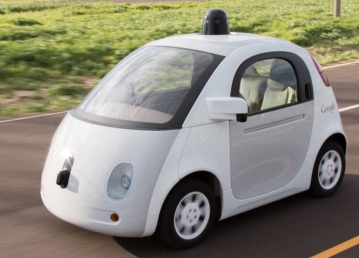
Domestic push for autonomous vehicles on actual roads is in its infancy, while overseas markets are racing to fully apply artificial intelligence.
As the government has decided to implement autonomous vehicle road tests, attention is once again focusing on core autonomous driving technologies. The Ministry of Land, Infrastructure and Transport (Minister Kang Ho-in) announced its '2016 Business Plan' on the 28th of last month, selecting autonomous vehicle industry development as one of the seven new industries in land, infrastructure and transport. This development plan includes technology development support projects such as real-road testing of autonomous vehicles, designation of pilot operation zones, and construction of experimental cities.
2016.02.01by 신윤오 기자
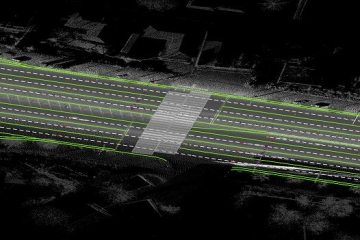
Get the 'Precision Road Map' needed for developing self-driving cars
High-precision road maps created to usher in the autonomous vehicle era will be provided free of charge starting from the 29th. High-precision road maps include electronic maps (with 3D coordinates) produced at 25cm accuracy containing lane information necessary for autonomous driving (regulatory lines, road boundaries, stop lines, lane center lines), road facilities (median barriers, tunnels, bridges, underground underpasses), and marking facilities (traffic safety signs, road surface markings, traffic signals).
2016.02.29by 신윤오 기자
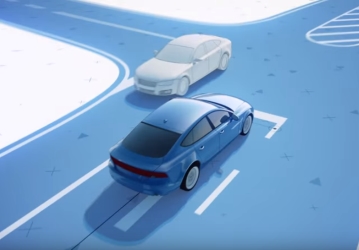
Can self-driving cars operate without precise maps, V2X, or road infrastructure?
As autonomous vehicle development accelerates both domestically and internationally, interest in vehicle-to-infrastructure wireless communication linking roads and vehicles—that is, V2X (vehicle-to-x)—and high-precision maps for autonomous driving is rising. Autonomous vehicles, as commonly understood, refer to human-friendly automobiles capable of safe autonomous operation by minimizing driver intervention through self-recognition of surrounding environments, risk assessment, and route planning. Accordingly, when autonomous vehicles are classified in stages, they are divided from Level 0 (driver perceives, controls, and is responsible) to Level 4 (vehicle perceives and controls, driver availability not required). True autonomous vehicles are those of Level 2 (driver perceives, vehicle controls) or higher.
2016.03.28by 신윤오 기자

[e4ds Tech Day 2026 ⑨] Sim Sang-gyu, Autocrypt CTO: "In the Physical AI Era, Automotive Security Must Extend Beyond the Vehicle"
At e4ds Tech Day 2026, Sim Sang-gyu, CTO of Autocrypt, explained automotive cybersecurity strategies in the era of Physical AI and SDV (Software-Defined Vehicle). Automobiles are evolving as part of an ecosystem connected to AI, cloud, chargers, IoT, and robots, and he emphasized that the scope of security must expand beyond the vehicle interior to the entire connected environment. In particular, AI model tampering, adversarial attacks, OTA updates, and EV charger hacking were identified as major threats. He explained that response measures require zero trust, AI model integrity protection, intrusion detection, Security by Design and Default, and full lifecycle security management, and that proactive security system establishment beyond regulatory compliance is critical for securing future mobility competitiveness.
2026.10.12by 배종인 기자

Practical HIL Construction Strategy for Automotive and Off-Highway Controller Validation
As vehicle E/E architecture transitions to zonal structures and shifts to software-defined vehicles (SDV), the number of controllers (ECUs) requiring validation and software complexity are surging dramatically. Meanwhile, real vehicle testing cannot provide repeated verification under identical conditions and entails lead time and safety concerns. This white paper explains the principles of HIL (Hardware-in-the-Loop) validation and the structure of the NI platform composed of PXI, SLSC, and VeriStand, and through two actual implementation cases—Camera Record & Replay HIL for In-Cabin Monitoring Controller (ICMU) and Forklift Controller (VCU) HILS—describes how controller-level regression testing becomes possible. Additionally, it explicitly states application boundaries and limitations, such as lack of A2B support.
2026.10.12by 편집부











