



Everything about automotive electrical components as seen in smart car and autonomous car applications
 Published2016.04.06 17:47
On April 15th, held at the Association Conference Center… Comprehensive introduction focusing on application cases
Self-driving cars and smart cars, which have recently become issues, are based on the electrification of automobiles. As the number of automobile electrical components increases, electrical components account for more than 40% of automobile manufacturing costs, and in electric vehicles, the cost of electrical components reaches 70%.
In particular, the use of semiconductors is increasing to the point where they are called running semiconductors, so the automotive semiconductor market is expected to become another battleground for semiconductor companies in the future. The smart car market, armed with advanced semiconductors and other electrical components, is expected to grow by an average of 7.9% annually, from $39.4 billion in 2010 to $78.3 billion in 2019.
A place has been created where you can learn everything about automotive electrical components, which are receiving a lot of attention from the automobile, IT, and semiconductor industries. The Korea Industrial Technology Association (www.kitanet.or.kr), which has been providing specialized technical information for industrial sites, will provide essential information on electrical components, from automotive electrical PCBs, electrical component reliability, electrical component EMC technology, to technology development trends for smart cars and autonomous vehicles, at the association conference center on the 15th.
▲ NXP Semiconductors is a leader in V2X modules, a key element of autonomous vehicles (Homepage)
First, Center Director Yoo Si-bok of the Korea Automotive Technology Institute will present ‘Smart Car, Autonomous Vehicle Standardization Strategy, Technology Development Trends, and Application Cases’ and introduce the following: △Current status of international standardization of smart safety cars and autonomous vehicles, △Autonomous vehicle development strategies and issues of each country, and △Prospects for commercialization of autonomous vehicles.
Next, CEO Kim Hee-kyung of Moria Korea will discuss the following topics in her presentation on “Causes of Quality Problems in Automotive Electrical PCBs, Technology Development Trends, and Application Cases”: △What are the differences in automotive PCBs? △Problems with automotive PCBs occurring in the field? △Quality measures for automotive PCBs. Director Song Tae-seung of the Korea Testing Laboratory, who will present on trends in automotive and electrical component EMC technology development and application cases, will focus on the following topics: △Overview of automotive EMC and power characteristics, analysis of major EMC noise sources, △Trends in automotive electrical component EMC technology development and measurement of high-voltage cable shielding effectiveness, △Automobile EMC countermeasure techniques and future outlook for international EMC standards.
From reliability analysis of battlefield components to smart car operating systems and SW platforms
The afternoon session will feature presentations on topics centered around smart cars. Lim Ki-taek, the director of the Electronics and Telecommunications Research Institute, will present the following during his presentation titled 'Commercialization Issues, Technology Development Trends, and Application Cases of Automotive Wireless Communication Modules': △Overview of Vehicle-to-Everything (V2X) technology; △V2X wireless communication development trends and V2X wireless communication commercialization and application cases.
Team Leader Park Sang-wook of the Automotive Parts Research Institute deals with the reliability of automotive electrical components. Team Leader Park examines reliability issues and policy directions in the automotive industry and introduces automotive electrical component failure analysis, reliability testing techniques, and application cases.
Professor Seung-Joo Jang (Dong-Eui University) brought up 'Trends in the development of real-time operating system technology for automotive electronics'. Professor Jang will explain the characteristics of automotive electronics devices and the current status of real-time operating system technology development during this time. Dr. Hyun-Seo Oh of the Electronics and Telecommunications Research Institute will introduce the concept of cooperative autonomous driving and V2X communication technology through 'Domestic and international technology development trends and application cases of smart connected car electronics components'.
In his presentation on the topic of 'AUTOSAR-based SW platform technology development trends and application cases for electrical system,' Popcorn CEO Seung-Yeop Chae will present in detail the following: △A case of a domestic Tier 1 supplying electrical components using AUTOSAR 4.x to an overseas OEM; △An introduction to the AUTOSAR Adaptive platform standard that supports autonomous driving artificial intelligence (AI); and △A case of an AUTOSAR development tool, which is a web browser-based SaaS (Software As Service).
Seminar registration is available at the Korea Industrial Technology Association ( http://www.kitanet.or.kr ).
Comments
Related news
Will domestic production of image processing processors secure competitiveness in autonomous vehicles?
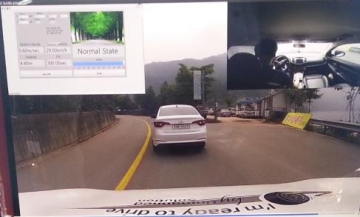
The Aldebaran processor is a purely domestic Korean CPU that does not use ARM cores and is capable of supporting high-resolution video processing, offering bright prospects for the realization of autonomous vehicles in the future. The new Aldebaran processor, AB-TS3, is equipped with a quad-core capable of 4K video processing, an H.265 (HEVC) encoder, and VD/PD/LD engines.
2015.10.12by 신윤오 기자
Where Are We in Core Sensor Element Development? ② “Development of 79GHz Automotive Radar Sensor to Preempt the Autonomous Vehicle Market”
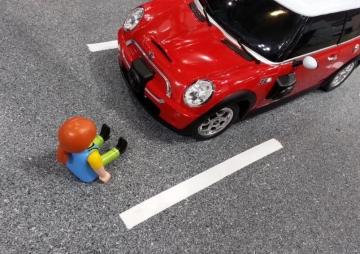
Following last week's updates on smart motion sensors, metabolic rate measurement sensors, harmful gas sensors, and optical sensors, we introduce the following technologies: ▲automotive shunt resistance current sensors ▲lidar sensors for autonomous vehicles ▲automotive 79GHz radar sensor technology.
2015.11.23by 신윤오 기자
[Planning] MCU Company Tour ② Infineon: Will it Power Self-Driving Cars with High-Performance MCUs?
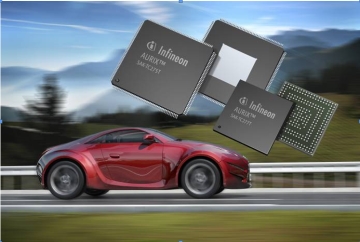
E4ds News seeks out major semiconductor companies specializing in MCUs (Micro Controller Units), known as the brains of various electronic products. As the scope of MCU applications expands from simple electronic devices to automobiles and robots in the IoT era, high-performance and low-power capabilities are increasingly being strengthened. Accordingly, we aim to intensively introduce the functions and features of various MCU products and, through coverage of major MCU manufacturers, examine the technologies and trends each company prioritizes to assist readers in their product selection. <Editor's Note>
2015.12.07by 신윤오 기자
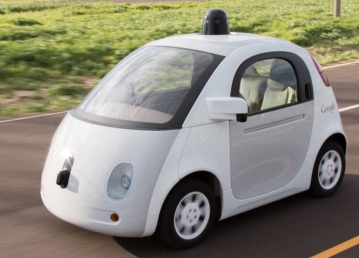
Domestic push for autonomous vehicles on actual roads is in its infancy, while overseas markets are racing to fully apply artificial intelligence.
As the government has decided to implement autonomous vehicle road tests, attention is once again focusing on core autonomous driving technologies. The Ministry of Land, Infrastructure and Transport (Minister Kang Ho-in) announced its '2016 Business Plan' on the 28th of last month, selecting autonomous vehicle industry development as one of the seven new industries in land, infrastructure and transport. This development plan includes technology development support projects such as real-road testing of autonomous vehicles, designation of pilot operation zones, and construction of experimental cities.
2016.02.01by 신윤오 기자
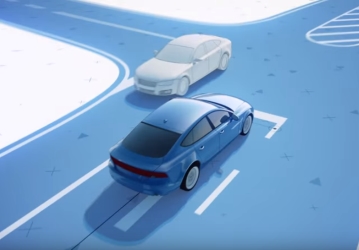
Can self-driving cars operate without precise maps, V2X, or road infrastructure?
As autonomous vehicle development accelerates both domestically and internationally, interest in vehicle-to-infrastructure wireless communication linking roads and vehicles—that is, V2X (vehicle-to-x)—and high-precision maps for autonomous driving is rising. Autonomous vehicles, as commonly understood, refer to human-friendly automobiles capable of safe autonomous operation by minimizing driver intervention through self-recognition of surrounding environments, risk assessment, and route planning. Accordingly, when autonomous vehicles are classified in stages, they are divided from Level 0 (driver perceives, controls, and is responsible) to Level 4 (vehicle perceives and controls, driver availability not required). True autonomous vehicles are those of Level 2 (driver perceives, vehicle controls) or higher.
2016.03.28by 신윤오 기자











