


What are the 5 conditions for the success of IoT products?
 Published2016.04.11 15:37
What is needed for a product incorporating IoT (Internet of Things) technology to succeed?
The Korea International Trade Association recently introduced five strategies through its report, 'Success Strategies for Smart Products Incorporating Overseas IoT Technology,' including: connecting objects that customers need; providing services tailored just to me; adding smartness to smartness by combining other technologies and infrastructure; inducing the smartification of existing products by enhancing compatibility; and providing economic rewards to customers.
The report, which emphasized the need to enhance data usability, stated that it is important to add smartness to existing products by providing distinct value unique to IoT technology in areas where customers need it, rather than simply applying IoT technology to products.
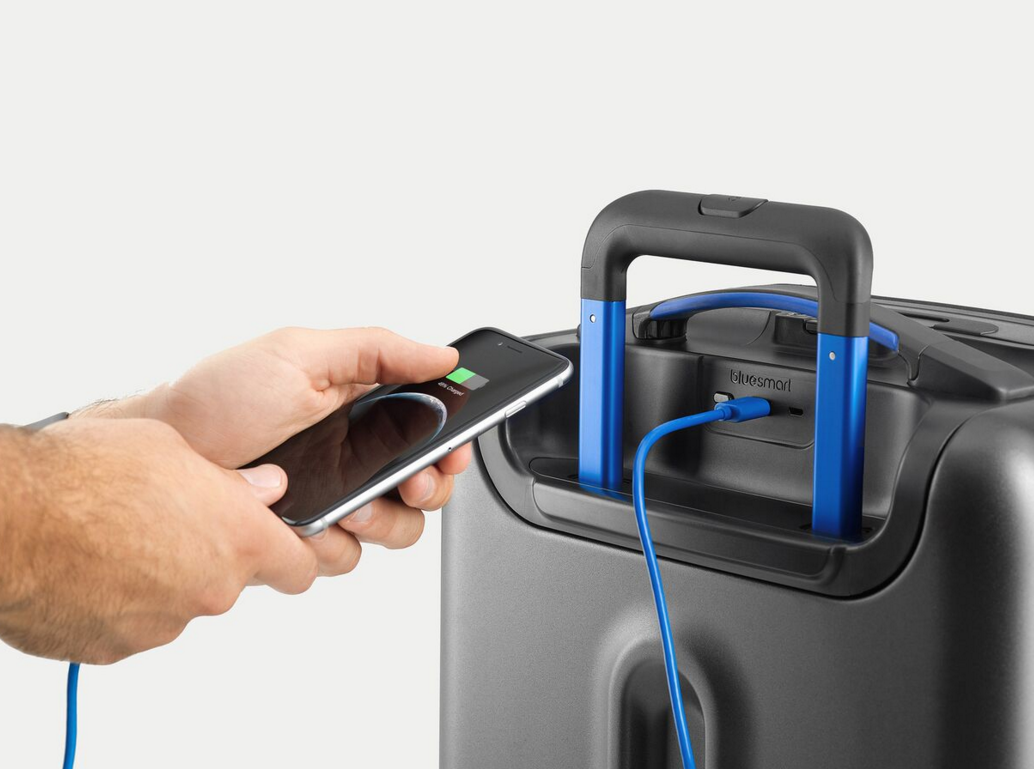
The travel bag from the US company Bluesmart was designed with the management of lost bags at airports in mind.
First of all, the instruction to connect the objects necessary for customers means identifying the needs of target customers and focusing on satisfying their core desires through IoT. Considering that the smart market is still in the early stages of mass adoption, the point is to secure a market of a certain size by segmenting customers into meaningful units, rather than targeting a tiny minority of customers. While various features can be added through connectivity, it is necessary to focus on core values that encourage continuous usage rather than merely one-time entertainment.
Bluesmart Carry-on, a U.S. company, conceived the product based on the difficulties airline passengers face when using luggage at airports, such as the risk of loss or theft. By attaching sensors and communication devices, the product enables remote locking, location tracking, and weight checking of the bag via a smartphone. If the bag moves away from the user, it automatically switches to a locked state and sends a notification. This product exceeded its fundraising goal on the crowdfunding site Indiegogo, surpassing the $50,000 target and reaching $1 million.
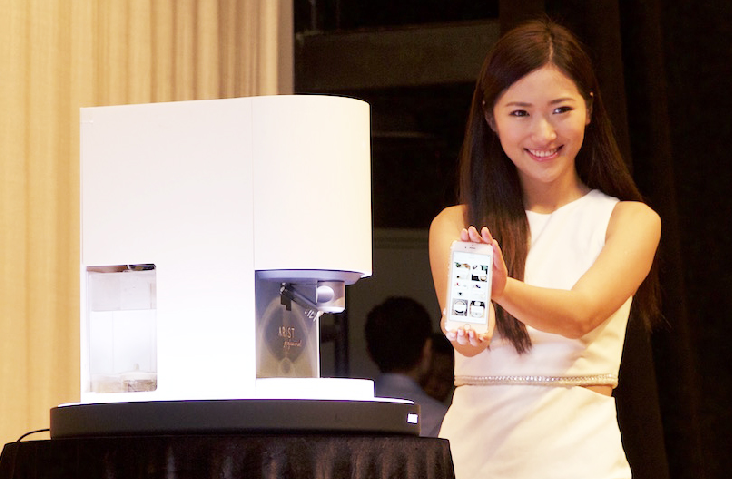
The Hong Kong Arist coffee machine provides coffee recipes tailored to individual tastes.
Second, providing services tailored exclusively to oneself refers to realizing the "Internet of You" by offering customized services based on continuously collected personal data. Through data analysis technology, it stimulates customer motivation to use products by providing recommendation services that match individual preferences and linking them with related offline services. An example of this is the coffee machine (Hong Kong Arist Cafe Machine) that recommends and brews barista-made coffee every morning. The Arist cloud platform contains thousands of coffee recipes created by hundreds of baristas, which are used to automatically brew coffee suited to the user's taste via smartphone. It recommends coffee via morning notification messages and allows users to share recipes with others. This product exceeded its fundraising goal of $1.2 million on the crowdfunding site Kickstarter, reaching $8.45 million.
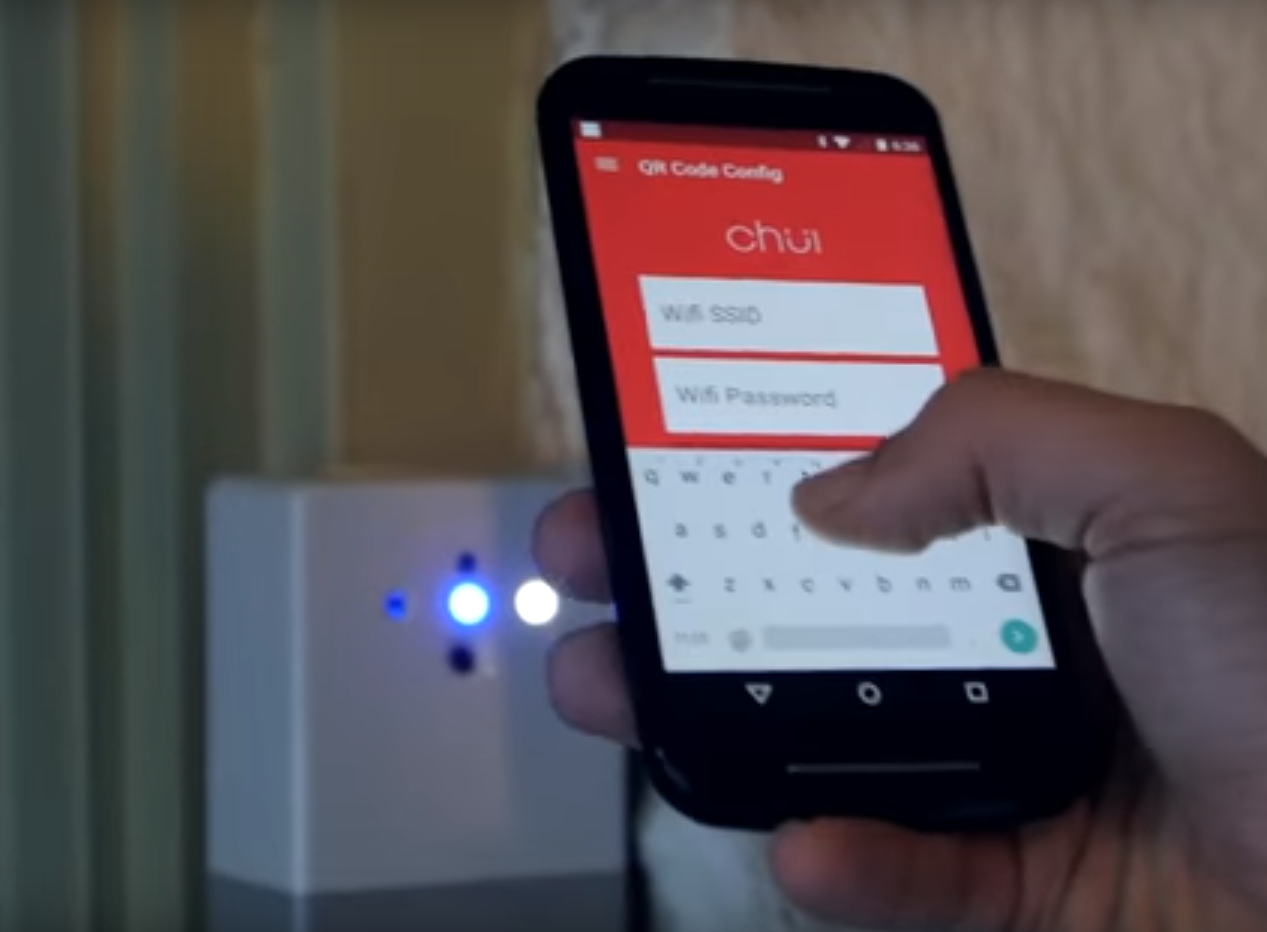
The doorbell from Chui, a US company, offers various features including a locking function, individual automatic locking, and visit history storage.
Third, there are cases where "smart" is enhanced by combining it with other technological infrastructures. This approach increases product value by applying additional technologies that create synergy beyond IoT technology, and lays the foundation for product expansion through the proactive establishment of infrastructure. Chui (214technologies) in the United States has developed a doorbell that automatically opens the door while distinguishing even identical twins. This product, which allows users to check visitors in real-time or converse with them via smartphone connectivity, utilizes advanced facial recognition technology to differentiate between identical twins or fake authentication attempts using photos or videos, and it can also learn changes in facial features. While competitors only support video verification and locking functions via smartphone, this product enhances the convenience and security of doorbell usage through features such as individual automatic locking, visitor history storage, and blacklist management.
Fourth, we introduce a strategy to induce the smartification of existing products by enhancing compatibility. As an aftermarket-type strategy for smartening existing products, consumers often feel burdened by the need for a new purchase when buying smart products, even if the functions overlap with their existing products. By integrating the smart product with existing items, it functions as a complement rather than a substitute. French company Sen.se has introduced a household object monitoring device that can be attached anywhere, such as bags or toothbrushes. When the sensor-equipped Motion Cookie is attached to an object, it measures the object's movement and temperature, and displays an alert when unusual data is detected. Designed to enable smart functionality simply by attaching it to most everyday items, it can be applied to tracking activity levels and managing daily life for a wide range of age groups, from infants to the elderly.
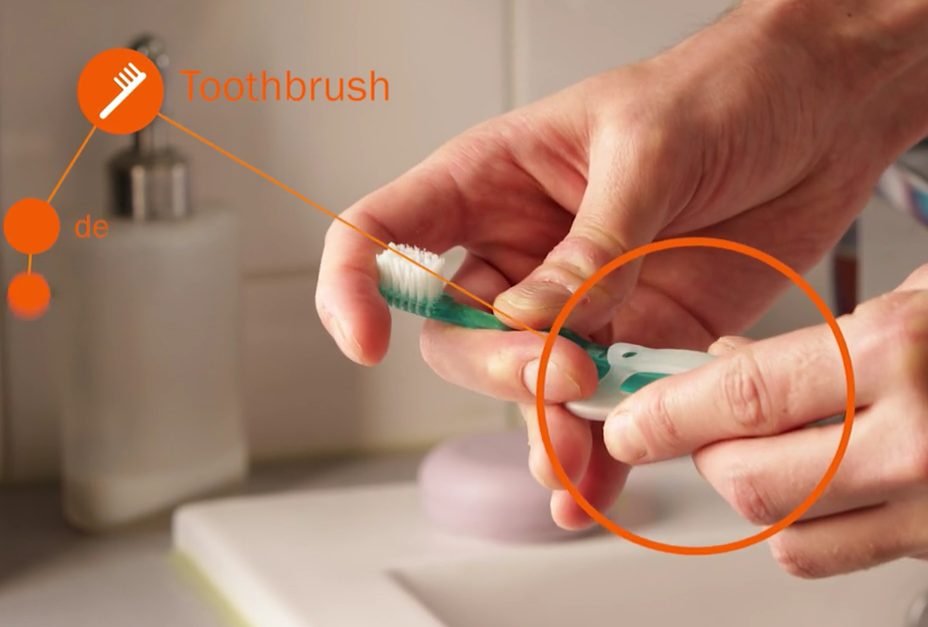
French company Mother (Sen.se) introduced a household object monitoring device that can be attached anywhere, such as bags and toothbrushes.
Finally, a strategy for providing economic rewards to customers involves offering users financial compensation based on data-driven services. New services are created by integrating IoT technology at the interface that satisfies the demands of both suppliers and consumers, and by providing economic rewards to consumers. A prime example is Marmalade Insurance in the UK, which developed an insurance policy that calculates premiums by evaluating drivers using dashcams. After charging a base premium at the lowest rate, the company analyzes and evaluates the subscriber's driving habits daily via dashcam footage, increasing the premium based on the number of warnings. It notifies subscribers of improvements regarding daily driving records via email or smartphone and, if necessary, provides personalized online driving education to encourage the maintenance of low premiums. It is gaining popularity among young people, such as students starting to drive, and recently, Ford has formed a partnership to subsidize insurance premiums.
Kim Bo-kyung, a researcher at the Corporate Competitiveness Division of the Korea International Trade Association, stated, "For smart products characterized by the continuous collection, storage, and sharing of data, it is not the connectivity itself but the use value created through that connection that matters, and as data is a crucial tool for creating that value, a data-centric approach must be prioritized." She added, "Instead of simply applying IoT technology to IoT products, smartness must be added to existing products by providing distinct value unique to IoT technology in areas where customers need it. To achieve this, the usability of data collected through IoT technology must be maximized by considering aspects such as specifying the data target, strengthening compatibility, and enhancing qualitative value."
Comments
Related news
[Reporter's Notebook] Did you make some money with IoT?
The momentum of the Internet of Things shows no signs of slowing down. The government announced in the first half that it will invest 98.9 billion won over three years in five converging IoT fields including smart homes. Furthermore, with the goal of becoming a "hyper-connected digital revolution leading nation" that develops and utilizes IoT services by 2020, the policy aims to expand the domestic market size from 2.3 trillion won to 30 trillion won. Given that by 2020 a connected era will arrive in which 26 billion devices will be "connected" (according to Gartner), this is nothing short of true "creative economy."
2015.10.23by 신윤오 기자
Can Samsung's IoT platform, 'ARTIK,' succeed?
Samsung Electronics' ARTIK is a ultra-compact IoT module composed of a processor (AP), memory, communication, and sensor. As evidenced by the company's emphasis that it is a platform with software/drivers, storage, security solutions, development boards, and cloud functionality integrated into a single module, Samsung expressed confidence that developers can quickly and easily commercialize IoT devices utilizing ARTIK.
2016.03.07by 신윤오 기자
Telecom companies' "living room war" ignites as they seek to capture the home IoT market.
Following SK Telecom and LG U+, KT is making a full-fledged entry into the IoT home market, and fierce competition is expected to unfold among Korea's leading telecom operators in the "living room war" for IoT homes. As smart home devices are expected to lead the IoT market, the proportion of smart home-related devices is projected to rise from 26.6% in 2015 to 34.4% in 2016 and 39.9% in 2017. The domestic smart home market is expected to grow at an average annual rate of 22.2% from 2014 to 2019, reaching 23.4 trillion won by 2019. Telecom operators, home appliance manufacturers, and IT platform companies are providing smart convergence appliances, smart healthcare, smart TV, and home entertainment services.
2016.03.14by 신윤오 기자
Environmental sensors that meet IoT are expanding in all directions, including “indoor car environments, mobile, and smart homes”
As Internet of Things (IoT) technology spreads, demand for environmental sensors such as temperature/humidity sensors, gas sensors, and pressure sensors is rapidly increasing. This is because demand for sensors that meet requirements such as ultra-miniaturization and low power consumption is surging in order to collect object information across various IoT application fields. In particular, smart environmental sensors are high-functionality, high-precision, high-convenience, and high-value-added sensors that combine sensing elements with intelligent signal processing to perform data processing, automatic calibration, self-diagnosis, and decision-making functions. Environmental sensors include temperature/humidity sensors, gas/pressure sensors, as well as dust sensors, ultraviolet sensors, and water quality sensors, and these sensors support real-time environmental monitoring regarding the effects of environmental pollutants in environmental media such as water and atmosphere, humans, and ecosystems.
2016.03.21by 신윤오 기자

[Survey Results Announcement] Smart Cars Take Second Place in the IoT Field with the Brightest Prospects. So What's First?
E4ds News conducted a survey on 'IoT Business Status' targeting 120 participants who attended the online live broadcast 'IoT Business Talk with Director Kim Hak-yong,' held on February 25th. When asked what product currently on the market best implements IoT technology among Internet of Things devices, 27.9% of respondents answered smartband, followed by smartwatch (20.2%), smart boiler (9.5%), remote power control device (9.5%), smart lighting (8.7%), drone (7.7%), smart glasses (4.8%), and facial recognition camera (4.8%).
2016.03.21by 신윤오 기자











