



Why did Google's self-driving car spend 3.85 million kilometers on road tests?
 Published2016.05.02 12:45
Dr. Cha Won-yong conducts a detailed analysis of 110 Google self-driving car patents.
It was analyzed that patents for Google's self-driving cars are mainly concentrated in sensor systems, self-driving computer systems, and authentication systems between users and autonomous vehicles.
Dr. Cha Won-yong, a leading Korean futurist and the CEO of ASPAC Future Technology Management Research Institute, said this in his recently published book, “Intensive Patent Analysis of Google AI-Based Autonomous Cars,” and said, “Most of Google’s patents are aligned with Level (L) 3 and 4 as defined by the US SAE.” He added, “These are patents related to software design capabilities related to artificial intelligence (AI)-machine learning (ML)-deep learning (DL), which are the core of autonomous vehicles, and the situations, responses, and learning that occur during actual road driving tests based on this.”
Patents are concentrated on sensor systems, autonomous driving computer systems, and user-autonomous vehicle authentication systems.
Dr. Cha analyzed 110 of Google's important patents from 2009 to December 31, 2015, in relation to Google's Self-Driving Car (SDC) project, which is a semi-autonomous car (Self-Autonomous Car) and an autonomous car (Autonomous Car). Most of these patents are related to sensor systems, which are the core of autonomous vehicles, autonomous driving computer systems, and authentication systems between users and autonomous vehicles when commercialized.
Google's acquisition of these patents was a hidden effort, and it's ongoing. From 2009 to January 31, 2016, Google conducted road tests with 55 semi-autonomous vehicles in two cities across two states. Since beginning testing in California with a Toyota Prius in 2009, the company has driven a total of 3.85 million kilometers (2,408,597 miles), of which 2.27 million kilometers were in autonomous mode. This represents approximately 60% of the total, and Google increased this figure to 80% last year.
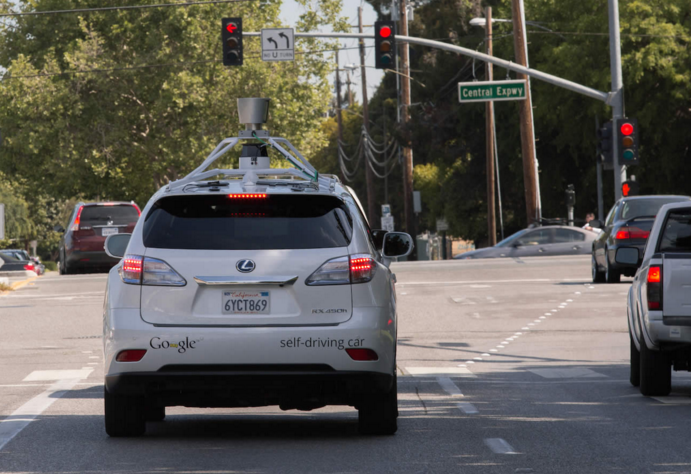
▲ Google conducted road tests with 55 semi-autonomous vehicles in two cities across two states from 2009 to January 31, 2016. (Photo: Google)
So, does the fact that autonomous driving isn't even 90% accurate mean there are still many technical flaws? Dr. Cha Won-yong bluntly responds, "That's also part of the learning process." He pointed out that “most people only know about Google’s real-world road tests, but if there were a very powerful simulator that could allow semi-autonomous cars to learn before they even leave the garage, they could learn in the garage,” and that “in these simulators’ virtual labs, Google’s semi-autonomous cars are learning by driving 3 million miles (4.8 million km) of virtual roads a day.”
In this regard, he added that the passage explicitly mentioning the disabling of autonomous driving functions should also be noted. Google's self-driving car has disabling its functions 341 times, most of which (304 times) occurred on public roads. In contrast, only 32 instances occurred on highways. The reasons for disabling autonomous driving mode were weather conditions and unexpected situations that could occur on the road, such as jaywalking. Dr. Cha stated, "The important point is that Google has identified the causes of these function disablings and trained its self-driving cars in a virtual lab, and these results are reflected in the patent application."
Focus on fusion sensor systems and fusion algorithms
What does Google's patent analysis reveal about sensor systems, autonomous driving computer systems, and user-autonomous vehicle authentication systems? In sensor technology, which is one of the core technologies of autonomous vehicles, the fusion sensor system and fusion algorithm (Sensor Fusion Algorithm) composed of sensors such as cameras, radar, lidar, ultrasound, and audio installed on the roof, mirrors, front and rear bumpers, side doors, or under the body are drawing attention.
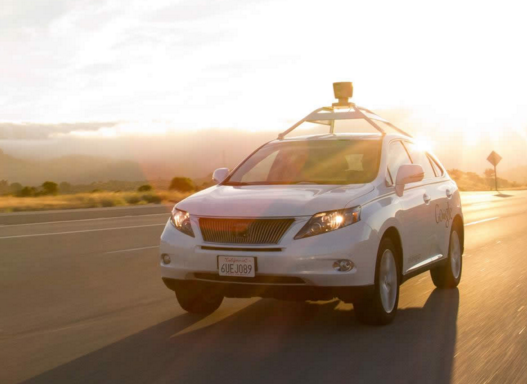
▲ Google Self-Driving Car Project (Photo Google)
The next crucial factor is driving data. In other words, autonomous driving requires a combination of a detailed prior map based on big data and detailed real-time sensing data. This means conducting driving tests in manual mode, where the driver drives the vehicle, scanning road types, lane widths, lane shapes (dotted/solid lines, etc.), shoulders, signs, guardrails, trees, obstacles, intersection types, and traffic signal types. Based on this data, a new, precise and detailed map must be created.
This advanced detailed map is stored in the data of the autonomous driving computer system memory and can be retrieved when driving in autonomous mode and compared and analyzed with the sensor's real-time sensing map (Detailed Real-Time Map). Dr. Cha said, “This kind of comparative analysis requires building up big data in advance, which is why Google has conducted 3.85 million kilometers of actual driving tests so far.”
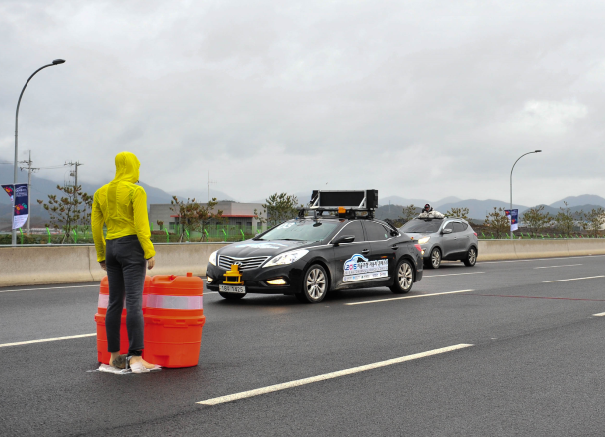
▲Last year, the Ministry of Trade, Industry and Energy held a self-driving car contest at the Daegu Intelligent Automobile Parts Testing Center .
Finally, a highly detailed model of traffic patterns must be created based on the pre-detailed map and real-time sensing data. Depending on the location of the pre-detailed map, the model includes other vehicle attributes or properties of moving objects, such as the distribution of typical or expected speeds of the autonomous vehicle, trajectories along lanes, and where it accelerated or de-accelerated (speed-regulated).
Through continuous testing, the vehicle can detect and model the driving patterns of these other vehicles to predetermine threshold values. When a vehicle exceeds these thresholds, the vehicle alerts the driver to take control of the steering wheel and switches from autonomous mode to manual mode. If other vehicles drive normally within these thresholds, the autonomous vehicle automatically switches to autonomous mode.
Urgent need to build an ecosystem through domestic companies' platforms
One way is to focus on the sensor fusion system field.
Dr. Cha pointed out that, with Google developing a fully autonomous vehicle utilizing artificial intelligence, it is urgent to build an ecosystem through a platform of domestic large corporations, small and medium-sized enterprises, and venture companies. He brought up the concept of autonomous vehicles, explaining, "According to the definition of autonomous vehicles stipulated in the California law permitting autonomous driving testing, an autonomous vehicle is not a vehicle equipped with one or more collision avoidance systems... (omitted) An autonomous vehicle is a vehicle that has the ability to drive autonomously or comprehensively without the active control or monitoring of a human operator."
He analyzed that if we focus our capabilities on areas where we excel, such as sensor fusion systems, we will be able to dominate the global market. In the book's preface, he stated, "Although Google's patents show a significant lead, analyzing patents from other industries could provide a strategy to circumvent this." He added, "Furthermore, like the United States, Korea needs to invest in autonomous vehicles and road infrastructure with a long-term perspective. While autonomous vehicle research and development is crucial, we must not forget that existing road infrastructure, including advanced detailed maps, must be reorganized to enable autonomous driving."
Comments
Related news
Can self-driving cars operate without precise maps, V2X, or road infrastructure?
As autonomous vehicle development accelerates both domestically and internationally, interest in vehicle-to-infrastructure wireless communication linking roads and vehicles—that is, V2X (vehicle-to-x)—and high-precision maps for autonomous driving is rising. Autonomous vehicles, as commonly understood, refer to human-friendly automobiles capable of safe autonomous operation by minimizing driver intervention through self-recognition of surrounding environments, risk assessment, and route planning. Accordingly, when autonomous vehicles are classified in stages, they are divided from Level 0 (driver perceives, controls, and is responsible) to Level 4 (vehicle perceives and controls, driver availability not required). True autonomous vehicles are those of Level 2 (driver perceives, vehicle controls) or higher.
2016.03.28by 신윤오 기자

[Reporter's Notebook] The Autonomous Vehicle Industry: How to Avoid Going Backwards
For autonomous vehicles to be realized, core enabling technologies must be supported. Advanced technologies are required, including LIDAR systems, GPS technology, IMU (inertial measurement unit technology for measuring speed and direction), HVI (optimal UI for drivers), smart actuator technology, V2X communication technology, and LDM (digital map technology). In other words, all technologies must be mobilized—from core components to road infrastructure and mapping technologies.
2016.04.04by 신윤오 기자
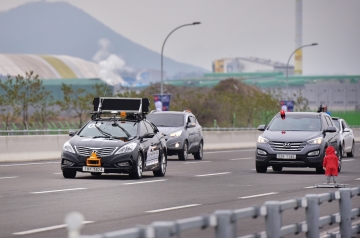
The autonomous vehicle industry is actively pursuing regulatory improvements and the creation of a convergence ecosystem.
What was emphasized to Minister Ju Hyung-hwan of the Ministry of Industry, Trade and Resource at an autonomous vehicle industry roundtable held on the 29th at the Intelligent Automotive Parts Promotion Institute. Participants in this meeting included complete vehicle manufacturers, parts suppliers, information technology (IT) companies, research institutes and other autonomous vehicle-related companies, experts and professionals who discussed industry challenges and requests, and deliberated on development strategies to foster autonomous vehicles as a core new industry.
2016.04.29by 신윤오 기자
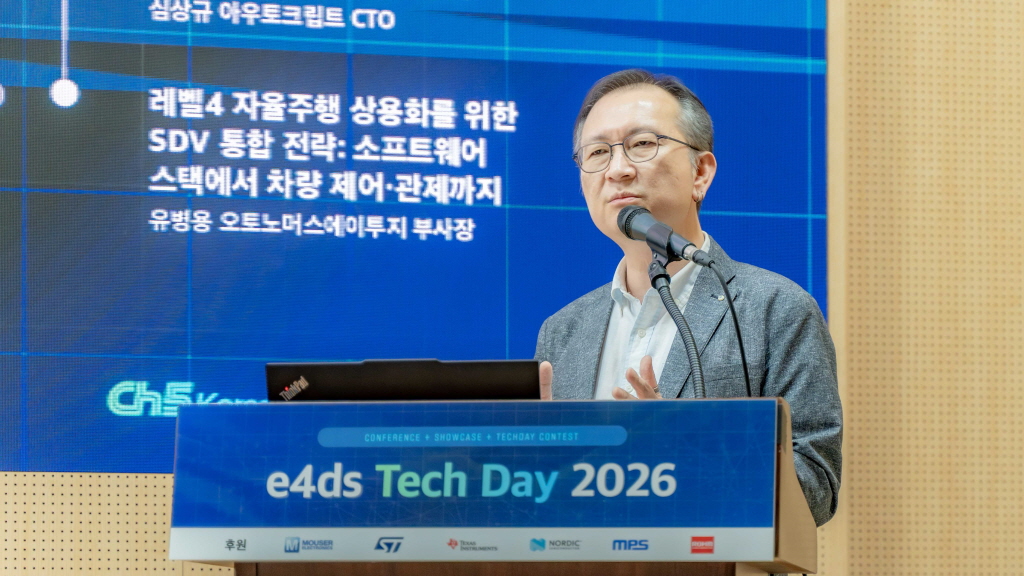
[e4ds Tech Day 2026 ⑨] Sim Sang-gyu, Autocrypt CTO: "In the Physical AI Era, Automotive Security Must Extend Beyond the Vehicle"
At e4ds Tech Day 2026, Sim Sang-gyu, CTO of Autocrypt, explained automotive cybersecurity strategies in the era of Physical AI and SDV (Software-Defined Vehicle). Automobiles are evolving as part of an ecosystem connected to AI, cloud, chargers, IoT, and robots, and he emphasized that the scope of security must expand beyond the vehicle interior to the entire connected environment. In particular, AI model tampering, adversarial attacks, OTA updates, and EV charger hacking were identified as major threats. He explained that response measures require zero trust, AI model integrity protection, intrusion detection, Security by Design and Default, and full lifecycle security management, and that proactive security system establishment beyond regulatory compliance is critical for securing future mobility competitiveness.
2026.10.12by 배종인 기자

Practical HIL Construction Strategy for Automotive and Off-Highway Controller Validation
As vehicle E/E architecture transitions to zonal structures and shifts to software-defined vehicles (SDV), the number of controllers (ECUs) requiring validation and software complexity are surging dramatically. Meanwhile, real vehicle testing cannot provide repeated verification under identical conditions and entails lead time and safety concerns. This white paper explains the principles of HIL (Hardware-in-the-Loop) validation and the structure of the NI platform composed of PXI, SLSC, and VeriStand, and through two actual implementation cases—Camera Record & Replay HIL for In-Cabin Monitoring Controller (ICMU) and Forklift Controller (VCU) HILS—describes how controller-level regression testing becomes possible. Additionally, it explicitly states application boundaries and limitations, such as lack of A2B support.
2026.10.12by 편집부











