



The Ministry of Science, ICT and Future Planning supports promising VR companies in moving into Growth Support Centers and waives rent.
 Published2016.05.09 06:13
Continued strengthening of government support and deregulation to foster new convergence industries and create youth jobs
On the 3rd, relevant ministries including the Ministry of Science, ICT and Future Planning, the Ministry of Economy and Finance, and the Ministry of Culture, Sports and Tourism, along with major domestic and international VR companies, held a virtual reality (VR) meeting at Sangam Nurikim Square, presided over by Choi Sang-mok, First Vice Minister of Economy and Finance.
During this meeting, the current status of global technological development was reviewed through experiences at the Digital Pavilion, the nation's largest ICT experience exhibition hall, and VR devices and content from domestic and international companies. Additionally, through discussions with various companies in the VR-related sectors—including device manufacturing, content, telecommunications, and broadcasting—industry challenges were listened to, and government support policies were explained.
In his opening remarks at the meeting, Vice Minister Choi mentioned that various industries around the world are converging based on big data, cloud computing, and artificial intelligence to create innovative products and services, and emphasized that fostering new convergence industries is essential to expand growth engines and provide quality jobs for young people.
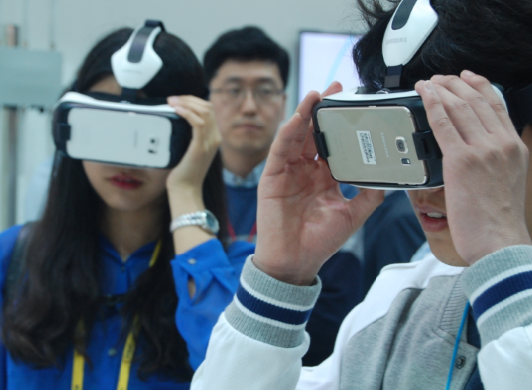
Visitors experiencing VR at the exhibition hall
In addition, the Ministry of Science, ICT and Future Planning announced that it would establish a Growth Support Center in Sangam DMC to support small and medium-sized VR companies, assist promising VR firms in moving in, and waive rent. It will secure a new space of 1,500 pyeong for the Growth Support Center, select approximately 14 promising companies, and provide rent waivers for companies with 10 to 20 employees.
In addition, they announced plans to install development studios and a VR lab at the Sangam Digital Pavilion to support corporate workforce training and R&D, and to renovate the co-production center to provide filming equipment and related systems necessary for the production of immersive content.
In particular, it was mentioned that through the 'VR Developers Competition' to be held for the first time this coming October, an ecosystem among virtual reality (VR) CPND companies would be established and a venue for sharing various ideas would be provided.
The Ministry of Culture, Sports and Tourism is jointly pursuing this with the Ministry of Science, ICT and Future Planning.It was stated that by promoting the development of virtual reality (VR) content authoring technology as an 'open source model,' it is expected to play a key role in building a VR content development ecosystem, such as enabling developers of various skill levels to easily access and utilize it.
The Ministry of Economy and Finance announced that, as part of expanding infrastructure to foster convergence new industries, it will establish Creative Economy Innovation Centers in 17 cities and provinces nationwide to support collaboration between companies and the government, and will boldly and continuously eliminate various regulations that hinder the development of convergence new industries through regulatory free zones and the New Industry Investment Committee.
In addition, it was stated that 80 trillion won in policy financing is planned to be provided to new growth sectors, with detailed criteria currently being established, and that a new 'Cultural Content Promotion Tax System' will be created to provide a tax credit of up to 10% on the production costs of film and broadcast content.
Finally, it was pointed out that while VR can overcome temporal and spatial constraints and be applied to various fields such as medicine, education, architecture, and national defense, its current application is limited to areas like games and museum exhibits. It was stated that if relevant ministries cooperate to actively develop projects in areas that are both effective and cost-effective, it would be possible to expand budgetary support for these sectors.
In addition, they stated that since the initial market for new industries such as VR is small and small and medium-sized enterprises face significant difficulties in establishing sales channels, they would review ways for the public sector to proactively create demand.
Vice Minister Choi reiterated the government's commitment to regulatory reform for the development of convergence new industries, citing the VIP's remark that "we must drown all regulations and salvage only what can be saved." Meanwhile, the Ministry of Culture, Sports and Tourism [applied] the Game Industry Act, which expands the self-rating system for games, currently permitted only for mobile games, to all games excluding those unsuitable for minors and arcade games. He said he would make an effort to revise it.
However, regarding the side effects of regulatory rationalization, they stated that they would not neglect the protection of children and adolescents by also establishing post-management measures for self-rating business operators.

Comments
Related news
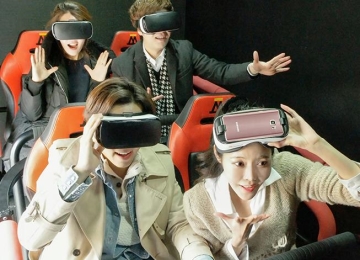
We are investing heavily in the game industry integrated with ICT, such as cloud computing and VR.
The Ministry of Culture, Sports and Tourism and the Ministry of Science, ICT and Future Planning held a "Content New Market Creation Discussion Forum through the Convergence of Culture and Information and Communications Technology (ICT)" on the morning of the 19th at the Kensington Hotel in Yeouido, Seoul, and announced plans to foster next-generation game content. The government assessed that the gaming industry, where the application of new information and communications technologies (ICT) such as cloud and virtual reality (VR) is active, has high growth potential going forward, and it is projected that if new markets incorporating virtual reality (VR) and other technologies are created, they will be able to make significant contributions to economic revitalization.
2016.02.19by 신윤오 기자
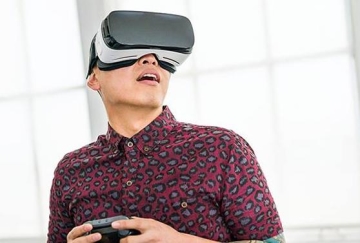
To Avoid Repeating the Failure of 3D TV in the Virtual Reality (VR) Industry...
Virtual reality (VR) technology, which creates a realistic experience through real-time interaction with humans in a three-dimensional virtual space built using computers, is gaining significant attention. As VR becomes more mainstream, there is growing recognition that lessons from the problems encountered with 3D TV should be heeded. VR is a user interface technology that uses specialized glasses and gloves to enable humans to experience simulated scenarios realistically through their senses such as vision and hearing, based on what is possible within computer software programs. It allows users to view and manipulate environments as if they have entered spaces that are difficult to experience in everyday life. Consequently, VR is being utilized across diverse fields including military, entertainment, medical, education, film, and tourism.
2016.02.22by 신윤오 기자
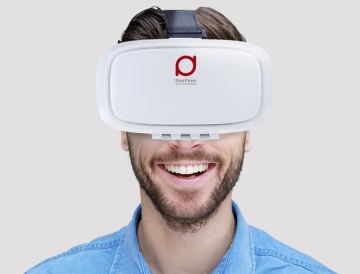
China's VR Market Is Growing Fast, VR Devices Expected to Grow 476% This Year
According to IDC (www.idc.com), a market analysis and consulting firm specializing in the IT sector, China's VR (Virtual Reality) device market is projected to reach 480,000 units in 2016, representing a 476% increase year-over-year, driven by the growth of Chinese VR companies such as DeePoon, ANTVR, and 3Glasses. Currently, these VR companies are announcing long-term plans encompassing both hardware and equipment as well as software ecosystems. Furthermore, major global VR companies such as Oculus, HTC, and Sony have announced that they will begin launching products starting in 2016.
2016.02.25by 신윤오 기자
ESP32 Development Environment Selection and GPS Application Implementation
The ESP32 is a microcontroller that integrates Wi-Fi, Bluetooth, 12-bit ADC, capacitive touch, PWM, DAC, and UART in a single SoC. However, the abundance of features does not by itself solve the designer's problems. The real challenges lie in selecting the appropriate development environment, determining which pins can be used and which must be avoided, and converting raw data from modules into usable information. This document addresses ESP32 peripheral constraints (ADC2 and Wi-Fi coexistence limitation, UART1 occupancy, ADC non-linear regions), the trade-offs between Arduino IDE and ESP-IDF, and the process from connecting NEO-6M/NEO-M8N GPS modules to UART2, parsing NMEA sentences, and visualizing routes in Google Earth, all organized based on documented references.
2026.10.12by 편집부
MIPI CSI-2, DSI-2, C-PHY, D-PHY Test Solution Technical White Paper
The MIPI interface adopts a burst mode that transitions between low-power (LP) and high-speed (HS) states for low-power consumption, and in return, strict timing rules are imposed on state transitions. Additionally, the high-speed section operates as a packet-based protocol with headers, ECC, and CRC, so verification engineers must handle waveforms and protocols simultaneously. Traditional configurations combining general-purpose oscilloscopes and AWGs reveal limitations in setup complexity, measurement uncertainty, and lack of reproducibility when faced with these requirements. This white paper, based on webinar materials, organizes the structure of this problem and describes how the SV5C-DPTXCPTX generator for receiver testing and SV5C-DPRXCPRX analyzer for transmitter testing integrate state transition testing, stressed eye testing, and protocol analysis into a single bench, along with their application boundaries.
2026.10.12by 편집부











