



[Reporter's Notebook] Will the application of domestic cores be a money-maker or a bomb?
 Published2016.05.10 12:30
However, the problem was technology. In a situation where there were overseas companies with strong leading technologies, they had to have differentiation and competitiveness. They also had to avoid intellectual property disputes with companies such as ARM, Intel, and IBM. The technology that was born that way is the EISC (Extended Instruction Structure) ISA, which is the basis of the domestic CPU core, emCORE.
However, the domestic processor technology that emerged in 2001 was not well known to the public because it was overshadowed by foreign ARM, MIPS, ARC, and Tensilica processors. Above all, it was difficult to enter the market due to the negative perception of domestic technology. Vice President Lee Hee said, “We have continuously developed domestic processors by investing company operating funds,” and “Despite many difficulties, we have not given up on the CPU business and have maintained our presence as the only company in Korea.” Over the 18 years of history of the Emcore processor, which has continued without giving up, Emcore-based chips have cumulatively shipped over 50 million units.
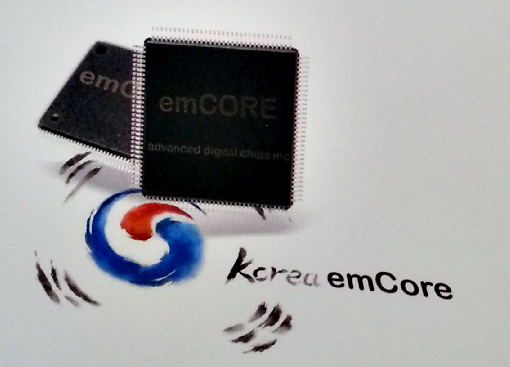
▲ ADCHIPS' emCore
The CPU development of AD Chips is a case that clearly shows how difficult it is to develop a domestic product in a situation where there are strong overseas competitors and technologies. It is not over once the product is made. After the product is released, the prejudice that it is a domestic product must be overcome. In order to gain the trust of the people who use the product and to gain competitiveness, as much effort as development is required.
The domestic CPU business that started last year is the same. There was a lot of talk and a lot of trouble. As Song Yong-ho, the head of the Intelligent Semiconductor Promotion Team who led the business, said, there were many twists and turns in the process of creating the domestic CPU core development project. People asked why they were doing a business that wasn’t competitive. However, at a meeting to share the business results of a year and a half, Director Song expressed his opinion that the business should be carried out ‘seriously.’ It sounded like he was saying that the government should not only criticize the fact that it cannot ‘seriously’ foster any industry, but that the industry players should also be persistent.
Jaehong Eom, CEO of Believe Micron, which developed a wireless communication SoC using the domestic CPU core, Core-A, said, “Previously, when it came to radios, Motorola was the name, but since 2008, Chinese companies have been making great strides by using only digital radios. Chinese companies are making products using their own CPU cores, so why can’t we?” “We also thought that it would be possible to develop SoCs using domestic CPU cores,” he said. “Domestic CPU cores can also be successful if companies like us take responsibility and take the lead,” Eom added.
Song Yong-ho, Business Unit Manager, "There are many twists and turns... We must succeed"
Director Song emphasized that the domestic CPU development project must “achieve results.” He wants to hear that there were results, and that the next project is possible only when there are actual results. He said that some commercialization results have surfaced and that it is fortunate that the possibility has been confirmed. He added that he hopes that commercialization will spread and the day will come soon when domestic CPU core companies receive royalties.
However, contrary to the wishes of business entities, the development of domestic CPU cores is not so easy. This is because they do not want to take a ‘risk’ in using the CPU cores that are the core of the SoC. They do not want to cause problems by using domestic products instead of using foreign products that are already highly reliable. Companies that have used domestic CPUs also do not deny the fact that there are disadvantages as well as advantages.
The important point is that even in these circumstances, domestic CPU companies and related organizations are continuing to 'seriously' focus on technology development. This is because foreign products cannot keep up with domestic products in terms of price competitiveness or technical support. In fact, companies that use domestic CPU cores say that the convenience of being able to contact and resolve problems whenever they arise is a major advantage.
The problem is the future. We need to know that we have domestically produced CPUs that are useful, and developers need to continue to improve by fully reflecting the opinions of demanders. As the report cards have increased, the homework has increased. At least as one semiconductor company official said, if we cannot provide the reliability that using domestic CPUs will either be a 'money-maker' or a 'bomb', the spread of domestic CPUs will be a distant goal.
Comments
Related news
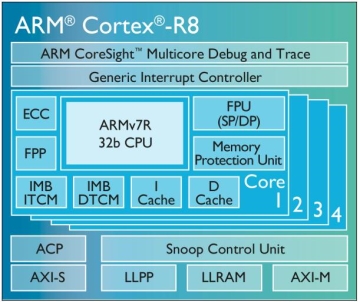
ARM Announces Cortex-R8 Processor, Real-Time CPU Supporting 5G Speeds
ARM has announced a new ARM Cortex-R8 processor that supports 5G speeds. As a result, semiconductor design companies can now double the SoC performance of ARM-based modems and high-capacity storage systems. ARM's latest real-time CPU delivers the low latency, high performance, and power efficiency required by next-generation 5G modems and high-capacity storage devices. The processor is currently available for licensing and is expected to be produced in silicon within 2016.
2016.02.19by 신윤오 기자
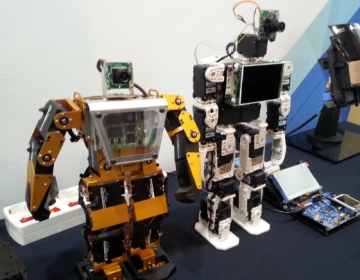
[CPU Planning ①] How Much Do You Know About Domestic CPU Cores?
The domestic CPU core roadshow introduced Core-A from Dynarit Systems, emCore from A.D. Chips, Aldebaran from the Electronics and Telecommunications Research Institute (ETRI), and MENSA core from the Korea Electronics Technology Institute (KETI). SoC development cases utilizing these cores were demonstrated by participating companies, including Believe Micron's location-based wireless communication SoC for digital transceivers (applying Core-A), MCS Logic's wireless speaker SoC with embedded USB DAC (applying emCore), and Unmanned Solution's small mobile robot platform control SoC (applying Aldebaran).
2016.05.10by 신윤오 기자
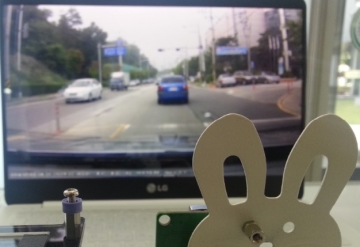
[CPU Planning ②] The goal is to expand the application of domestic cores in the field of autonomous vehicle image recognition
The Aldebaran CPU core is a core independently developed by the Electronics and Telecommunications Research Institute (ETRI). The name is derived from Aldebaran, the first-magnitude star representing Taurus in the constellations. This processor provides integrated ADE (Application Development Environment) that includes a CPU core based on power consumption minimization microarchitecture and an open source (GNU)-based software toolchain to enhance interoperability with enterprises. As computational functionality and learning capability for optimization in given situations are required, the development of hardware-based MCUs capable of efficiently calculating intelligent algorithms is increasingly demanded. To meet these requirements, the Electronic Components Research Institute developed the MENSA core.
2016.05.16by 신윤오 기자

Intel Unveils Next-Generation 'Core Ultra Series 3' and vPro Platform for Enterprise PCs
Intel has officially unveiled the "Intel Core Ultra Series 3" for next-generation enterprise PCs and the latest vPro platform, addressing a wide range of demands from enterprise notebooks to high-performance workstations.
2026.03.26by 배종인 기자

ROHM Launches ESD Protection Diode Compatible with High-Speed Interfaces of 10Gbps or Higher
Semiconductor specialist ROHM has developed the 'RESDxVx series' of ESD (electrostatic discharge) protection diodes capable of responding to next-generation high-speed data communication environments exceeding 10Gbps, simultaneously enhancing both signal quality maintenance required in high-speed interfaces and IC protection performance.
2026.03.26by 배종인 기자











