


Domestic cloud software market to grow at an average annual rate of 16.3% over the next five years
 Published2016.05.13 17:08
According to a recent report by IDC Korea (CEO Hong Yoo-sook), the domestic cloud software market last year recorded a growth rate of 35.1% year-on-year and reached a size of KRW 238 billion. The market is expected to continue its average annual growth rate of 16.3% over the next five years and exceed KRW 500 billion in 2020.
According to the report ('Korea SaaS and Cloud Software Market Outlook, 2016-2020, #AP40489816') , the domestic cloud market is growing with a focus on infrastructure services, and demand for cloud-based software is also increasing.
Vendors that have successfully entered the cloud software market are exploring various ways to increase their market share, while vendors that were relatively unprepared are focusing on acquiring cloud-based software service providers or converting existing installed software to cloud-based software.
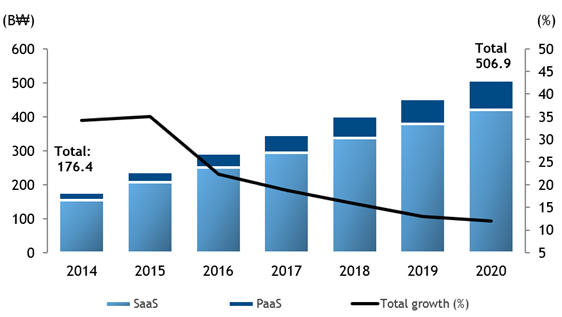
▲Domestic cloud software market outlook, 2015-2020 (Unit: billion won)
As the cloud-first strategy is expected to gradually increase, especially among public institutions, in accordance with the 'Cloud Development Act', market growth is expected as the cost-saving effects and flexible service expandability resulting from the introduction of cloud services by institutions and companies increase. In addition, continuous market expansion is expected due to government-level support for cloud software development and support for cloud-related companies, as well as improved awareness among companies regarding the introduction of cloud services.
Depending on the situation, you need to apply the appropriate cloud model, such as hybrid cloud or VPC.
Moon-soo Choi, a researcher at IDC Korea Enterprise Research Group, said, “In order to successfully expand the domestic cloud software market in the future, a strategy of applying an appropriate cloud model, such as hybrid cloud and VPC (Virtual Private Cloud), depending on the situation is necessary, and it will be important to strengthen the related ecosystem, such as cloud service providers and capable partners.” He continued, “Creating a cloud ecosystem, such as activating a collaborative community among cloud software providers and fostering cloud platform providers, will be one of the important tasks.”
Meanwhile, the report found that one of the reasons for the reluctance to switch to SaaS and cloud software environments in Korea is still data security issues, and emphasized that vendors should possess security technologies that can complement this. It also advised that cases of hybrid clouds that link private and public clouds should be discovered to provide customers with a variety of choices.

Comments
Related news
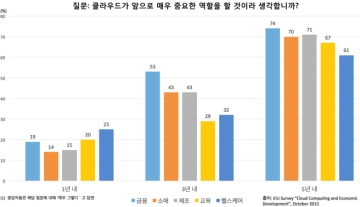
70% of respondents believe the cloud will become increasingly important within the next five years.
VMware (CEO: Pat Gelsinger), a global leader in cloud infrastructure and business mobility solutions, has released a report titled 'Ascending cloud: The adoption of cloud computing in five industries'.
2016.03.30by 명세환 기자
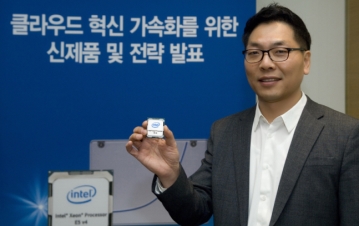
Intel Leads Cloud Transition with Enterprise Microprocessors
Intel announced on the 6th through a product presentation that it will introduce various new technologies, investment plans, and industry collaborations for cloud services with superior speed and scalability, and will support enterprise customers in building cloud infrastructure more easily, enabling them to launch new services quickly and drive revenue growth. The Intel Xeon Processor E5-2600 v4 product family was developed using 14nm process technology and provides key components for SDI, including Intel Resource Director Technology. Intel Resource Director Technology enables customers to transition to fully automated SDI-based cloud services by providing excellent visualization for seamless control and monitoring of critical shared resources such as processor cache and main memory.
2016.04.08by 신윤오 기자
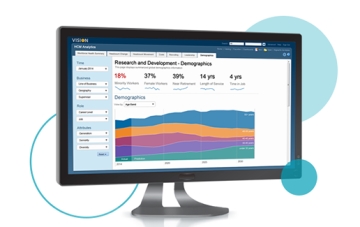
Oracle Announces New Oracle HCM Cloud Solution
Oracle (www.oracle.com/kr) recently announced new services for its Oracle Human Capital Management Cloud (HCM Cloud) portfolio at the Oracle HCM World conference held in Chicago, United States, offering comprehensive support for enterprise HR innovation. The new services are designed to enable HR departments to easily apply the latest best practices. They include comprehensive self-service solutions that streamline issue resolution for HR departments and employees, new work-life applications, and updated enterprise learning solutions that support enterprises in meeting their digital human resources needs.
2016.05.12by 명세환 기자
European Patent Applications Surpass 200,000 for the First Time… South Korea Maintains 5th Place, Led by Batteries and Telecommunications
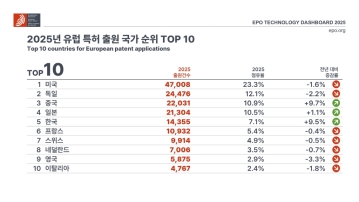
According to the European Patent Office (EPO)'s 'Technology Dashboard 2025', European patent applications last year reached 201,974, surpassing 200,000 for the first time. Korean companies and inventors filed 14,355 applications, representing a 9.5% increase from the previous year and maintaining 5th place by country. Battery, digital communication, and semiconductor technologies led the growth, with Samsung ranking as the top EPO applicant for the second consecutive year and LG reaching 3rd place. The presence of major domestic cities such as Seoul, Suwon, and Yongin was also confirmed. It was also revealed that Korea's European patent strategy is expanding beyond individual technologies to span the entire industry.
2026.03.24by 명세환 기자

SK Telecom First Applies AI-Based Network Operations at Gwanghwamun K-Pop Concert
SK Telecom announced that it applied an AI-based network operation system for the first time at a large-scale K-pop concert held in the Gwanghwamun area of Seoul on March 21st, managing communication quality throughout the event. Mobile data usage during the three hours before and after the concert reached 12.15TB, approximately doubling compared to the same time slot the previous weekend. SK Telecom monitored traffic using the AI system 'A-One' in five-minute and 50-meter units to respond to potential overload situations, while also operating temporary communication facilities and on-site personnel in parallel. This case is interpreted as confirmation of the practical applicability of AI-based autonomous network operation in an environment where demand from dense events and foreign users increases simultaneously.
2026.03.23by 명세환 기자











