


Could Micro LED Displays Solve Everything from VR Wearables to TVs?
 Published2016.05.30 19:47
The key is the technology to create modules through bonding and packaging.
Can micro LED displays surpass conventional LED displays and even catch up with the OLED display market?
As interest in future smart devices such as wearables grows, demand for technological development in micro LED displays is also intensifying.
Micro LED displays, which are typically manufactured with chip sizes of 10 to 100 μm and can be applied to all optical applications that require low power consumption, miniaturization, and light weight, can be widely used in flexible displays, smart fibers, bio-contact lenses, HMDs, human body attachment, and wireless communication.
As LEDs, which were primarily used for lighting and displays, are increasingly being used in bio- and medical-related fields, micro LEDs, which have secured stability in terms of high efficiency, yield, and reliability, are rapidly emerging as a next-generation display technology. In particular, micro LED has emerged as an alternative that can make VR (virtual reality) devices, which have recently become an issue, lighter and clearer, and it is also expected to be suitable for TV displays as it can be made larger.
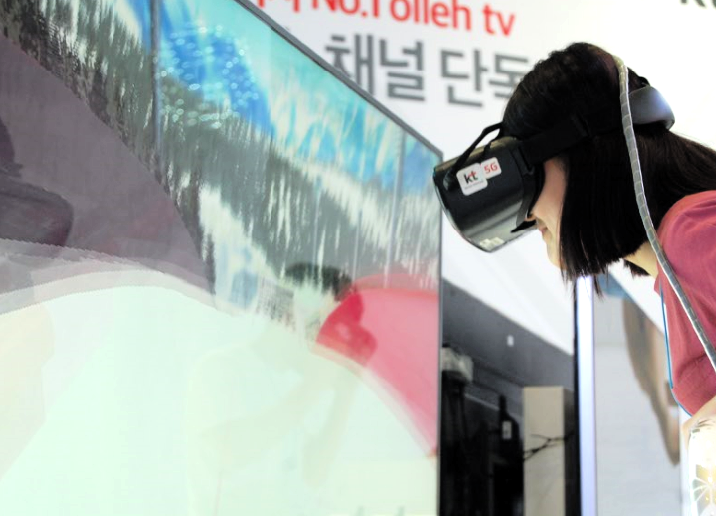
▲ Micro LEDs have emerged as a promising alternative for lightweight and vivid VR (virtual reality) devices, a trend that has recently become a hot topic. (Reference photo: A visitor experiences VR at a company booth at WIS 2016.)
In terms of market prospects, with global competition intensifying and major foreign companies rapidly dominating the LED industry, there are growing calls for domestic companies to find a breakthrough with micro LED displays. This is because developing customized micro LED light sources for the wearable era, a future industry trend, can increase product value and create new markets through convergence with IT, healthcare, agriculture, fisheries, textiles, and communications technologies.
Accordingly, companies are also moving faster. Apple acquired Luxvue Technology, a micro LED specialist, in 2014, and Japan's Sony and China's BACO have released prototype LED pixel TVs, making the potential of micro LED displays a reality.
Micro LED patents are active in the US, while Korea and Japan each hold 10%.
Patent applications in the field of micro LED technology development are also active. This field, where application rates have been rising since the early 2000s, has no monopoly, with Korea, the US, and Japan maintaining similar market shares (the top 16 companies account for 80% of the market). Notably, Panasonic of Japan and Samsung Display of Korea each hold approximately 10% of the market. The US is the most active in patent applications, with many applications coming from other countries due to market potential. Domestic applicants include LuxVue and Osram. Japan, which entered the technology market the fastest, is a leader in micro LED technology, but patent applications are currently stagnant.
Micro LEDs are attracting attention as a way to further advance the flexible display market, which is projected to reach $23.4 billion by 2020 due to their technological and industrial advantages. Compared to conventional LEDs, micro LEDs offer faster response times, lower power consumption, and higher efficiency. When applied to displays, they can be slimmer and larger. In particular, experts say that power consumption can be improved by more than five times compared to OLED (organic light-emitting diode), which is emerging as a next-generation display, and that if the raw material cost and process/equipment are optimized, it can surpass OLED.
Dr. Lee Sang-heon of the Korea Institute of Photonics Technology said, “It is true that micro LEDs currently have advantages and disadvantages compared to OLEDs,” and “Ultimately, the goal of micro LEDs will be to catch up with OLEDs.”
Can Micro LEDs Replace OLEDs, Which Are Difficult to Scale Up?
OLED displays, which utilize the property of organic materials emitting light when current flows through a fluorescent organic thin film, have a faster response speed than conventional LCDs, have almost no afterimages when playing moving images, and are self-luminous, so they do not require a backlight, allowing for a slim design and clear picture quality even in dark places or bright outdoor environments. However, they have the disadvantages of being difficult to make large and having a short product lifespan.
In contrast, LEDs can be made to bend when manufactured to a size of several tens of microns, and they have the advantage of being easy to enlarge and having a long product lifespan.
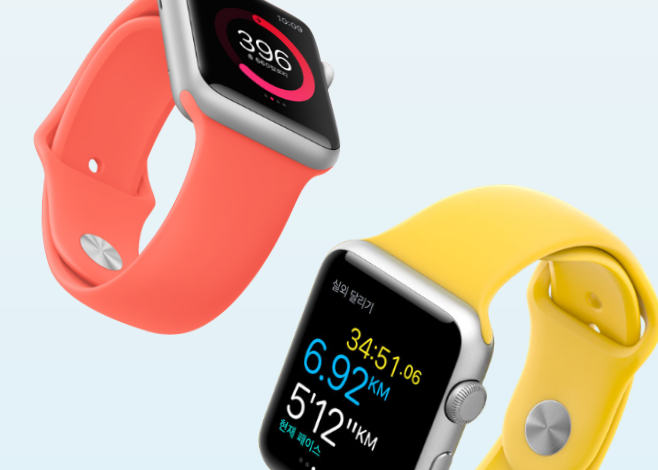
▲ There are continued predictions that Apple, which acquired Luxvue in 2014, will apply micro LED to its smartwatches. (Photo: Apple website iWatch image)
In the biomedical field, LEDs are medical light sources with a similar role to low-level laser therapy (LLLT). If LED elements are manufactured into micro-sized elements, flexible elements can be implemented, allowing them to be attached to or inserted into the human body for application in various medical fields such as cell stimulation, optogenetic therapy, wound healing, and diagnosis.
Recently, wearable smart devices such as watches, glasses, and necklaces have been commercialized. Applying micro LEDs to these devices can lead to applications such as displays, smart fabrics combining fibers and LEDs, bio-contact lenses, and HMDs (Head-Mounted Displays). Li-Fi technology, which utilizes the wavelengths of light emitted from LEDs to achieve high communication speeds, is also brightening the prospects for this field by enabling miniaturization of devices when applied to micro LEDs.
Former Samsung Electronics Executive Vice President Ham Heon-ju said, “Micro LED technology was started to minimize battery consumption in smartwatches,” and “As the smartwatch market has not been doing well recently, we are trying to apply it to TVs, and prototypes will be released soon.”
There are many challenges to overcome, including developing customized microchips.
The government plans to launch a micro LED project as a new growth engine.
However, there are many obstacles to commercializing micro LEDs. Developing micro LED displays requires the development of customized microchips based on flexible materials and components. Process technology for developing micro LEDs or transferring arrayed chips onto flexible substrates is particularly crucial. Furthermore, printed electronics technology is required for micro LED bonding.
In addition, epitaxial growth technology is required to produce devices with improved internal quantum efficiency and light extraction efficiency, and vertical LEDs with excellent thermal characteristics, wafer-level package (WLP), and chip-scale package (CSP) technologies must also be developed.
Dr. Lee Sang-heon of the Korea Institute of Photonics Technology said, “It is important to develop high-level packaging technology to differentiate micro LEDs, to the point where it can be said that the key is not chip manufacturing technology but rather the technology to make modules by bonding and packaging,” and “If only printed electronics technology capable of micro-line widths, such as organic TFT and fine wiring circuits, is developed, it is expected that commercialization will be possible within five years at the earliest because it will be possible to go beyond the fab.”
Cho Seong-haeng, a researcher at the Electronics and Telecommunications Research Institute (ETRI), also said, “We do not yet have experience bonding micro LEDs to flexible substrates,” and emphasized, “Rather than substrates, it is urgent to develop technology to transfer many pixels for high resolution.”
The government recently decided to foster the micro LED industry as a new growth engine through the LED Convergence Industry Hub Development Project. This is because micro LEDs are considered highly suitable as next-generation items for small and medium-sized enterprises (SMEs). Jeon Ki-young, a producer at the Korea Evaluation Institute of Industrial Technology, stated, "While developing micro LED light source technology for displays is not easy, it is nevertheless a necessary next-generation technology. Accordingly, we will focus our support on infrastructure equipment, such as transfer equipment technology and inspection equipment, and explore application markets such as smartwatches and automotive headlights."
Comments
Related news
LG Display Showcases Future Lighting Technologies, Including Flexible and Mirror Types
LG Display will participate in "Light + Building 2016," which will be held in Frankfurt, Germany from March 13 to 18 (local time), showcasing next-generation OLED lighting products and technologies.
2016.03.14by 명세환 기자
The strategy to solidify the portable LED projector market is 'brighter'
LG Electronics solidifies its position as the world's number one in the LED projector market by launching brighter minibeam TV new products. LG Electronics recently launched two new minibeam TV models, portable projectors, in the domestic market. The flagship product (model name: PW1500) features increased maximum brightness of up to 1,500 lumens (equivalent to the brightness of 1,500 candles), delivering clear images even during daytime. This is the brightest minibeam TV that LG Electronics has released to date.
2016.04.05by 명세환 기자
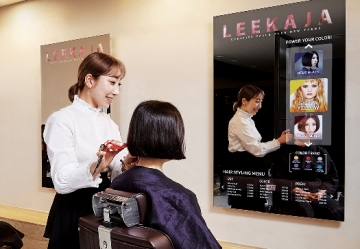
The futuristic mirror 'Mirror Display' offers both practicality and information.
Samsung Electronics unveiled its next-generation mirror product, 'Mirror Display,' for the first time. Samsung Electronics installed the 'Mirror Display' product for the first time at Igaza Hair Vis, located in the Wellness Center of Lotte Department Store's Jamsil branch. Igaza Hair Vis is a beauty salon franchise that expands the differentiated excellence of Korean beauty globally, not only in Korea but also in the United States, Australia, and China. Samsung Electronics manufactured a 55-inch 'Mirror Display' as a mirror, creating a 'Smart Zone' where Igaza Hair Vis customers can obtain various latest trend information on beauty and hair care in addition to using it as a mirror.
2016.05.18by 명세환 기자
ESP32 Development Environment Selection and GPS Application Implementation
The ESP32 is a microcontroller that integrates Wi-Fi, Bluetooth, 12-bit ADC, capacitive touch, PWM, DAC, and UART in a single SoC. However, the abundance of features does not by itself solve the designer's problems. The real challenges lie in selecting the appropriate development environment, determining which pins can be used and which must be avoided, and converting raw data from modules into usable information. This document addresses ESP32 peripheral constraints (ADC2 and Wi-Fi coexistence limitation, UART1 occupancy, ADC non-linear regions), the trade-offs between Arduino IDE and ESP-IDF, and the process from connecting NEO-6M/NEO-M8N GPS modules to UART2, parsing NMEA sentences, and visualizing routes in Google Earth, all organized based on documented references.
2026.10.12by 편집부
MIPI CSI-2, DSI-2, C-PHY, D-PHY Test Solution Technical White Paper
The MIPI interface adopts a burst mode that transitions between low-power (LP) and high-speed (HS) states for low-power consumption, and in return, strict timing rules are imposed on state transitions. Additionally, the high-speed section operates as a packet-based protocol with headers, ECC, and CRC, so verification engineers must handle waveforms and protocols simultaneously. Traditional configurations combining general-purpose oscilloscopes and AWGs reveal limitations in setup complexity, measurement uncertainty, and lack of reproducibility when faced with these requirements. This white paper, based on webinar materials, organizes the structure of this problem and describes how the SV5C-DPTXCPTX generator for receiver testing and SV5C-DPRXCPRX analyzer for transmitter testing integrate state transition testing, stressed eye testing, and protocol analysis into a single bench, along with their application boundaries.
2026.10.12by 편집부











