



Lenovo Secures $690 Million Through Reorganization, Successfully Defends Profit
 Published2016.05.30 20:18
Annual revenue stood at US$44.9 billion, down 3% from the previous year.
Lenovo (www.lenovo.com/kr) announced its financial results for the fourth quarter and the full year of the fiscal year ended March 31, 2016. Despite internal and external factors impacting revenue, Lenovo succeeded in maintaining profitability while strengthening its core PC business and improving its cost structure.
Fourth-quarter revenue fell 19% year-over-year to US$9.1 billion, while annual revenue decreased 3% year-over-year to US$44.9 billion. Through organizational restructuring and improvements to its cost structure, Lenovo saved US$690 million in costs in the second half alone, and boosted its pre-tax profit (PTI) in the fourth quarter to US$193 million, an 86% increase year-over-year.
The annual pre-tax loss was $277 million, and net income for the fourth quarter reached $180 million, up 80% from the previous year. On the other hand, despite reflecting $330 million in non-cash M&A-related accounting expenses, the annual net loss was only $128 million.

Lenovo Chairman and CEO Yang Yuanqing said, “In the last quarter, there were many difficulties not only in the overall economy but also within the industry, which had a negative impact on our core product lines. However, by taking bold measures in the middle of the fiscal year, we were able to preserve profitability.” “In particular, our core PC business unit served as a pillar of support, and the enterprise division has also continuously improved profitability. In addition, we were able to confirm positive growth drivers in some major smartphone markets,” he said.
Furthermore, the company explained, “Regarding business operational issues, Lenovo has already taken various positive measures in areas such as organizational restructuring, management composition, products, and sales channels. These measures are intended to restore growth momentum in the mobile sector and establish a new operating system for diverse businesses, through which we plan to enhance the productivity and creativity of each business unit. At the same time, we intend to capitalize on the new opportunities presented by a balanced combination of devices and cloud by combining our existing strong capabilities in end-user products with newly acquired competitiveness in cloud and infrastructure.”
Lenovo’s annual gross profit was US$6.6 billion, down 1% from the previous year, and fourth-quarter gross profit was US$1.5 billion, down 15%. Gross profit margins were 14.8% annually and 16.6% in the fourth quarter, with an annual operating loss of US$62 million. Fourth-quarter operating profit was US$248 million, marking 95% growth year-over-year. Basic EPS for the fourth quarter was US$1.63 cents (HK$12.67), and the annual basic loss per share was US$1.16 cents (HK$9.00). The Lenovo Board of Directors resolved to pay a final dividend of US$2.64 cents (HK$20.5) per share for the fiscal year ended March 31, 2016.

Comments
Related news

Lenovo Korea offers up to 15% off popular laptops for Family Month.
Lenovo Korea (CEO: Kang Yong-nam, www.lenovo.com/kr) announced that it will conduct a promotional event offering various benefits to customers on the Lenovo Online Store in celebration of Family Month. The event, running from April 28 to May 15, was designed to reciprocate customer interest and affection toward Lenovo and to provide customers with opportunities to actually enjoy substantial benefits.
2016.05.07by 명세환 기자
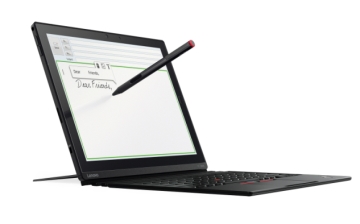
Lenovo Korea Launches First Modularly Designed Tablet
Lenovo Korea announced the launch of ThinkPad X1 Tablet (hereinafter X1 Tablet), part of its X1 FAMILY premium PC lineup for professionals. The X1 Tablet is Korea's first premium Windows tablet to adopt a modular approach for expandable functionality. It features an easily detachable modular design that allows versatile utilization in various modes such as 3D camera, projector, tablet, and notebook, depending on user preference.
2016.05.12by 명세환 기자
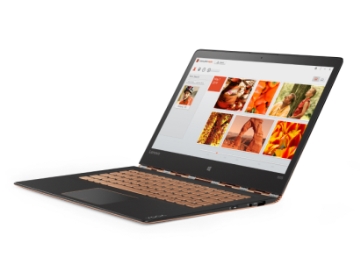
Lenovo Launches 'Yoga 900s', First Laptop Under 1kg
Lenovo Korea announced the launch of the 'YOGA 900s', the world's thinnest convertible 2-in-1 notebook. The 'YOGA 900s' boasts a slim thickness of 12.8mm and weighs merely 999g, making it the thinnest and lightest 2-in-1 notebook that Lenovo has introduced.
2016.05.16by 명세환 기자

Intel Unveils Next-Generation 'Core Ultra Series 3' and vPro Platform for Enterprise PCs
Intel has officially unveiled the "Intel Core Ultra Series 3" for next-generation enterprise PCs and the latest vPro platform, addressing a wide range of demands from enterprise notebooks to high-performance workstations.
2026.03.26by 배종인 기자

ROHM Launches ESD Protection Diode Compatible with High-Speed Interfaces of 10Gbps or Higher
Semiconductor specialist ROHM has developed the 'RESDxVx series' of ESD (electrostatic discharge) protection diodes capable of responding to next-generation high-speed data communication environments exceeding 10Gbps, simultaneously enhancing both signal quality maintenance required in high-speed interfaces and IC protection performance.
2026.03.26by 배종인 기자











