


[Reporter's Notebook] For the Fading LED Industry to Shine Again…
 Published2016.05.31 11:23
The words of a retired executive who had long overseen Samsung Electronics' LED business were almost solemn. In fact, even without him saying it that strongly, everyone agrees that the domestic LED industry is in trouble. After all, even the Chinese companies that created this situation are getting caught up in restructuring.
Nevertheless, the outlook for the LED industry remains rosy. Market research firms forecast that the global LED light source market will grow at an average annual rate of 13.6%, rising from approximately $23 billion in 2014 to about $48 billion in 2020. The outlook for the domestic LED light source market is similar. During the same period, the domestic market is projected to grow at an average annual rate of 18.5% to reach 4.3 trillion won in 2020. In fact, the trade balance has maintained a trade surplus for the past five years, surprisingly, despite China's low-cost offensive.
The LED lighting market is no exception. The global LED lighting market is projected to grow at an average annual rate of 45% until 2020, while the domestic market is expected to grow by 41.7% by 2018. This is the result of the phase-out of incandescent bulbs and the expansion of support policies for energy conservation and the adoption of LED lighting in various countries. With the full support of the government, China is (surprisingly) aiming to capture 80% of the global LED lighting market. We must acknowledge the fact that China has caught up to Korea not only in price but also in light source technology.
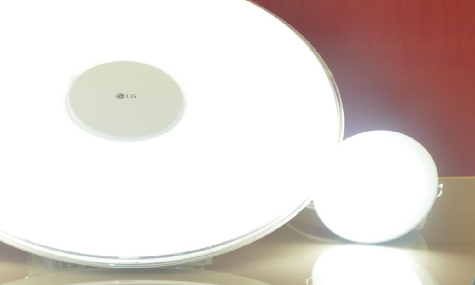
LG Electronics launched three types of LED lights last September that reduce energy consumption and extend lifespan.
(Photo courtesy of LG Electronics)
Then, what about the LED integration field, where we are pinning our hopes? The LED application sector, still in its early stages, encompasses a vast and diverse range of fields, including medical, agricultural biotechnology, shipbuilding and ports, sensor communications, and UV LEDs. Apple has already begun full-scale development of LED pixel displays, while IT companies such as Intel and Qualcomm are developing LED communication technologies like Li-Fi, LED-ID, and OCC. Japan is focusing on light-based plant factories and aquaculture technologies, while automakers and parts suppliers are concentrating on the commercialization of adaptive headlamps. In Europe, the Netherlands has long been developing plant growth technologies, and automotive parts companies like Infineon and Bosch are developing near-infrared LiDAR sensors and light sources.
I turned my attention to the current state of the domestic LED industry. Domestic small and medium-sized enterprises (SMEs) in the epi/chip sector are on the verge of ecosystem collapse due to restructuring and business closures as profitability weakens. Meanwhile, the LED lighting market is being encroached upon by China; companies are losing ground to global lighting firms in terms of brand competitiveness, and distribution is being hampered by cost pressures. Domestic LED research institutes and convergence centers are limited to supporting LED equipment setup and reliability and performance analysis, resulting in insufficient development support that leads to demand creation for SMEs. Because the market is small, few companies are willing to enter even new markets, and without companies, the market fails to expand—a situation that repeats itself.
Consequently, the LED industry must shift its focus from obsessing over revenue expansion for mere outward growth to concentrating on securing profits. Furthermore, it is urgent to streamline the lighting LED business by moving beyond simple LEDs for general use. There is also a strong call to identify niche markets in the display and automotive sectors and to expand flip-chip and CSP technologies. In particular, as the application of flip chips in the display sector increases and spreads to the lighting sector, strategic cooperative relationships with flip chip manufacturers are becoming increasingly important.
At a recent event announcing the achievements of the LED convergence industry hub construction project, Baek Jong-hyeop, General Director of the Korea Institute of Photonics Technology, stated, “LED convergence technology is a project that we have emphasized and focused on for the past 7 to 8 years,” adding, “In the early stages of the project, we expected participation from many companies in other fields, and the fact that 248 companies have utilized convergence technology as of 2016 can be considered a result.”
That is correct. As mentioned at the beginning, if we approach the LED industry solely through conventional methods, the situation will become even more serious. The answer is clear, but the implementation process is not easy. The industry seems to agree that we must select strategic LED light source technologies, secure premium LED lighting manufacturing technologies, and focus on commercializing high-value-added convergence industries.
Now is the time for LEDs, which are losing their light, to shine even brighter.
Comments
Related news
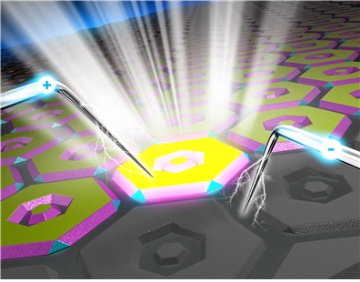
White LED, implemented with a single chip without using phosphors
A KAIST research team has developed a white LED manufacturing technology. Since this technology is a white LED manufacturing method that does not use phosphors, it is expected to contribute to advances in next-generation lighting and display technologies.
2016.02.25by
Samsung Electronics enables communication with smart LED platform
Samsung Electronics unveiled new products consisting of a 'Smart Lighting Module' and an ultra-compact 'Chip Scale Package (CSP)', which enable more diverse and efficient lighting design. Samsung Electronics' 'Smart Lighting Module' is a product based on a 'Smart LED Lighting Platform' that combines LED lighting with various sensors and software, enabling the transmission of various information to administrators via wired and wireless communication.
2016.03.15by
Fairchild Announces LED Solutions Simplifying LED Lighting Product Development
Fairchild has announced the new FL77944, the first solution in its LED Direct AC Drive product family, a solid-state LED lighting solution. Manufacturers can now easily scale power and create smart, scalable LED-based lighting products that are smaller, deliver stronger performance, and offer longer usable life compared to products using switch mode power supply (SMPS) approaches.
2016.05.24by 명세환 기자
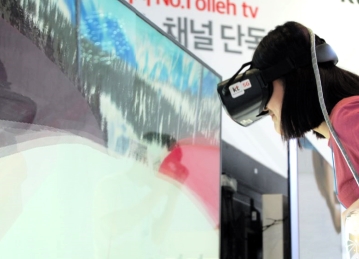
Could Micro LED Displays Solve Everything from VR Wearables to TVs?
Can micro LED displays catch up with the OLED display market beyond conventional LED displays? As interest in next-generation smart devices such as wearable devices increases, demand for technological development of micro LED displays is intensifying. Micro LED displays, which are manufactured with chip sizes typically in the 10–100 μm range and can be applied to all optical applications requiring low power consumption, miniaturization, and weight reduction, can be extensively utilized in flexible displays, smart textiles, bio contact lenses, HMDs, wearable body-attached devices, and wireless communication applications. In a situation where LEDs, which were primarily used in lighting and display applications, are increasingly showing potential for use in biomedical and medical fields, micro LEDs—which have secured stability in high efficiency, yield, and reliability—have emerged as a next-generation display technology.
2016.05.30by 신윤오 기자

Intel Unveils Next-Generation 'Core Ultra Series 3' and vPro Platform for Enterprise PCs
Intel has officially unveiled the "Intel Core Ultra Series 3" for next-generation enterprise PCs and the latest vPro platform, addressing a wide range of demands from enterprise notebooks to high-performance workstations.
2026.03.26by 배종인 기자











