


29 New Projects Selected, Including Support for IoT SMEs and Establishment of Convergence Pilot Complexes
 Published2016.06.07 07:33
The Ministry of Science, ICT and Future Planning (Minister Choi Yang-hee, hereinafter 'MSIT') announced the final selection results for the 2016 Internet of Things (IoT) support projects.
The Ministry of Science, ICT and Future Planning is promoting IoT support projects as part of the "K-ICT Strategy," which drives economic growth and job creation through ICT, in order to generate innovative results for the creative economy at an early stage.
This year, we are promoting support projects for small and medium-sized enterprises (SMEs) and venture companies specializing in the IoT field, as well as IoT convergence pilot complex development projects that solve urban issues such as traffic congestion through IoT in cooperation with local governments and private companies. These development projects include SME support projects (leading the development of new IoT industries, 5.63 billion KRW in 2016) and IoT convergence pilot complex development projects (2 billion KRW in 2016).
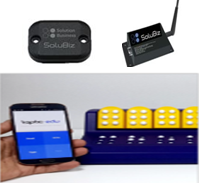
▲ Beacon-based mold history management (above) enhances the efficiency of the mold process by managing movement status, such as history and location, through the input of molds using industrial beacons. The smart Braille learning device assists in Braille learning by controlling the device via an app, enabling features such as Braille protrusion and voice guidance.
The IoT SME Support Program discovers creative ideas from capable small and medium-sized enterprises (SMEs) and venture companies in the IoT field and supports their commercialization into products and services. To allow creative ideas from the private sector to develop freely, the program was conducted as an open call without specific areas (March 25–April 27), and a total of 28 projects were selected in the categories of 'Service Verification and Dissemination' and 'Convergence Product Commercialization'.
The 'Creation of an IoT Convergence Pilot Complex' project is a project in which local governments and private companies cooperate to solve chronic urban problems such as traffic and public safety using IoT. As a result of the open call for local governments and corporate consortia ('16.4.11~5.11), the Gyeonggi-do Goyang City and LG Uplus consortium was selected and will solve Goyang City's urban problems using IoT for the next two years.
Goyang City has identified three key areas of local concern (safety, environment, and energy) and services necessary for the region through a survey of citizens and relevant organizations, and plans to expand them after a two-year service demonstration. For example, in the case of the Clean Environment Notification Service, air quality measurement sensors will be installed at Goyang Lake Park to share environmental information with citizens.
Jang Seok-young, Director General of Internet Convergence Policy at the Ministry of Science, ICT and Future Planning, stated, “We will focus on fostering capable IoT specialized companies through public-private cooperation-based IoT support projects and improving the quality of life for citizens through IoT to accelerate the IoT era.”

Comments
Related news

[Reporter's Notebook] What will short-range wireless communication be that will take over IoT homes?
As short-range communication networks such as WiFi and Bluetooth have come into the spotlight as necessary communication means for home automation applications to be connected, competition between different communication technologies has become inevitable. The main short-range communications currently applied to IoT devices for home automation include WiFi, Bluetooth, ZigBee, and THREAD. Each of these communication technologies has advantages and disadvantages in terms of power consumption, range, and scalability, and is expanding its domain.
2016.04.25by 신윤오 기자

Multi-connectivity chip developers, capture the smart home IoT market
With the smart home market based on IoT (Internet of Things) expected to experience rapid growth, interest in IoT connectivity communication technologies that connect various smart devices is rising again. In particular, major semiconductor companies are actively developing chips that support multi-connectivity in line with the expansion of the IoT market. These companies are offering various multi-connectivity solutions, including supporting Bluetooth in addition to WiFi, adding WiFi to Zigbee, supporting Zigbee and Bluetooth alongside proprietary standards, and multi-chip solutions that additionally support Thread for comprehensive connectivity support.
2016.05.27by 신윤오 기자
Will a riding bicycle emerge when the Internet of Things network and IoT platform meet?
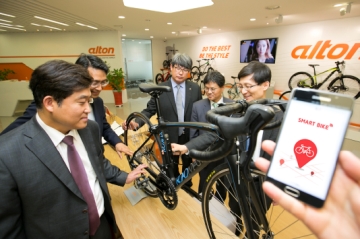
KT (Chairman Hwang Chang-gyu) announced on the 25th that it will sign a 'Memorandum of Understanding for IoT Bicycle Market Activation' with Alton Sports, BC Card, KT Telecap, and Dongbu Fire & Marine Insurance at Alton Sports headquarters located in Pangyo, Seongnam-si, Gyeonggi-do. The 'IoT Bicycle' is a solution that leverages KT's nationwide narrowband IoT (LTE-M) network and IoT platform to provide features including vibration and alarm functions for theft prevention, sophisticated location tracking, and battery depletion warning capabilities. Under the memorandum of understanding signed on this day, ▲ KT will provide narrowband IoT communication modules and support for sophisticated IoT platforms, ▲ Alton Sports will distribute IoT bicycles utilizing its 111 Alton Bike Clinics nationwide, ▲ BC Card will conduct target marketing based on Big Data, ▲ KT Telecap will develop business models to minimize theft and loss, and ▲ Dongbu Fire & Marine Insurance will develop bicycle theft insurance products, with all parties agreeing to cooperate closely.
2016.05.25by 명세환 기자
Korea Instrument, KOLAS Accredited Calibration Agency First to Simultaneously Acquire ISO/IEC 27,001·27,701
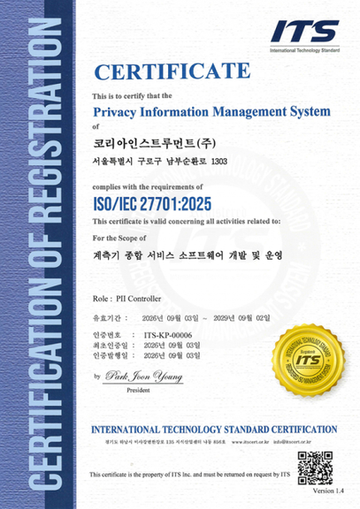
Korea Instrument has become the first among KOLAS accredited calibration agencies to simultaneously acquire ISO/IEC 27,001 and ISO/IEC 27,701 certifications. Through its proprietary platforms CWIZ Enterprise and CWIZ Partners, the company has embedded information security and personal data protection requirements across all business processes including customer information, equipment data, and calibration reports, with plans to continuously advance its management system through regular audits and security inspections.
2026.10.12by 배종인 기자

TeamViewer One, IT Incident Automation Workflow and Resolution Center Enhanced
TeamViewer has added IT incident automation capabilities and an advanced Resolution Center to its integrated digital workplace management platform 'TeamViewer ONE'. Recurrent service disruptions, configuration errors, and capacity shortages are automatically handled according to preset policies, and device status verification through script deployment can be managed in a unified interface, significantly reducing repetitive tasks for IT teams.
2026.10.12by 배종인 기자











