


Urgent need to embrace changes in smart production through the utilization of industrial IoT
 Published2016.06.07 18:42
Most manufacturing companies lack concrete plans to generate new revenue using IIoT.
It has been found that manufacturers are inadequately prepared for the utilization of the Industrial Internet of Things (IIoT), which serves as the foundation for realizing smart factories, indicating an urgent need for a shift in perception regarding smart production.
The Industrial Internet of Things (IoT), initially utilized in the manufacturing sector for process and production efficiency, is spreading to other industries overseas. With the digitalization of manufacturing, the integration of IoT technology into traditional production processes is demonstrating tangible results in cost reduction and productivity improvement.
The Industrial Internet of Things (IoT), which connects various physical and virtual objects over the internet, refers to the entire infrastructure utilized in facilities, manufacturing, logistics, and distribution to support intelligent supply chains from a manufacturing perspective and demand-based production from a sales perspective, as well as to provide various services aimed at enhancing industrial efficiency. Accordingly, it consists of services, devices, and platforms, and through the provision of connectivity between each component, all elements of facilities, manufacturing, distribution/logistics, and services interoperate with one another, thereby providing high added value creation in the smart manufacturing sector.
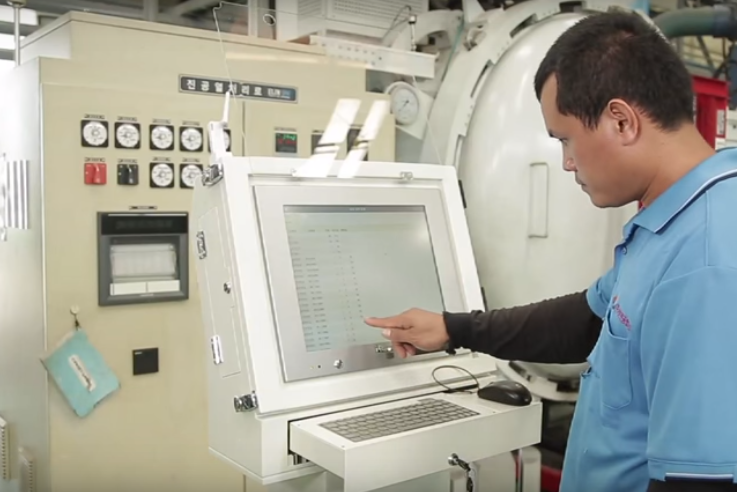
▲ Smart factory implementation cases introduced on the website of the Smart Factory Promotion Team (Director Park Jin-woo)
According to a survey by global consulting firm Accenture, 84% of respondents in the Industrial Internet of Things (IIoT) sector claimed that they could generate new revenue from IIoT, while 73% answered that they had no specific plans to generate new revenue using IIoT, and only 7% had established a comprehensive strategy.
In response, Lee Tae-jin, Executive Director at Accenture, emphasized during his presentation on "The Best Ways for Manufacturing Companies to Utilize the Industrial Internet of Things" at the Smart Manufacturing Technology Conference held on the 2nd that "manufacturers must consider six key perspectives when planning smart factories."
Manufacturing companies must review the factors accelerating smart production and consider which options to choose.
First, he stated that manufacturing companies can drive overall reliability, predictability, and optimization by intelligently self-managing facilities and linking them with other manufacturing-related systems. Secondly, it was emphasized that even traditional low-wage countries are focusing on process and labor efficiency through automation and collaboration (next-generation robotic technology) due to wage increase issues, and that excellent results can only be produced by creating a 'workforce' where workers and machines work in harmony.
Third, it was pointed out that some manufacturing companies are already reducing massive inventory costs by utilizing JIT inventory and supply chain management techniques, emphasizing the need for an efficient materials management process equipped with integration and speed to achieve this. Fourth, it was stated that manufacturing companies must effectively respond to work and resource demands by integrating ERP and MES. Fifth, it was noted that IIoT device-level systems at the forefront of production and cloud environments will soon evolve into platforms supporting decision-making in distributed environments through enterprise applications. Finally, it was emphasized that utilizing eco-friendly manufacturing facilities not only minimizes adverse impacts on workers and the natural environment but also enables the most efficient and productive use of raw materials and natural resources.
Executive Director Lee identified key elements for accelerating smart production as follows: “Investment, modernization, and retrofitting of facilities entail investment, and close integration between OT and IT, familiarity with technological changes, rapid deployment of industrial security solutions, and rapid workforce retraining are necessary.” He also stated, “It is necessary to consider the potential of IIoT and its ability to facilitate smart production,” adding, “Manufacturing companies must review the factors that accelerate smart production and deliberate on which options to choose.”
Innovation and improvement are needed starting from the design concept of existing equipment.
In the report "Issues and Challenges for Smart Factories for Future Manufacturing Innovation" (Kim Sang-hoon et al.), the Korea Institute for Industrial Economics and Trade (KIET) stated that the smartification of manufacturing plants requires an understanding of existing production processes and presupposes that the advancement of existing production technologies is necessary for building smart factories. The report noted, "While most technologies related to smart factories fall under IT, an in-depth understanding of the process technology itself is required to improve core process infrastructure, such as the implementation and optimization of the Internet of Things within the factory. Furthermore, to achieve a smart factory in the true sense, going beyond simple factory automation, innovation and improvement starting from the design concepts of existing equipment are necessary."
Meanwhile, as the government continues its efforts to integrate smart factories into the domestic manufacturing industry, attention is being paid to how significant an impact this will have on establishing an industrial Internet of Things (IIoT) infrastructure. The government recently designated the Banwol-Sihwa Industrial Complex, the nation's largest national industrial complex, as a smart factory hub cluster. It announced plans to invest a total of 44.9 billion won to install a dedicated communication network for tenant companies in Banwol-Sihwa, deploy cloud-based smart factories utilizing Industrial Internet of Things (IIoT) platforms, and upgrade the complex's smart communication infrastructure by establishing a big data center.
Comments
Related news
How to build a smart factory? 'Ask' the Industrial Internet of Things
As the government decided to establish 10,000 smart factories by 2020 as part of "Manufacturing Innovation 3.0," interest in Industrial IoT has been sharply increasing. While the Internet of Things (IoT), which has recently attracted significant attention, is primarily discussed in the context of consumer products such as homes and automobiles, Industrial IoT (IIoT), which will serve as the core foundation of smart factories, is expected to outpace the consumer IoT market in terms of market size and deployment timeline.
2016.02.15by 신윤오 기자
e4ds Regular Seminar and Industrial Internet of Things (IIoT) Innovation Day Successfully Held
This seminar, hosted by COEX and held in conjunction with the International Smart Factory Automation Exhibition (Automation World 2016), focuses on disseminating Industrial Internet of Things technology to the industry by providing the latest information in the Industrial IoT field spanning from semiconductors to communications, platforms, software, testing, and security.
2016.03.14by 명세환 기자

Security issues becoming visible due to the spread of industrial automation and the Internet of Things (IoT)
In the industrial automation security sector, it is important to integrate security features into the devices themselves. It is no longer possible to rely solely on the security functions provided by perimeter defenses. It must not be forgotten that hackers are highly intelligent and do not give up. There is no way to perfectly protect a device with a single solution. What is more important today is not only adding security layers across the enterprise in the industrial automation field, but also incorporating security features into individual embedded devices.
2016.05.03by 명세환 기자
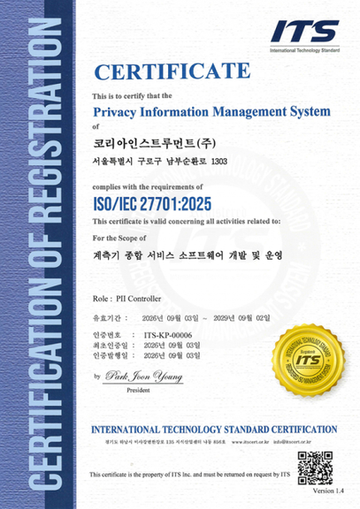
Korea Instrument, KOLAS Accredited Calibration Agency First to Simultaneously Acquire ISO/IEC 27,001·27,701
Korea Instrument has become the first among KOLAS accredited calibration agencies to simultaneously acquire ISO/IEC 27,001 and ISO/IEC 27,701 certifications. Through its proprietary platforms CWIZ Enterprise and CWIZ Partners, the company has embedded information security and personal data protection requirements across all business processes including customer information, equipment data, and calibration reports, with plans to continuously advance its management system through regular audits and security inspections.
2026.10.12by 배종인 기자

TeamViewer One, IT Incident Automation Workflow and Resolution Center Enhanced
TeamViewer has added IT incident automation capabilities and an advanced Resolution Center to its integrated digital workplace management platform 'TeamViewer ONE'. Recurrent service disruptions, configuration errors, and capacity shortages are automatically handled according to preset policies, and device status verification through script deployment can be managed in a unified interface, significantly reducing repetitive tasks for IT teams.
2026.10.12by 배종인 기자











